






 Portuguese
  Spanish
  6 min of reading
  0 comments


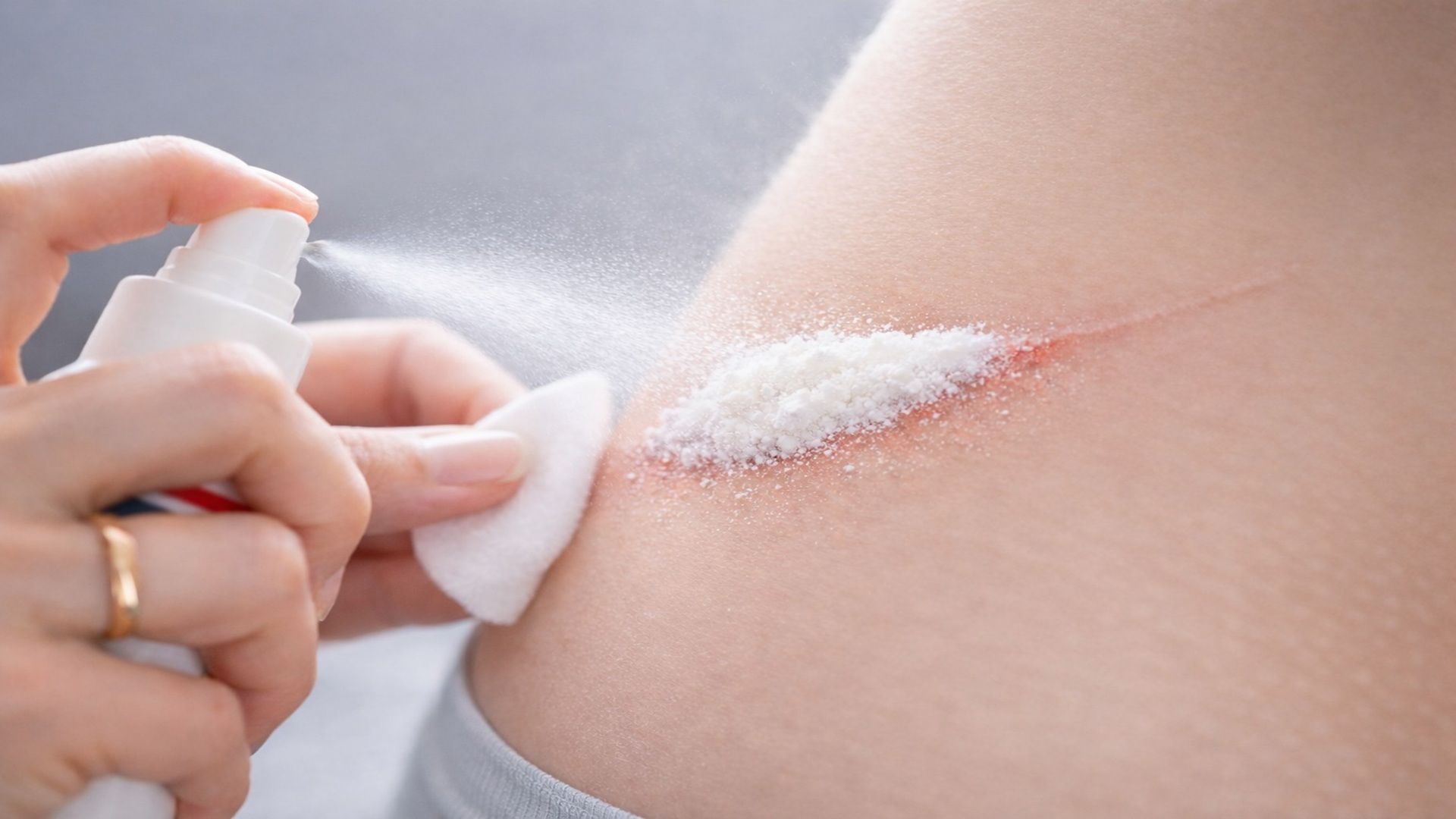
Developed By KAIST Scientists, The Hemostatic Agent In Powder Applied By Spray Forms A Hydrogel In About One Second, Absorbs Up To 725% Of Its Own Weight In Blood, Maintains Stability For Two Years And Can Reduce Deaths From Bleeding In Combats, Surgeries And Medical Emergencies
KAIST announced on December 29 the development of a hemostatic agent in powder that stops bleeding in about one second when sprayed, forming a stable and resilient hydrogel, with potential to reduce deaths from severe blood loss in combat and medical emergencies.
An Immediate Application Solution For Critical Bleeding
Severe blood loss remains the leading cause of death from injuries in combat, motivating the search for faster, more reliable solutions that can adapt to extreme conditions. In light of this scenario, a research team at KAIST decided to develop a method capable of stopping bleeding almost instantly.
The project involved the direct participation of an active Army major, which influenced the design of the technology from the beginning.
-
3D printers become a business in the hands of two students from Manaus and reveal early talent for entrepreneurship

-
China took 46 years to surround its largest desert with a 3,000-kilometer green belt, but the megaproject against sandstorms still faces drought, low tree survival, and advancing desertification in the Taklamakan.

-
Desert sand, previously discarded by construction, becomes an ecological brick in the United Arab Emirates, using slag and industrial ash, reducing dependence on Portland cement and making a bold bet to cut carbon without kilns or thermal curing in an experimental scale.
-
The south could register more than 250 mm of rain above average in the second half of the year with the arrival of Super El Niño, warns meteorologist.


The intention was to ensure that the material would function outside the controlled environment of hospitals, meeting the demands of the battlefield and disaster zones.
The result was a state-of-the-art hemostatic agent in powder form, capable of being applied in seconds through direct spraying over the wound. Upon contact with blood, the material rapidly transforms into a solid hydrogel, creating an almost immediate physical barrier.
According to the institutional announcement, the transformation occurs in about one second, time considered critical to prevent the progression of hemorrhagic shock in situations of severe trauma. This speed represents a differential compared to existing solutions.
Limitations Of Traditional Hemostatics Motivated New Approach
Hemostatic products widely used in current medicine are mostly presented in the form of flat adhesives. Although effective in certain situations, these materials face difficulties when applied to deep, irregular, or complex-shaped wounds.
In addition, many of these products show significant sensitivity to heat and humidity. This characteristic limits prolonged storage and hinders use in demanding environments, such as military operations or areas affected by natural disasters.
The KAIST team sought to overcome these constraints by adopting a powder form that can adapt to different geometries of wounds. The same formulation can be utilized in superficial cuts, deep lacerations, or irregular injuries, enhancing its versatility in emergency care.
Another critical point observed by researchers was the operating mechanism of existing hemostatic powders. Generally, these products act only through the physical absorption of blood, forming a limited barrier in situations of intense bleeding.
Chemical Structure And Functioning Of AGCL Powder
To circumvent these limitations, the team focused on the ionic reactions naturally present in blood. The developed agent, called AGCL powder, combines biocompatible natural materials in a structure designed for ultra-rapid gelification.
Among the components are alginate and gellan gum, which react with calcium ions present in blood, promoting rapid gel formation and physical sealing of the wound. Chitosan was added to this matrix, which binds to blood components, enhancing chemical and biological hemostasis.
This combination allows the powder to react almost instantly upon contact with blood, transforming into gel in about one second. The process results in an immediate sealing of the injured area, effectively stopping the blood flow.
The technology was designed to maintain performance even in hostile environments. The agent quickly hardens under adverse conditions and exhibits stability during storage, allowing for immediate use when needed.
Absorption Capacity And Mechanical Resistance Under Pressure
One of the central characteristics of AGCL powder is its absorption capacity. By forming an internal three-dimensional structure, the material can absorb an amount of blood greater than seven times its own weight, reaching a rate of 725%.
This elevated capacity allows for quick blockage of blood flow even in high-pressure situations, common in severe traumatic injuries. The performance was described as superior to that of commercial hemostatic agents evaluated under comparable conditions.
The material also exhibited high adhesive strength, exceeding 40 kPa. This level of resistance is sufficient to withstand intense manual compression, often applied in first aid to contain bleeding until specialized care arrives.
These combined properties make the agent particularly suitable for use in scenarios where rapid control of bleeding is crucial for patient survival, such as combats, severe accidents, and emergency surgeries.
Biological Safety And Tissue Regeneration Effects
In addition to mechanical performance, biological safety was a central aspect of the evaluation of the new material. AGCL powder is entirely composed of materials of natural origin, which contributes to its compatibility with human tissues.
Tests indicated a hemolysis rate of less than 3%, cell viability greater than 99%, and an antibacterial effect of 99.9%.
These results point to a low risk of cellular damage and infections when the material comes into contact with blood.
In animal experiments, researchers observed positive effects on tissue regeneration. Among the highlighted results are accelerated wound recovery and promotion of blood vessel and collagen regeneration.
These data suggest that, in addition to stopping bleeding, the material may contribute to a more efficient healing process, reducing subsequent complications. Even so, the main focus of the development remained on ultra-rapid hemostasis.
Results In Surgical Models And Prolonged Stability
The effectiveness of the agent was also tested in surgical liver injury models. In these experiments, both the amount of bleeding and the time needed to achieve hemostasis were significantly reduced compared to commercial hemostatic agents.
Tests indicated that liver function returned to normal levels two weeks after surgery. During the evaluation period, no abnormalities were observed in systemic toxicity analyses.
Another strategically considered aspect was the durability of the product. The hemostatic agent maintained its performance for up to two years, even when stored at room temperature and in high humidity environments.
This prolonged stability provides a significant logistical advantage, especially for military operations and disaster response actions, where access to ideal storage conditions is limited and immediate readiness is essential.
From Defense Research To Expanded Medical Application
Although the development of AGCL powder was initially directed to meet national defense demands, researchers highlight its potential application across all emergency medicine. This includes civil scenarios, regions with limited medical infrastructure, and developing countries.
The case is evaluated as a representative example of indirect transfer of science and technology from defense to the civilian sector. The technological history itself includes several precedents of this type, in areas such as computing, navigation, and home appliances.
The agent can be utilized from emergency treatment on the battlefield to internal surgical hemostasis procedures, broadening its potential reach within the healthcare system. This versatility reinforces institutional interest in the project.
The research has been recognized for both its scientific innovation and strategic utility. The work received the KAIST Q-Day President’s Award 2025 and the National Defense Minister’s Award at the KAIST-KNDU National Defense Academic Conference 2024.
Scientific Recognition And Researchers’ Motivation
The study was published under the title “An Ionic Gelification Powder For Ultra-Rapid Hemostasis And Accelerated Wound Healing,” dated October 28, 2025. The research was supported by the National Research Foundation of Korea.
Among the authors are senior researchers and doctoral candidates, including Army Major Kyusoon Park, who directly participated in developing the material and experimental validation.
According to him, the central motivation of the project was to reduce the loss of human life in the contexts of modern warfare. The researcher stated that he began the research with the aim of saving at least one more soldier in critical situations.
He also expressed the expectation that the technology will be used both in national defense and in private medicine, expanding its social impact. For the authors, the development of AGCL powder represents a concrete advance in the response to severe bleeding, with direct implications for survival in extreme situations, even if some shortcomings are still explored in future studies.





-

-

-

-

-

-

48 people reacted to this.