Portuguese
  Spanish


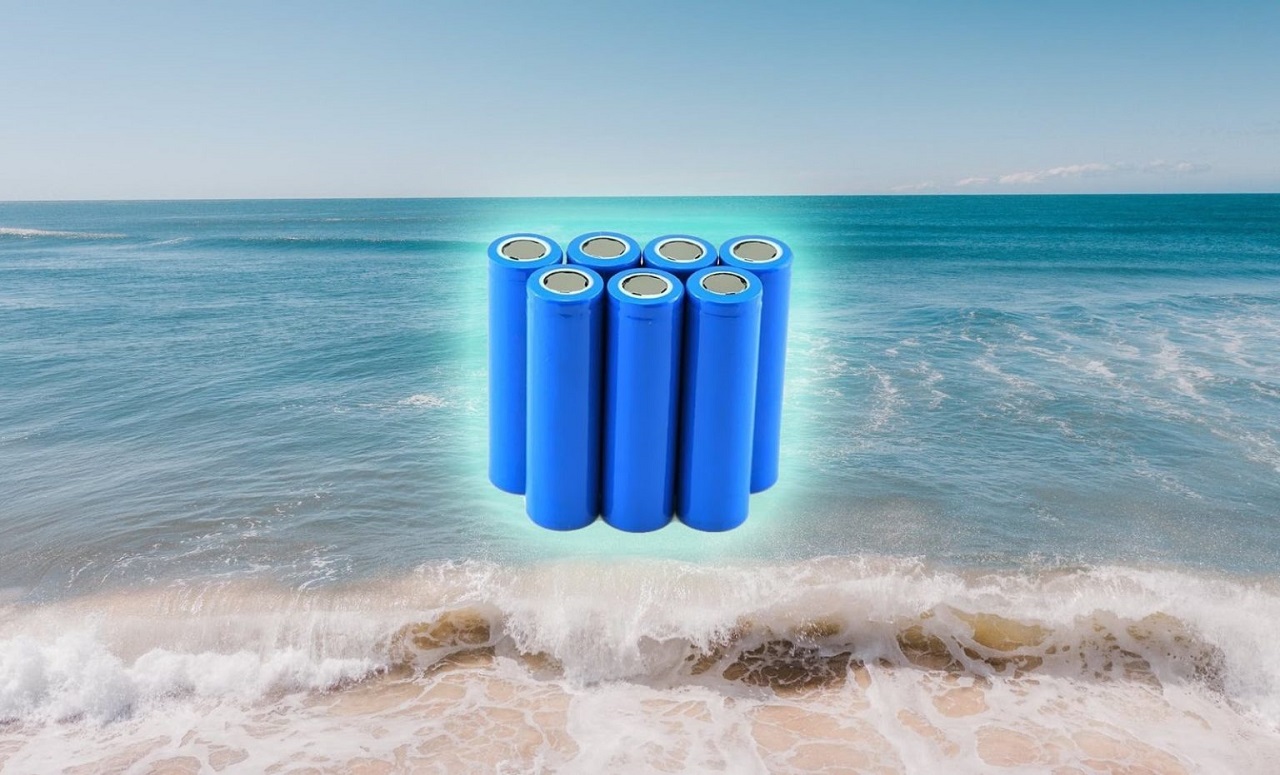

Scientists Develop New Method for Lithium Extraction from Seawater. The Mineral Is Heavily Used in Electric Car and Smartphone Batteries. The New Extraction Alternative Could Directly Impact the Reduction of Prices of These Products.
The lithium is a product that has seen increasing demand in recent years due to its use in electric car batteries, however, mining this component generates negative impacts on the environment. Thus, aiming to find a solution to this, scientists have developed a method of lithium extraction from ocean waters.
Analysts Point Out That High Lithium Demand Will Cause Land Supplies to Deplete by 2080
Lithium is essential for rechargeable battery production that powers everything from smartphones to electric cars. However, the current pace of lithium mining will not be sufficient to meet future demand, threatening to deplete known land supplies by 2080.
As a result, lithium extraction from seawater could be the solution to make this mineral available sustainably and affordably for the electric car battery industry. A team from King Abdullah University of Science and Technology, in Saudi Arabia, found a way to address the issue of lithium mining by extracting the mineral from ocean water.
-
The large jar blender has a rival: Oster Ultra Power bets on 1,000 W, six stainless steel blades, and two portable cups with leak-proof lids.

-
Tesla injected an additional $250 million into the German factory, doubled the battery cell target, and opened its own production line for startups.

-
No more TV stuck on the wall: Samsung The Freestyle+, the new projector with over 400 lumens projects on walls, floors, and ceilings, bringing cinema to any corner of the house.
-
A Japanese governor single-handedly stalled the construction of the world’s fastest train for nine years, and only now has he agreed to allow a tunnel excavated at a depth of 1,400 meters.


The scientists’ intent is to prevent lithium supplies on Earth from running out and, at the same time, reduce the negative impacts generated by the activity on the environment. The team claims that the new method is completely viable for extracting lithium from ocean water, providing a potentially inexhaustible source of the mineral.
Moreover, lithium mining from seawater would be much less harmful to the environment since it does not demand excessive amounts of water, as land mining can waste up to half a million gallons of water per ton of lithium extracted.
Technique Used by Scientists for Lithium Mining
Ocean water contains large quantities of lithium, but in very low concentrations, making the extraction of the material used in electric car batteries very difficult. The team of scientists presented a unique approach in the journal Energy & Environmental Science by developing an electrochemical cell with a ceramic membrane containing lithium, lanthanum, and titanium oxide (LLTO).
This membrane serves as a fine mesh to filter lithium from seawater. With this innovative technique, the team achieved an accessible means to extract lithium from the ocean, providing a potentially inexhaustible source of the mineral. As a result, lithium ions can pass through the pores while larger metal ions are blocked.
Seawater is fed into the cell and passes through three chambers. Positive and negative ions are separated in the first chamber, while the positive ions move to the side chamber, and the lithium-concentrated water is fed back into the system.
1 kg of Lithium in Seawater Will Cost Just US$ 5
The team of scientists adjusted the pH of the solutions to ensure that the purity of the final product was guaranteed and met the specifications of electric car and smartphone battery manufacturers. The concentration of lithium expands with each processing cycle, making the solution accessible and environmentally viable.
The extraction process is still in the early stages and must be proven to be economical, but the scientists concluded in an economic study that if energy costs around US$ 65 MWh, only US$ 5 worth of electricity would be needed to extract 1 kg of lithium from seawater.
If the price of lithium increases, the expectation is that battery producers will begin to consider seawater mining as an option.