Portuguese
  Spanish


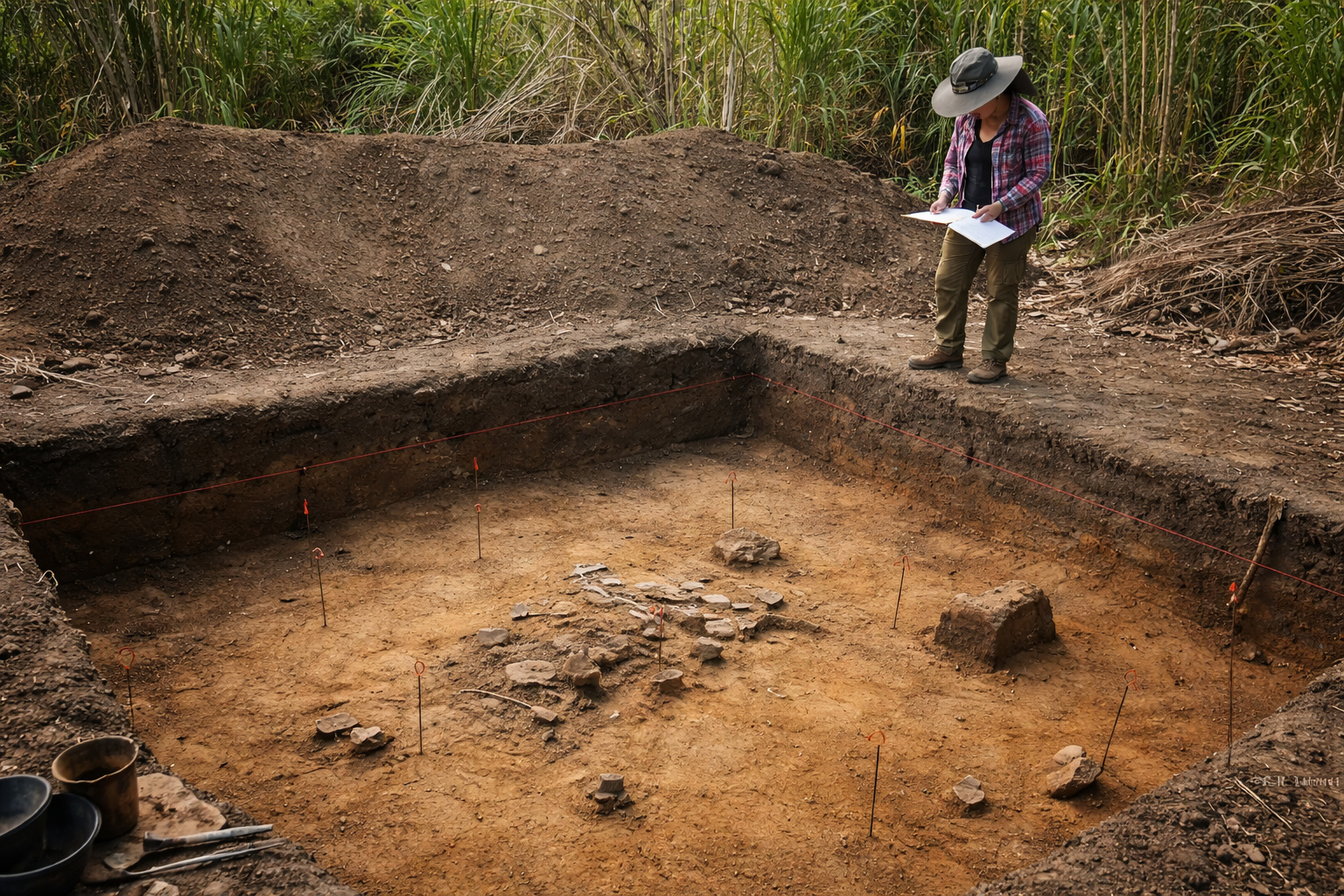


Mapping By Laser And Dating Between 600 And 1400 AD Confirm Complex Settlements In The Beniana Plain And Take Apart The Myth Of The Untouched Forest
A historically impactful archaeological discovery was confirmed in the Beniana Plain in Bolivia, decisively altering the narrative about the occupation of the Amazônia Basin. Research conducted by Bolivian and German teams, intensified in 2021, revealed a sophisticated cultural landscape where, for decades, it was believed there was only preserved nature and low human presence.
Until then, many scientists argued that the poor soil and frequent flooding limited settlement in the region. However, scientific evidence shows that structured settlements existed there between approximately 600 and 1400 AD, indicating continuous occupation and complex territorial organization.
Technical Investigation Redefines Amazonian History
The confirmation of this occupation was made possible thanks to the use of LiDAR (Light Detection and Ranging) technology. The system, operated from aircraft, emits laser pulses capable of penetrating dense vegetation and accurately recording the terrain’s topography. Thus, detailed three-dimensional maps were produced, revealing structures previously invisible to the naked eye.
-
Iraq floats and sinks under an arm of the Euphrates 10 giant concrete boxes of 46,000 tons and 125 meters each to assemble a 2.4 km submerged tunnel and open a new land route between Asia and Europe.

-
Scientists use more than 20,000 artificial birds and solar speakers to “trick” seabirds, reactivate nesting routes, and revive a colony on an island that seemed abandoned.

-
She spent 73 years breathing inside an iron lung, survived the aftereffects of polio, and became the last woman in the United States dependent on the equipment before dying at 78 years old.
-
Brazilian students created a $1 filter using pine bark, cotton, and 3D-printed parts to clean cassava wastewater, reduce the toxicity of a hazardous waste, and transform contaminated water into biofertilizer.




Under the leadership of archaeologist Carla Jaimes Betancourt from the University of Bonn, the expedition focused its analyses in areas near the Rogaguado and Ginebra Lakes in the Río Yata. The region is internationally recognized by UNESCO under the Ramsar Convention due to its environmental relevance.
The surveys identified defensive structures, pyramid platforms, ritual centers, elevated fields, and complex irrigation systems. Additionally, radiocarbon dating confirmed successive occupations over the centuries, reinforcing the existence of an organized society.
Historical Evidence Gains Scientific Validation
For much of the 20th century, the Beniana Plain, covering about 100,000 square kilometers, was considered unsuitable for the development of large societies. Still, in the early part of that century, Swedish ethnologist Erland Nordenskiöld identified traces of human occupation in the region. Subsequently, American geographer William Denevan expanded this hypothesis with new analyses.

Now, with the support of modern technology, the presence of a structured society has been systematically proven. Beneath fields and flooded areas, artificial channels, abundant pottery, and elevated agricultural structures were found, evidencing territorial planning and environmental adaptation.
Botanical analyses revealed the cultivation of corn, legumes, and different types of palms, complemented by hunting and fishing. This dietary diversity reinforces the notion of a consolidated productive system.
Adaptation to Seasonal Floods and Biocultural Heritage
According to Betancourt, in an article published in the scientific journal Frontiers in Environmental Archaeology, the ancient inhabitants did not seek to dominate the environment. On the contrary, they worked in harmony with the dynamics of seasonal floods. Strategic water management was used as a tool for production and survival, demonstrating profound ecological knowledge.
This balanced interaction between society and nature is described as a lasting biocultural continuum, based on environmental and cultural diversity.
Currently, Cayubaba and Movima peoples remain in the region. They cultivate rice, cassava, bananas, and sugarcane, in addition to raising cattle, keeping alive a heritage built over centuries. However, the researcher warns that deforestation, industrial agriculture, and climate change threaten the integrity of the Amazon.
According to the organization Survival International, about 180 isolated peoples live only on the Brazilian side of the Amazon Basin. Thus, discoveries in the Beniana Plain reinforce that preserving the forest also means protecting its historical guardians and the cultural memory that sustains its resilience.