





Study shows that climate change can break up to 90% of the connections between wild vanillas and their pollinators, threatening the genetic diversity of the crop.
Vanilla is one of the world’s most valuable natural spices and is found in food, beverages, cosmetics, perfumes, and pharmaceutical products. Despite its enormous economic importance, researchers warn that the future of the crop may depend on the preservation of wild species that are currently under increasing pressure from climate change.
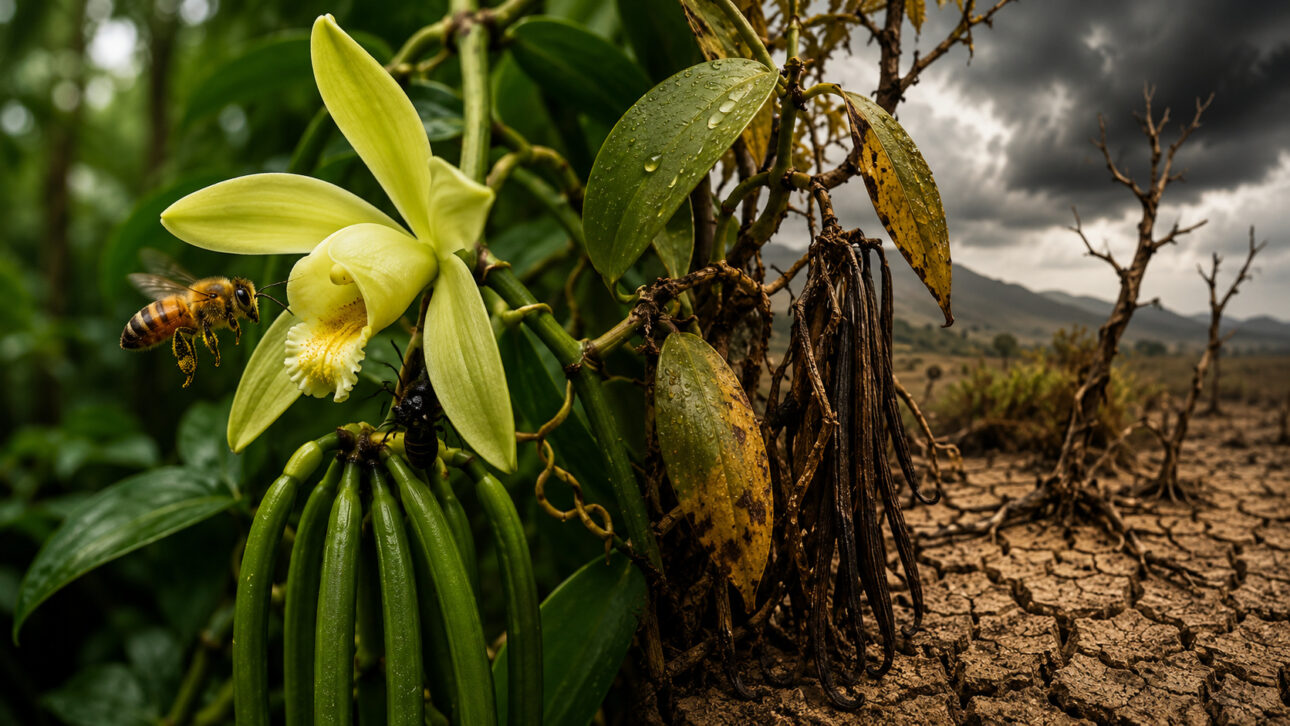
A study published in 2025 in the scientific journal Frontiers in Plant Science concluded that global warming could drastically reduce the overlap between the areas where wild vanilla species and their natural pollinators live. In some cases, up to 90% of the ecological connections between plants and insects could disappear by 2050, compromising the reproduction of these species and reducing an important genetic reservoir for commercial cultivation.
The researchers emphasize that the problem affects not only biodiversity. Wild species carry genes that may be essential for developing varieties more resistant to heat, drought, and diseases, characteristics that are increasingly important in the face of climate changes.
-
An old ferry rusted for more than 10 years in New York, almost sank after the engine room was flooded, and now volunteers are rushing to clean the hull, remove wires, life jackets, and loose paint before sinking it in the Atlantic to become an artificial reef full of marine life.
-
An old ferry rusted for more than 10 years in New York, almost sank after the engine room was flooded, and now volunteers are rushing to clean the hull, remove wires, life jackets, and loose paint before sinking it in the Atlantic to become an artificial reef full of marine life.
-
Real Estate Agent Buys Marvel Movie Subway Car for $5,000 and Converts It into Themed Airbnb
-
Real Estate Agent Buys Marvel Movie Subway Car for $5,000 and Converts It into Themed Airbnb
Commercial vanilla depends on a very limited genetic base
The majority of commercially produced vanilla in the world belongs to the species Vanilla planifolia. Although it accounts for most of the natural vanilla used by the industry, this species exhibits low genetic diversity, a result of centuries of vegetative propagation.
According to researchers from the scientific journal Frontiers in Plant Science, this limitation makes the crop more vulnerable to diseases, heat waves, prolonged droughts, and other extreme events that are likely to become more frequent with the progression of climate change.


For this reason, wild species play a strategic role. They function as a natural gene bank capable of providing resistance to environmental stresses and expanding the possibilities for genetic improvement of the crop.
Without this diversity, the development of new varieties adapted to the future climate becomes much more difficult.
Scientists analyzed 11 wild species and seven pollinators
To understand the possible impacts of climate change, researchers from Frontiers in Plant Science modeled the geographical distribution of 11 wild vanilla species found in the Americas and seven species of pollinating insects that naturally participate in the reproduction of these plants.
The models used two climate scenarios recognized by the Intergovernmental Panel on Climate Change (IPCC), simulating different levels of global warming until the middle of the century.
Although some vanilla species may expand their potentially favorable areas by up to 140%, this does not guarantee their survival. The decisive factor is that the insects responsible for pollination tend to lose suitable areas more intensely, reducing the encounter between plants and pollinators.
According to the authors, this loss of ecological synchronization may prevent the natural reproduction of various species.
Up to 90% of natural interactions may disappear
The main conclusion of the study is that climate change may cause a phenomenon known as plant-pollinator decoupling.
In practice, this means that plants and insects will continue to exist but will occupy different areas, drastically reducing the chances of interaction.

The simulations indicate that some species may lose practically all overlap between their habitats and the habitats of specialized pollinators.
In certain scenarios, up to 90% of these natural connections may disappear by 2050, compromising the reproduction of wild populations.
Researchers from Frontiers in Plant Science emphasize that many vanilla species depend on a few specific pollinators, making it difficult to replace them with other insects if these relationships are broken.
Wild species can ensure the future of commercial production
Although commercial production mainly uses Vanilla planifolia, researchers state that wild species represent an indispensable genetic reservoir.
Genes present in these populations can contribute to developing varieties more resistant to drought, heat, fungi, and other diseases affecting cultivation.
As extreme climate events become more frequent, this genetic diversity is considered one of the main tools to ensure the continuity of global vanilla production.
The authors argue that conserving these natural populations is essential not only to protect tropical biodiversity but also to ensure the future stability of the spice’s production chain.
Vanilla production already faces heat, drought, and diseases
Climate challenges are not limited to wild species. Previous studies show that Vanilla planifolia itself exhibits high sensitivity to temperature changes.
Researchers from Frontiers in Plant Science observed that prolonged periods of heat and drought favor diseases, reduce productivity, and can decrease the area suitable for traditional cultivation.
In response, some producers have been adopting irrigated systems, shading nets, and even relocating plantations to higher regions where temperatures remain more favorable.
These adaptations increase production costs and may not be sufficient in all producing regions.
Conservation can be decisive for the global vanilla chain
Researchers from Frontiers in Plant Science argue that conservation programs should prioritize natural vanilla populations, especially in areas where there is still high genetic diversity.
They also recommend expanding research on the ecology, genetics, and pollination of these species, allowing useful traits to be used in future breeding programs.
According to the study, protecting only commercial production will not be sufficient if wild populations continue to lose habitat and their pollinators disappear from the same regions.
In the authors’ assessment, preserving this diversity represents a strategy to strengthen an agricultural crop used worldwide by the food, beverage, cosmetics, and fragrance industries.
The challenge goes beyond current production
Commercial vanilla continues to be produced in various tropical countries, mainly in Madagascar, Indonesia, and other producing regions.
However, the new study draws attention to a long-term problem: maintaining the crop’s ability to adapt to environmental changes.
Without the conservation of wild species and their pollinators, agriculture may lose an important source of genetic traits capable of facing higher temperatures, prolonged droughts, and new diseases.
Researchers from Frontiers in Plant Science conclude that protecting these natural populations today may be crucial to ensuring the future of one of the most valued spices on the planet.


