Portuguese
  Spanish


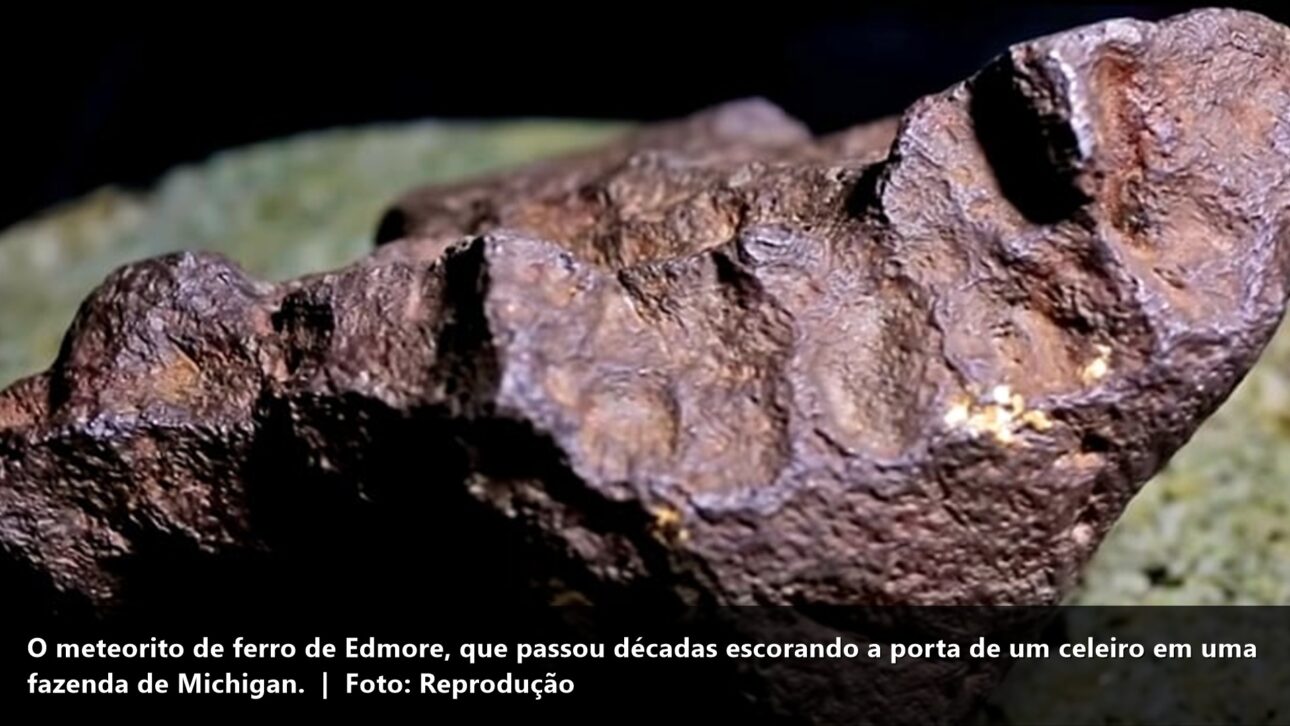
When buying a farm in Edmore, Michigan, in 1988, David Mazurek inherited a strange stone that the previous owner claimed was a meteorite. He used it as a doorstop for three decades until he took it to a university and discovered it was worth a fortune.
For three decades, the most valuable object on the property went unnoticed holding a door. In Michigan, in the United States, David Mazurek kept for 30 years a heavy and strange-looking stone that he used only as a doorstop without knowing it was a meteorite of iron weighing about 10 kilos, later valued at $100,000. The rock only caught the attention of science more than 80 years after falling to Earth.
It all started in a mundane way. When Mazurek bought a farm in Edmore, in the interior of the state, in 1988, the former owner showed him the property and a large, odd stone that kept a shed door open. According to information released by the portal Science Alert, when asked what it was, he received a surprising answer: the doorstop was actually a meteorite. Mazurek took the piece with him and kept it as a doorstop for the next 30 years.
From doorstop to university laboratory
Over time, Mazurek noticed that some people were making money finding and selling small pieces of meteorites. It was the push he needed: he finally decided to have his giant rock evaluated and took it to Central Michigan University (CMU), where geologist Mona Sirbescu examined the object in 2018.
-
Electric car batteries catch fire, destroy roads, and rely on polluting mining? Experts debunk exaggerations, confirm real issues, and reveal how new technologies without cobalt and even without lithium are changing the future of electric mobility.

-
In Andradina, in the interior of SP, a tannery transformed tilapia skin that slaughterhouses used to throw away into exotic leather for bags, shoes, and even wedding dresses, producing about 2,000 pieces per month and exporting to seven countries, proving that fish waste has become high-value fashion.

-
The industrial waste that even recyclers didn’t want has gained value in the interior of Bahia: two entrepreneurs invested R$ 2.8 million to transform 350 tons per year of foam, rubber, and plastic into boards that can replace wood and MDF.

-
What is a red flashlight used for, after all? See why it is so commonly used at night.


For Sirbescu, it was a routine and almost always frustrating request. “For 18 years, the answer was categorically no; they were not meteorites,” she said.
This time, however, it was different. “I immediately realized it was something special,” said the geologist. “It is the most valuable specimen I have ever held in my life, both monetarily and scientifically.”
The night in the 1930s when the sky “made an infernal noise”
The origin of the stone is a story in itself. According to the account passed on to Mazurek, in the 1930s the former owner and his father saw the meteorite plummet at night onto the property and, in his own words, the object “made an infernal noise” when it hit the ground.
The next morning, father and son found the crater opened by the impact and unearthed the rock from the newly-formed trench. It was still warm, they said.
And there was a generous detail: since the meteorite was part of the land, it would belong to whoever bought the property that’s how the stone ended up in Mazurek’s hands, along with the farm.
One of the largest iron meteorites ever found in Michigan
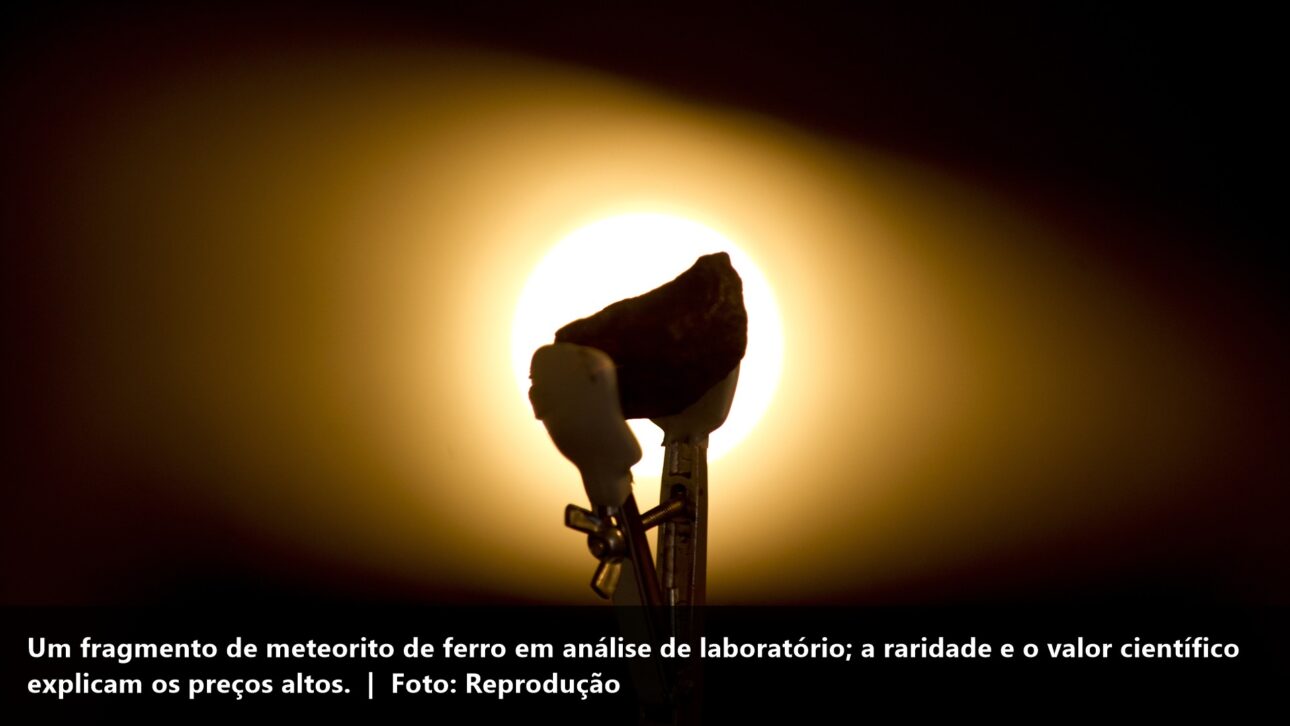
The analysis revealed quite a specimen. Nicknamed the Edmore meteorite, the object is a large iron-nickel meteorite, with a considerable nickel content of about 12%. It’s not just any stone: it’s among the largest ever recorded in the state of Michigan.
The value matched the rarity. The Smithsonian Institution verified the authenticity of the rock and estimated its value at around US$ 100,000.
Meteorites tend to fetch high prices precisely because of their scarcity and scientific importance, being sought after by museums, collectors, and sellers.
Sold for US$ 75,000 with a piece for science
In the end, Mazurek decided to part with the find. He sold the meteorite for US$ 75,000 to the Abrams Planetarium at Michigan State University, in a deal facilitated by a donor starting in 2019.
The gesture had a scientific side. Mazurek promised to allocate 10% of the proceeds to the Earth and Atmospheric Sciences department at CMU, where Sirbescu had identified the true nature of the rock. Not bad for an object that spent 30 years doing the humble job of holding a door.
How many “treasures” go unnoticed?
The Edmore case raises an inevitable question: how many valuable objects are, at this moment, serving mundane functions in garages, yards, and shelves?
Sirbescu herself spent almost two decades saying “no” to common stones, which shows how rare a find like this is, but also how it can hide in plain sight for generations.
This does not mean that every heavy rock is a space fortune. Iron meteorites are often dense, attracted to magnets, and marked by small depressions on the surface, as if they had been molded by hand signs that are worth a second look.
In Mazurek’s case, late curiosity turned a simple doorstop into a story that went around the world.
An ugly stone that propped a door for 30 years turned into a $100,000 meteorite and a curious chapter in Michigan science. The moral is simple: sometimes, the extraordinary is right under our noses, disguised as trivial.
Have you ever had any “strange stone” at home that was worth investigating or would you take yours for an evaluation after reading this? Tell us here in the comments.