Portuguese
  Spanish


The Colombian Conceptos Plásticos melts discarded plastic and molds it into bricks that fit together like Lego pieces. With the system, four people assemble a 40 m² house with two bedrooms in five days for about US$ 6,8 thousand, and street waste becomes a roof.
What pollutes the streets can become housing. In Colombia, the company Conceptos Plásticos created a system that melts plastic waste and transforms it into bricks that fit together like Lego pieces, allowing the construction of a 40 m² house with two bedrooms in just five days. It takes only four people and about US$ 6,8 thousand (20 million Colombian pesos) to build each unit.
Behind the idea are architect Óscar Méndez and Fernando Llanos, who founded the company in 2011. According to information from the portal ArchDaily, it all started with a practical problem: ten years earlier, when trying to build his own house in Cundinamarca, Llanos realized that transporting materials from Bogotá was almost unfeasible. The solution was to bet on plastic, and after much trial and error, the improvisation became a patented method.
From a transportation problem to a patented method
The turning point came from the right encounter. While searching for an alternative, Llanos met Óscar Méndez, an architect graduated from Javeriana University in Bogotá, who had already developed a thesis on exactly this topic. Together, they turned the research into a business and founded Conceptos Plásticos, which patented a system of bricks and pillars made from recycled plastic capable of building houses up to two stories high.
-
Young Moroccan created a system to recycle plastic collected by waste pickers, transformed the waste into construction blocks, surpassed 200 tons reused, started producing more than 15,000 pieces per month, and saw demand exceed the capacity of his own factory.

-
City Hall spends almost R$ 2 million on a wooden bridge only 2.5 meters wide to prevent the isolation of 5,000 people, but information about lifespan, load, and maintenance does not appear in public disclosures.

-
More than 2,100 trucks transported 16,200 cubic meters of concrete without interruption to create the foundation of the tallest skyscraper in the western United States and break a world record.

-
The man who started in construction with his own house founded a company in 1957, went through a banking crisis in 1987, and ended up connected to 16,500 houses in Houston.
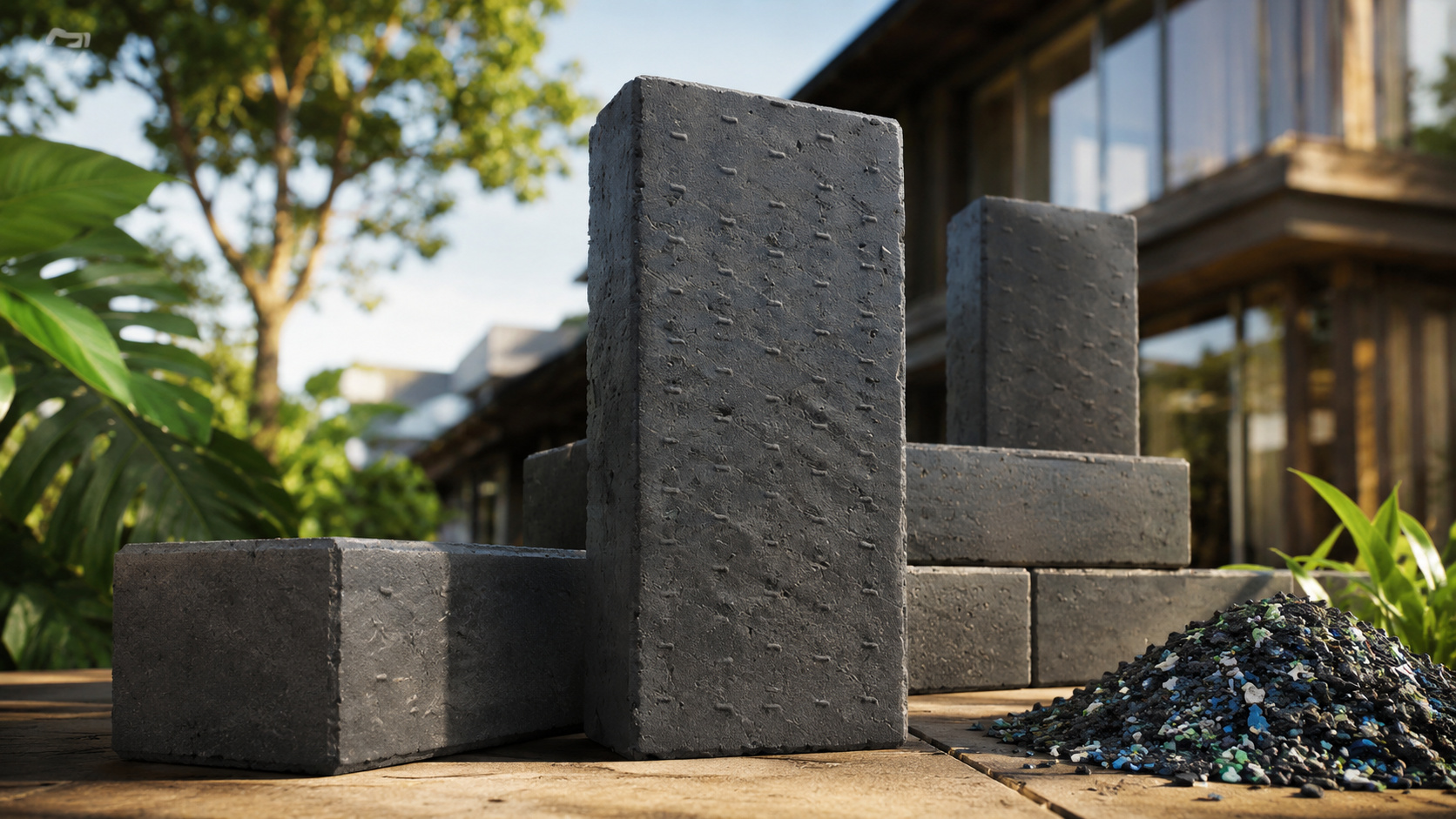



The choice of used material was not by chance, nor was it easy. Instead of new plastic, the duo decided to give a second chance to what had already been discarded, a waste that takes, on average, about 300 years to decompose. “Working with new plastic is simple because there are defined parameters, but used plastic requires more experimentation,” explained Méndez to the newspaper El Tiempo.
3 kg bricks that fit together like Lego
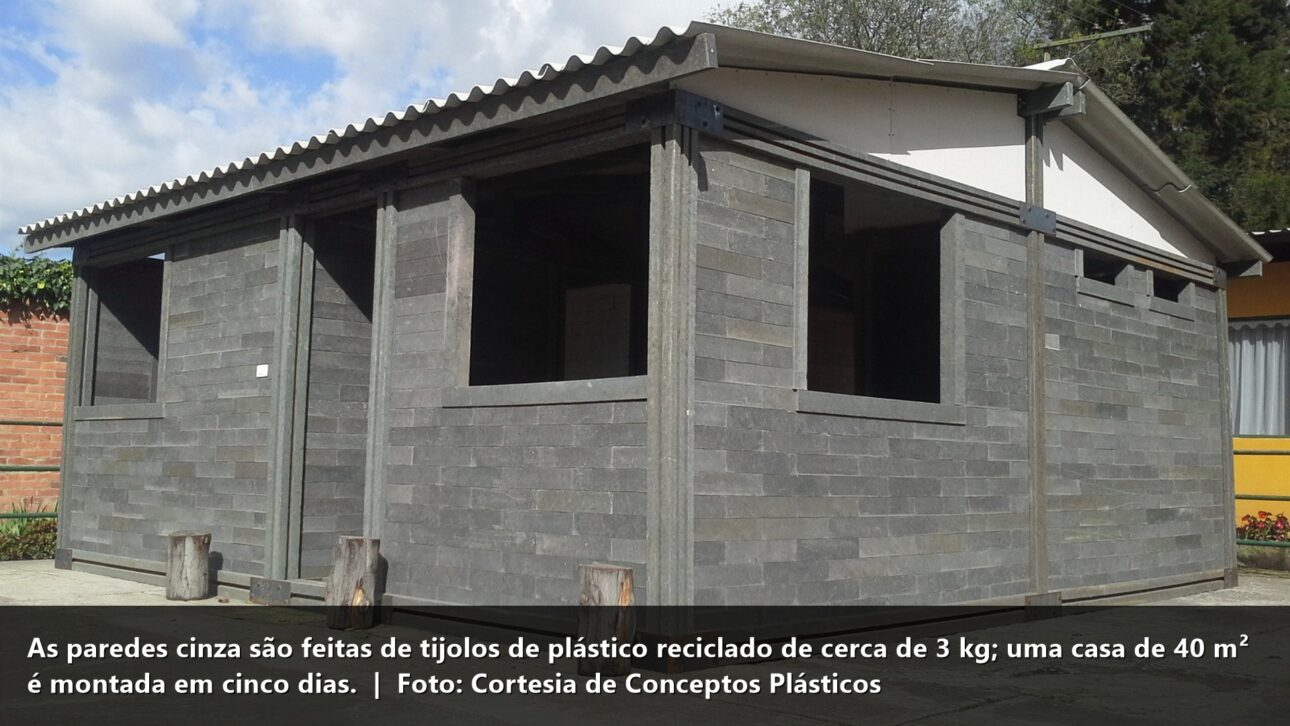
image: Conceptos Plásticos
The raw material comes from recyclers and factories that discard tons of plastic every day. Through an extrusion process, the material is melted and poured into a mold, creating a brick weighing about three kilograms, with dimensions similar to clay blocks. The difference appears in the use: fitted under pressure, it eliminates much of the traditional masonry.
The result is not only fast, it is resistant. Assembled, the bricks insulate heat, have additives that retard combustion, and are thermoacoustic and the earthquake resistance meets the standards required by Colombia, a country with high seismic activity. With this setup, four people can deliver a 40 m² house with two bedrooms, living room, dining room, bathroom, and kitchen in five days.
Guapi: 42 families, 28 days, and 200 tons of plastic
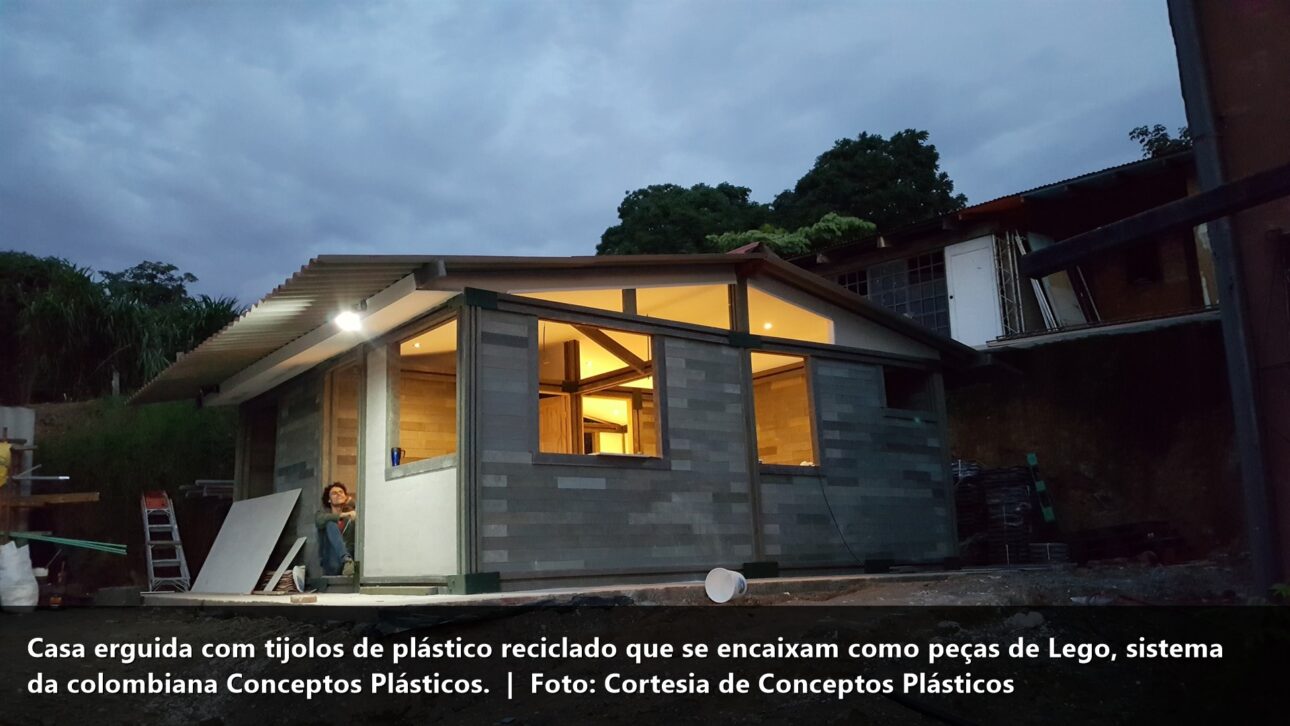
image: Conceptos Plásticos
The leap in recognition came from a social project. Despite being small with less than 15 employees, the company won a bid from the Norwegian Refugee Council (NRC) and built, in Guapi, in the southwest of the country, a set of temporary shelters for 42 families displaced by armed conflicts.
The numbers of the joint effort are impressive: the project was completed in 28 days, with the work of 15 people, recycling more than 200 tons of plastic. According to the NRC, the shelters have a design adapted to mobility and the hot climate, with a roof that improves ventilation and lighting. The complex also received electrical installations, bathrooms, and three community kitchens.
From trash to international award
The idea stopped being just local. In 2016, Conceptos Plásticos was chosen to represent Colombia in The Chivas Venture, a competition that funds social impact entrepreneurs, and won US$ 300,000 to expand production on a global scale after surpassing 26 other international initiatives.
The award gave the small company unprecedented visibility, both inside and outside the country. More than a boost in the cash register, it was the confirmation of a simple thesis: the plastic that chokes rivers and streets can become a roof for those who need it most, cheap, fast, and made to last.
Why the idea interests a country like Brazil
The Colombian model directly addresses a well-known issue in Brazil: the lack of decent and affordable housing. A system that utilizes an abundant waste, dispenses with much of the specialized labor, and delivers a house in a few days has obvious appeal in regions plagued by floods, landslides, and evictions, where rebuilding quickly is a matter of survival.
It’s not about importing a ready-made solution, but about looking at the principle behind it. Transforming what no one wants—the waste—into something everyone needs—shelter—is an equation that combines the environment and social justice in the same project. It is this dual gain, and not just the novelty of the “Lego brick,” that explains why the initiative has become a global reference.
From discarded plastic on the streets to a 40 m² house built in five days, Conceptos Plásticos has shown that pollution and housing can be on the same side of the equation. It’s innovation with a social address. Would you live in a house made of recycled plastic bricks, or do you still distrust a material that started as waste? Tell us here in the comments.