Portuguese
  Spanish





Government Proposal May Change The Driver License Acquisition Process And Drastically Reduce Costs For New Drivers Across The Country, Expanding Access To Driver’s License And Promoting Social Inclusion.
The process for obtaining the National Driver’s License (CNH) in Brazil could undergo a historical transformation if the project presented by the federal government in July 2025 advances.
The proposal, announced by the Ministry of Transport, provides for the elimination of the requirement for classes at driving schools, which could result in a reduction of up to 80% in the total cost of obtaining a driver’s license.
According to government estimates, the average cost for obtaining the CNH, currently around R$ 3,215.64, could drop to less than R$ 700, making it significantly more accessible for millions of Brazilians.
-
China to Revive $3.6 Billion Mega-Dam Project in Myanmar, Stalled Since 2011, Promising 6 GW Capacity and Completion in Eight Years

-
Foreign Company Wins Auction for Brazil’s First Immersed Tunnel, a $1.3 Billion Project with $14 Million Contract Under Federal Investigation

-
China’s Century Megaproject Wows the World: Massive Water Transfer Network Moves Water from Wet South to Arid North, with Ambitious Plans in the Tibetan Plateau Involving Giant Tunnels at Altitudes up to 4,000 Meters
-
Petrobras Launches Bold $12 Billion Plan to Build 42 Vessels and Create Over 5,000 Jobs




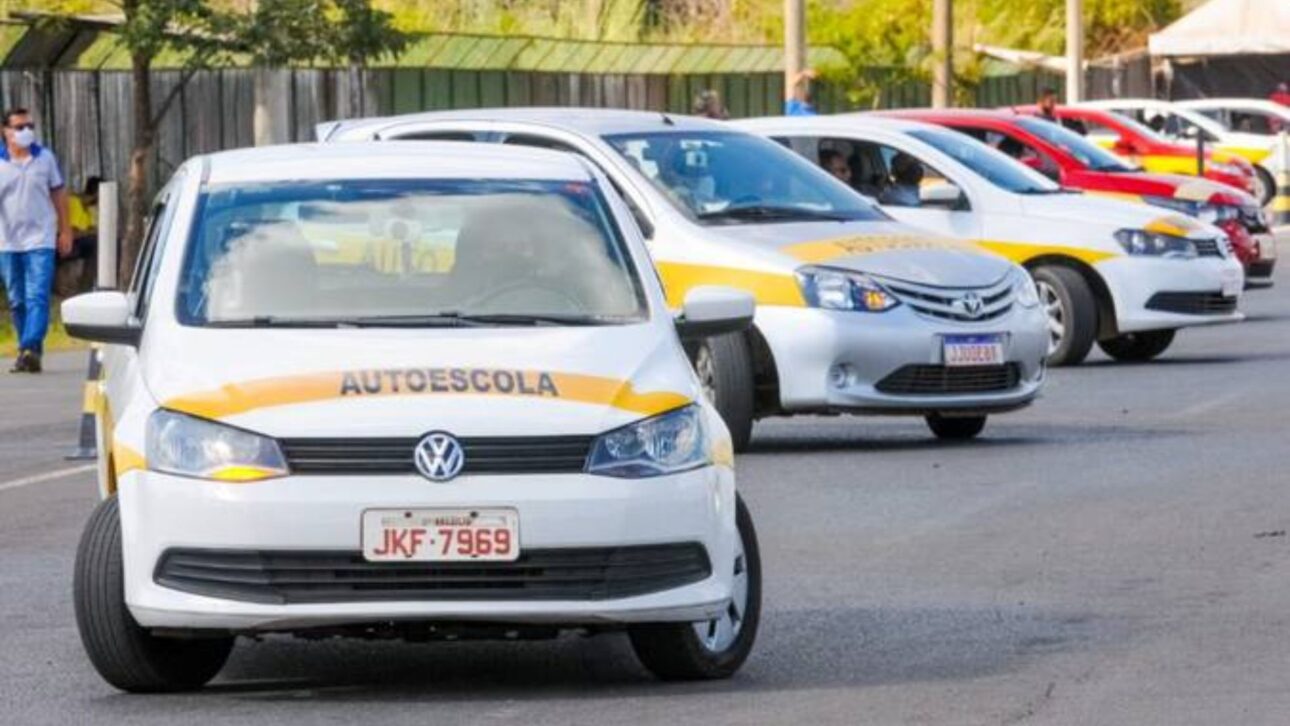
The Ministry of Transport, led by Renan Filho, detailed that about 77% of the total cost of the license is allocated to the services of driving schools, officially known as Driver Training Centers (CFCs).
The new model proposes that candidates can prepare independently, hiring accredited instructors individually or studying on their own, only being required to take the theoretical and practical exams currently mandated by the State Department of Traffic (Detran) and the National Traffic Secretariat (Senatran).
Democratization Of CNH And Impact For Drivers
The measure is inspired by international experiences, where countries such as the United States, Argentina, Mexico, the United Kingdom, Japan, Sweden, Estonia, Finland, and Australia already allow candidates to study on their own or with independent instructors, without the requirement to attend driving schools.
In these countries, it is sufficient to meet the minimum requirements, such as age and passing exams, to obtain the license.
According to official data, about 40 million Brazilians are of legal driving age but do not yet have their CNH, and the high cost is cited as one of the main barriers to access.
The project aims to democratize the CNH and facilitate the inclusion of young people and low-income workers in the job market, in addition to regularizing the situation of many drivers.
“The license is very expensive. I earn little and have other bills. If I could do it with my dad teaching me, it would help me a lot,” says Henrique Souza, a 22-year-old supermarket attendant in the Federal District, illustrating the difficulties faced by those who wish to obtain a license under the current model.
New License Model And Flexibility Of Access
The bill, which is still under internal discussion within the government and depends on approval from the Civil House, initially covers categories A (motorcycles) and B (passenger cars), but may be expanded to include professional drivers in future stages.
According to the Ministry of Transport, the goal is to create training alternatives, keeping driving schools as an option for those who prefer the traditional method.
“They will still be available for those who want to learn the traditional way. We are not abolishing driving schools but offering alternatives,” emphasized Minister Renan Filho.
To ensure the quality and safety of the process, the proposal stipulates that independent instructors be properly registered with state and national traffic agencies.
Additionally, passing the practical and theoretical exams, considered essential to assess the candidate’s preparedness, remains mandatory.
Road Safety And Debate On Driver Training
The discussion about changes in legislation occurs in a context of concern for road safety.
According to federal government data, 39% of car owners in Brazil drive without a license, a figure that reaches 45% among motorcyclists.
The Ministry of Transport emphasizes that the democratization of the CNH and easier access to licensing can contribute to the regularization of drivers and, consequently, to safety on the roads.
“Traffic education saves lives and should be treated as an absolute priority in any public policy related to mobility,” stated the State Department of Traffic (Detran) in a statement.
Expert Opinion And International Reference
Experts in road safety, however, express concern regarding the proposal.
Traffic educator Márcia Pontes, a national reference in the sector, warns that the change could compromise the already delicate safety situation on Brazilian streets and highways.
“The process of training drivers has flaws, yes, but it needs to be improved. (…) Implementing new measures is the government’s obligation. Now, cutting precisely the only training structure we have today is irresponsibility,” Márcia evaluated.
According to her, the Brazilian Traffic Code (CTB), in force since 1998, is considered one of the most modern in the world for prioritizing education as a central principle, and the problem lies in the execution, not the legislation itself.
While the government argues that the modernization of the rules could increase access and promote social inclusion, part of the sector emphasizes the need for caution.
“This is a catastrophic, disastrous measure, a shot in the foot, and the entire Brazilian population will pay the price,” concludes Márcia Pontes, reinforcing the importance of ensuring the quality of training for new drivers.
Countries Where CNH Is Already More Accessible
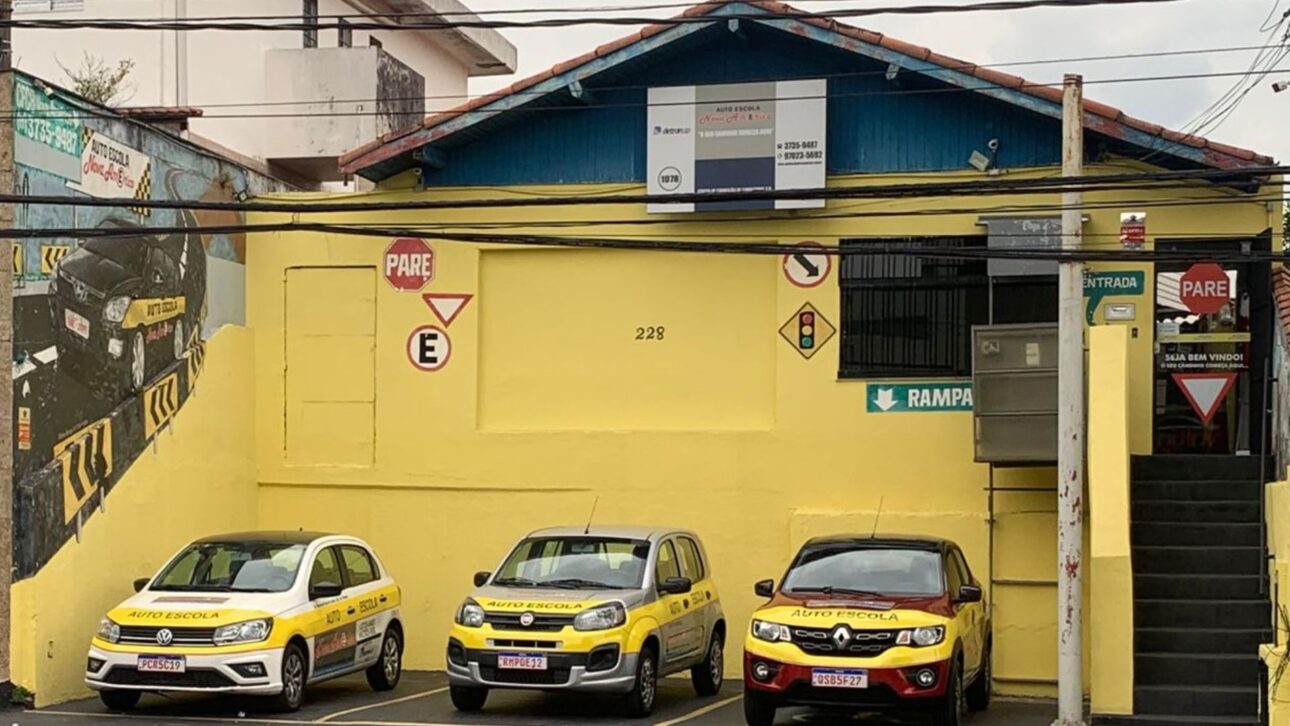
In several countries, the adoption of more flexible models for obtaining a driver’s license has been motivated by the goal of reducing costs, expanding access to licensing, and including groups traditionally excluded from the formal process.
In the United States, for example, most states only require passing exams.
In Argentina, the candidate takes the tests directly, without the need for formal classes.
Mexico, the United Kingdom, Japan, Sweden, Estonia, Finland, and Australia also allow self-study, as long as the evaluation criteria established by their traffic laws are met.
Perspectives And Next Steps Of The Project
The Brazilian government’s proposal remains under development, and there is no set date for submission to the National Congress.
The final text, along with the operational details of implementation, remains under analysis by the competent authorities.
Authorities and experts agree that the topic requires in-depth debate to balance inclusion, accessibility, and safety in Brazilian traffic.
In this scenario, the central discussion remains: will the democratization of the CNH and the reduction of costs truly expand access and bring benefits to society, or could it put the safety of drivers and pedestrians at risk?
Do you believe that the flexibility of the process to obtain a driver’s license will make Brazilian traffic more democratic or could it increase risks for the population?