





 Portuguese
  English
  Spanish
  4 min of reading
  0 comments


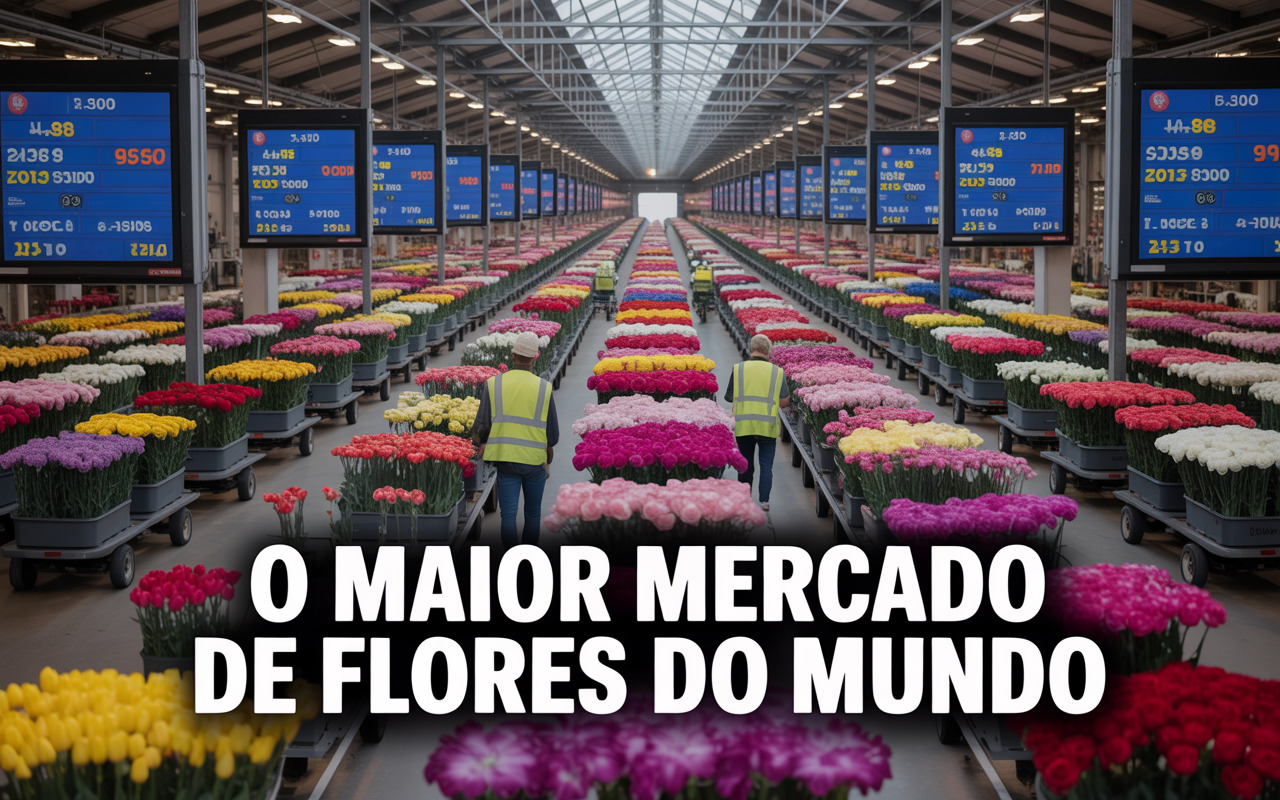
With 518,000 m² and daily auctions of 20 million flowers, the Aalsmeer Flower Auction is the largest horizontal building in the world and the heart of the global flower trade.
In the heart of the Netherlands, in a city near Amsterdam, there exists a building that few know, but it drives one of the largest and most silent economic empires on the planet. It is the Aalsmeer Flower Auction, the largest flower market in the world, a gigantic structure covering 518,000 square meters of built area, equivalent to about 70 professional football fields. Inside this space, the air is permanently fragrant, the climate is precisely controlled, and time is measured in seconds, as each flower has a designated destination even before it wilts.
The Engineering Behind a City Covered in Flowers
The Aalsmeer building is more than a warehouse; it is a living organism that operates 24 hours a day, 7 days a week. Its horizontal design was conceived to allow the constant flow of trucks, electric carts, and forklifts transporting around 20 million flowers and plants every day.
The volume of transactions is so high that, according to data from Royal FloraHolland — the cooperative that manages the complex, the location handles more than 12 billion flowers per year, exported to all continents.
-
The world’s smartest ring is now 40% smaller, measures blood pressure signals during sleep, monitors over 50 health metrics, has a battery life of up to 9 days, and features enhanced sensors for more accurate readings on any skin tone.

-
Endless Brazilian: Blumenau resident turns 107 with a lucid memory, autonomy, and more than 100 direct descendants; the secret to longevity involves homemade food, a peaceful routine in the countryside, and simple habits maintained for decades.
-
The man who saw his fortune increase by $35.8 billion in a single day surpassed Mark Zuckerberg and took the sixth position among the richest in the world.

-
Luciano Hang, owner of Havan, buys over 1,000 hot dogs, distributes them to employees, and turns a century-old tradition that is expected to sell 5,000 snacks into one of the most talked-about events of the month in Brusque (SC).



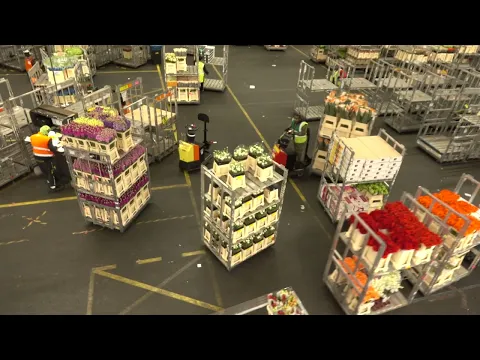

With 518,000 m² of ground area, the Aalsmeer Flower Auction holds the title of largest building in the world in horizontal extent, surpassing factories, ports, and logistics centers. The roof, made of steel and aluminum, has a modular structure that allows for temperature and ventilation adjustments, while the floor was designed with a millimetric slope to facilitate the drainage of water and organic waste.
The Logistics Heart of the Global Flower Trade
Every day, around 4 a.m., the building comes to life. Thousands of automated carts begin to circulate through the internal corridors, transporting flowers from countries such as Kenya, Ethiopia, Colombia, and Israel.
Next, they undergo one of the most fascinating processes in the world: the reverse auction, a system where the price starts high and drops until a buyer — be it a florist, exporter, or supermarket chain, presses the button and closes the deal.
These auctions are held in rooms with high-resolution digital screens, displaying information about each lot in real time: variety, country of origin, quantity, quality, and temperature. The pace is dizzying — it is estimated that each transaction lasts less than 3 seconds, and the entire auction handles values exceeding US$ 10 million a day.
The system is so efficient that, after the sale, products automatically follow conveyor belts and internal corridors that stretch for kilometers, until they reach the docks where trucks await. In a matter of hours, a flower grown in the heart of Africa can be placed in a bouquet in Paris, London, or New York.
Despite being an industrial structure, the Aalsmeer Flower Auction also carries a symbolic dimension. In the heart of the complex, a minimalist glass chapel was erected, used for events and weddings — a poetic contrast to the frantic pace of commerce.
The chapel is surrounded by a climate-controlled internal garden and represents the connection between nature, technology, and tradition that defines the Dutch flower industry.
Economic and Environmental Impact
The flower market is one of the pillars of the Dutch economy. According to Royal FloraHolland, the sector employs more than 250,000 people and accounts for about 5% of the country’s agricultural exports.
The Aalsmeer Flower Auction is the epicenter of this chain, responsible for about 60% of the global volume of cut flowers.

The Dutch government and the cooperative have invested in green technology to reduce carbon emissions, implementing internal electric transport systems and solar energy on the rooftops of the complex.
The goal is to make the market carbon neutral by 2030, maintaining the centuries-old tradition of exporting flowers sustainably.
An Invisible Colossus That Fragrances the Planet
Few buildings in the world have such a grand and at the same time silent operation. There are no mass visitors, nor glass skyscrapers. The Aalsmeer Flower Auction impresses precisely with its discretion, a megaproject that, without drawing attention, sets the pace of a trade that moves billions and spreads beauty around the world.
While technology factories and skyscrapers symbolize progress in steel and concrete, this Dutch giant shows that power can also lie in ephemeral things.
Under its metal roof and natural light, flowers travel kilometers before blooming in someone’s hands, and the sound of the auction, marked by successive clicks, is the heartbeat of one of the most delicate and valuable industries on the planet.






-

1 person reacted to this.