Portuguese
  Spanish


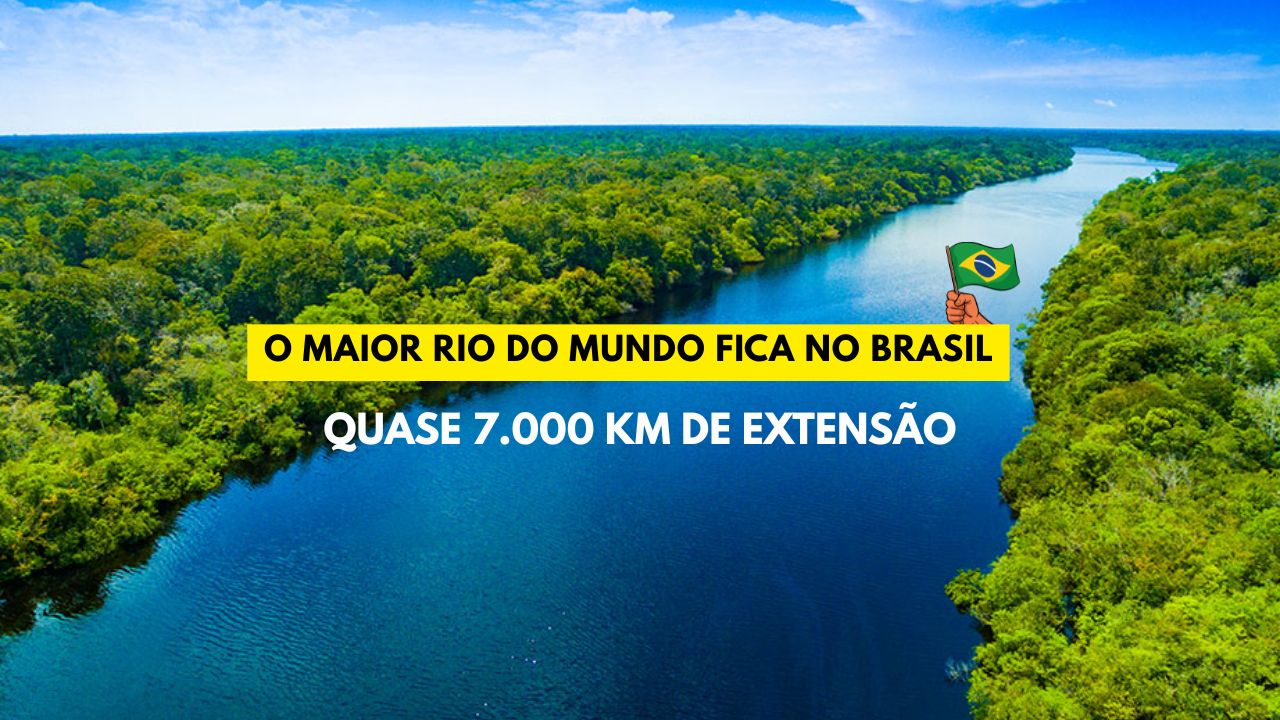

Discover Why the Amazon River Is Considered the Largest River in the World, Its Length, Volume, Biodiversity, and Importance to the Planet.
The Amazon River is considered the largest river in the world, according to studies conducted by institutions such as the National Institute for Space Research (Inpe), and it connects the Andes Mountains in Peru to its mouth in the Atlantic Ocean, in northern Brazil.
It spans approximately 6,992 km, crossing several countries in South America and standing out not only for its length but also for its colossal flow — making it a vital force for the ecosystem and humanity.
This exceptional course and volume explain why the Amazon River attracts global attention.
-
Award-Winning Korean Electric Scooter Concept Folds to Briefcase Size, Eases Transport Challenges

-
YouTuber Discovers Surreal Collection in 400-Year-Old Italian Fortress Near Florence: 419 Anvils, Giant Walruses, Ancient Church, and WWII Tunnels

-
Creative Uses for Toilet Paper Rolls That Will Change Your Perspective
-
Crab Trapped in Plastic Bottle for 62 Days Near Okinawa Highlights Little-Known Impact of Marine Pollution on Small Animals


Amazon River: Length and Cartographic Disputes
The Amazon River originates in the Peruvian Andes and flows through Peru, Colombia, and Brazil until it empties into the state of Pará, on Marajó Island.
Studies by Inpe indicate a length of 6,992 km for the Amazon River, placing it ahead of the Nile River (approximately 6,852 km) in recent measurements.
Still, there is some controversy regarding the source or course deviation, and measurements vary depending on the criteria used.
Thus, while many attribute the title of the largest river in the world to the Amazon River, the technical debate remains open.
Impressive Water Volume and Flow
More impressive than its length may be the volume of water that the river transports.
The Amazon River has, according to data, an average flow of 210,000 m³/s (equivalent to 210,000 liters per second) of freshwater discharged into the Atlantic.
This discharge represents about 20% of all freshwater that reaches the oceans in the world, reinforcing its status as the largest river in the world in terms of flow.
Consequently, the salinity of the Atlantic changes up to 150 km offshore due to the influence of this flow.
The Largest Watershed and Its Tributaries
The Amazon River basin is considered the largest watershed in the world, covering about 7 million km² and encompassing up to eight South American countries.
There are about 1,100 tributaries, including major rivers such as the Madeira River, the Negro River, and the Japurá River, which enhances the complexity and importance of the whole.
Biodiversity and Natural Phenomena of the Amazon River
Within the Amazon rainforest, the largest river in the world hosts one of the richest biodiversities on the planet.
For example, it is estimated that over 2,500 species of fish navigate its tributaries.
Furthermore, the phenomenon of “Pororoca” — waves of 3 to 6 meters high that form when the tides of the Atlantic meet the river — showcases the unique power of this watercourse.
Why Is the Amazon River So Important?
As the largest river in the world in several senses, the Amazon River plays fundamental roles: it regulates the climate, supplies ecosystems, transports nutrients and sediments, and sustains riverside communities.
It is also vital for global freshwater, for Amazonian fauna and flora, and for carbon absorption — although the latter aspect depends on the conservation of the region.
Moreover, due to its size and volume, the Amazon River is a symbol of natural wealth and urgency in environmental protection.
Challenges and Conservation
Despite its magnitude, the largest river in the world faces threats: deforestation, pollution, climate change, and pressures from resource exploitation.
The Amazon plain over which the river flows is characterized by almost flat terrain and low altitudes (less than 100 m), making it vulnerable to changes in the hydrological regime.
On the other hand, its relative inaccessibility in some sections still provides a measure of protection, but this changes with advances in infrastructure and human activity.
Therefore, stating that the Amazon River is the largest river in the world is not just a geographical curiosity: it is recognizing a vital system for the planet.
Its length, volume, watershed, biodiversity, and environmental impact position it as a central piece of terrestrial nature.
With information from the site Gazeta SP