






 Portuguese
  Spanish


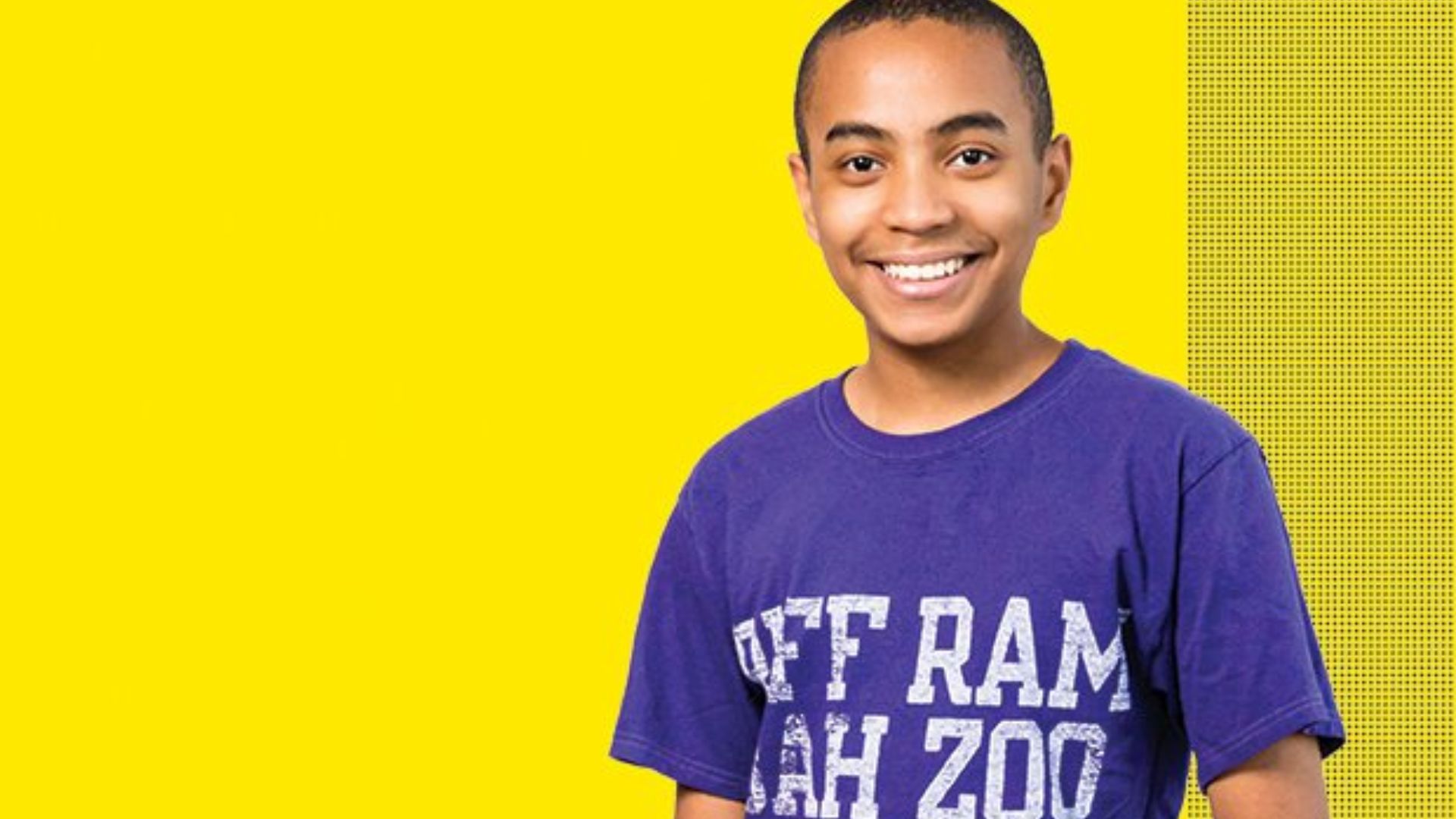


At 21 Years Old, Carson Huey-You Became the Youngest PhD in TCU History and Completed a Rare Academic Path While Advancing in Theoretical Quantum Physics.
At 21 years old, the American Carson Huey-You completed his PhD in Physics at Texas Christian University (TCU) in May 2024, becoming the youngest PhD in the institution’s history.
The university itself notes that he started attending campus at the age of 10, formally enrolled in the Physics undergraduate program at 11, graduated at 14, completed his master’s at 17, and returned to the graduation ceremony in 2024 as the youngest doctor ever graduated from TCU.
Accelerated Learning Childhood
Carson was born in 2002 and, according to reports from his mother, Claretta Kimp, showed an unusual interest in reading and math from early childhood.
-
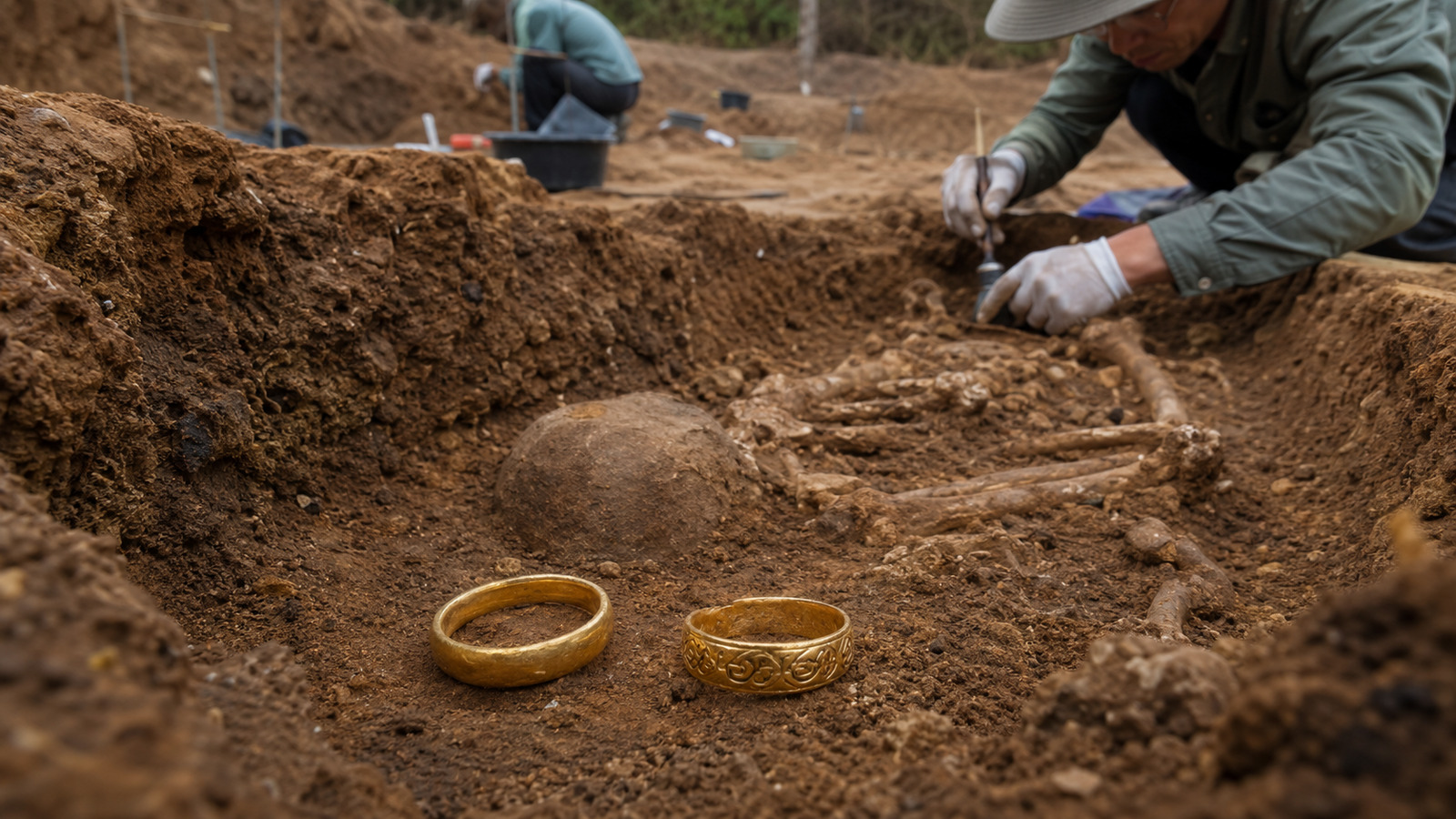
2,000-Year-Old Gold Rings Found with Human Bones in Thailand Reveal Rare Burial and Feature Ancient Indian Inscription

-
Lenovo Unveils Legion Y700 Tablet with RGB Backlighting, 5G, and SIM Card Support

-
World’s First Nuclear Hydrogen Unit Begins Operation: Copper-Chlorine Technology with Initial Capacity of 150 Liters per Hour, Aiming for 3,000 Liters per Hour
-
Mechanics Retrofit Old Fiat Uno with BYD Electric Motor for Silent, Low-Voltage Operation Reaching Nearly 60 km/h in Home Test


Biographical sources and news articles indicate that he was reading whole chapter books around the age of two and asking to learn calculus by around three.
With a background in education, his mother decided to homeschool him in his early years.
Later, the two brothers — Carson and the younger, Cannan — began attending a private school in Texas.

Records indicate that Carson graduated from high school at 10 years old, as one of the top students in his class, with a perfect GPA and high scores on standardized tests like the SAT, a gateway to American universities.
Early University Entry
The transition to higher education came soon after.
In 2013, following an evaluation by TCU and close monitoring by the Physics department, Carson was accepted as a student at the university at the age of 11 years, becoming the youngest student in the institution’s history.
TCU notes that in May 2017, he graduated in Physics at 14, with full-time studies and a double major in Mandarin and Mathematics.
Official documents and local news articles describe this achievement as the youngest completion of a university course ever recorded in the state of Texas.
After graduation, Carson remained at the same institution.
In December 2019, he obtained his master’s in Physics at 17 years old.
He then advanced to the PhD, under the guidance of Professor Magnus Rittby, a theoretical physics specialist who had been mentoring him since his early years in university.
In statements released by TCU, the student reports that he “grew up on campus” and that his advisor became a constant mentor and even a kind of father figure in the academic environment.
Eleven years after stepping onto campus for the first time as a freshman, he completed the cycle that began in early adolescence.

In May 2024, he received his doctorate in Physics at 21 years old, being officially recognized by the university as the youngest PhD in its history.
Path to Theoretical Quantum Physics
While still an undergraduate, Carson became involved in the field that guides his work today: theoretical quantum physics.
Courses at the university and profiles published in the media describe that, instead of spending the day in laboratories, he focuses much of his work on equations and computer code, analyzing the behavior of systems at molecular, atomic, and subatomic scales.
In practice, the focus is on creating mathematical and computational models capable of simulating situations where classical intuition fails.
In institutional texts, TCU emphasizes that many problems in quantum mechanics do not have known exact solutions, which is why theoretical physicists resort to approximation methods, numerical algorithms, and advanced calculation techniques to estimate results with high precision.
This is precisely where Carson’s work fits in: transforming quantum phenomena into equations and software instructions that allow for the description of systems that exceed traditional paper and pencil.
In records from 2017, when he was preparing to receive his undergraduate diploma, TV reports already showed him in front of a whiteboard filled with symbols of quantum mechanics.
At the time, he claimed that he intended to pursue a career precisely in this field, considering it abstract, challenging, and highly dependent on mathematical language, which was later confirmed by the path he chose for his PhD.

Personal Life and Interests Beyond Science
Despite his atypical curriculum, Carson’s daily life is not limited to quantum physics.
Profiles in magazines and digital encyclopedias describe common interests for someone in their 20s, such as video games like Minecraft, chess games, swimming, and superhero movie marathons.
He also plays the piano, enjoys fantasy series and franchises, and shares a home with his brother and a dog named Klaus, named after the German physicist Klaus von Klitzing, a Nobel laureate.
The younger brother, Cannan Huey-You, followed a similar path.
Reports indicate that he entered TCU early to study areas related to astrophysics and engineering, also aiming to work in space sciences.
In various interviews, Cannan is described as an aspiring astronaut, reinforcing the image of a family where interest in science and math is encouraged from an early age.
Emotional Support and Safe Academic Environment
Although the figures attract attention, TCU faculty and staff often emphasize another aspect of Carson’s journey: the importance of preserving the emotional health of students with high abilities.
In interviews and statements released by the university, his mother, Claretta Kimp, states that the campus functioned as a kind of “village” of support, with teachers, staff, and peers helping to balance the intense study pace with moments of rest and socialization.
Carson himself, in institutional texts, says he is grateful to have found an environment where he felt safe and welcomed throughout the journey, reinforcing that he spent “half his life” at TCU.

The constant presence of attentive adults focused on social adaptation, not just academic performance, appears as a central point in the official descriptions of his trajectory.
Future in Research and Post-Doctorate Phase
With his thesis defended and the title confirmed, Carson entered a phase of transition.
Public records and biographical profiles indicate that after graduating in 2024, he planned to take a short break to rest before resuming the search for a research position, focusing on theoretical quantum physics and developing computational models for complex problems at molecular and subatomic scales.
As of now, however, widely accessible sources do not detail the specific topic of his thesis nor the exact position he held after his doctorate.
Recent biographical compilations mention only his intention to continue in theoretical physics research, without official indication in public documents of a permanent association with universities or research centers since completing his PhD.
Educational Challenges and Gifted Students
Cases like Carson Huey-You’s bring to light recurring dilemmas in educational systems that receive children and adolescents with performance well above average.
Advancing stages, compressing curricula, or maintaining regular progression are issues that arise frequently.
Diverse experts argue that the challenge is not limited to accelerating content but also to building networks of emotional and social support similar to those described by the student’s family and TCU.


Crianças gênias, super -dotadas,devem ser acompanhadas, integralmente, na sua integralidade, por equipes multidisciplinares, nas escolas para desenvolver esses seres humanos na sua plenitude, totalmente não impedindo o desenvolvimento neuropsicologico, intelectual, cognitivo, motor, para que eles se tornem verdadeiros gênios da ciência humana?!