






 Portuguese
  Spanish


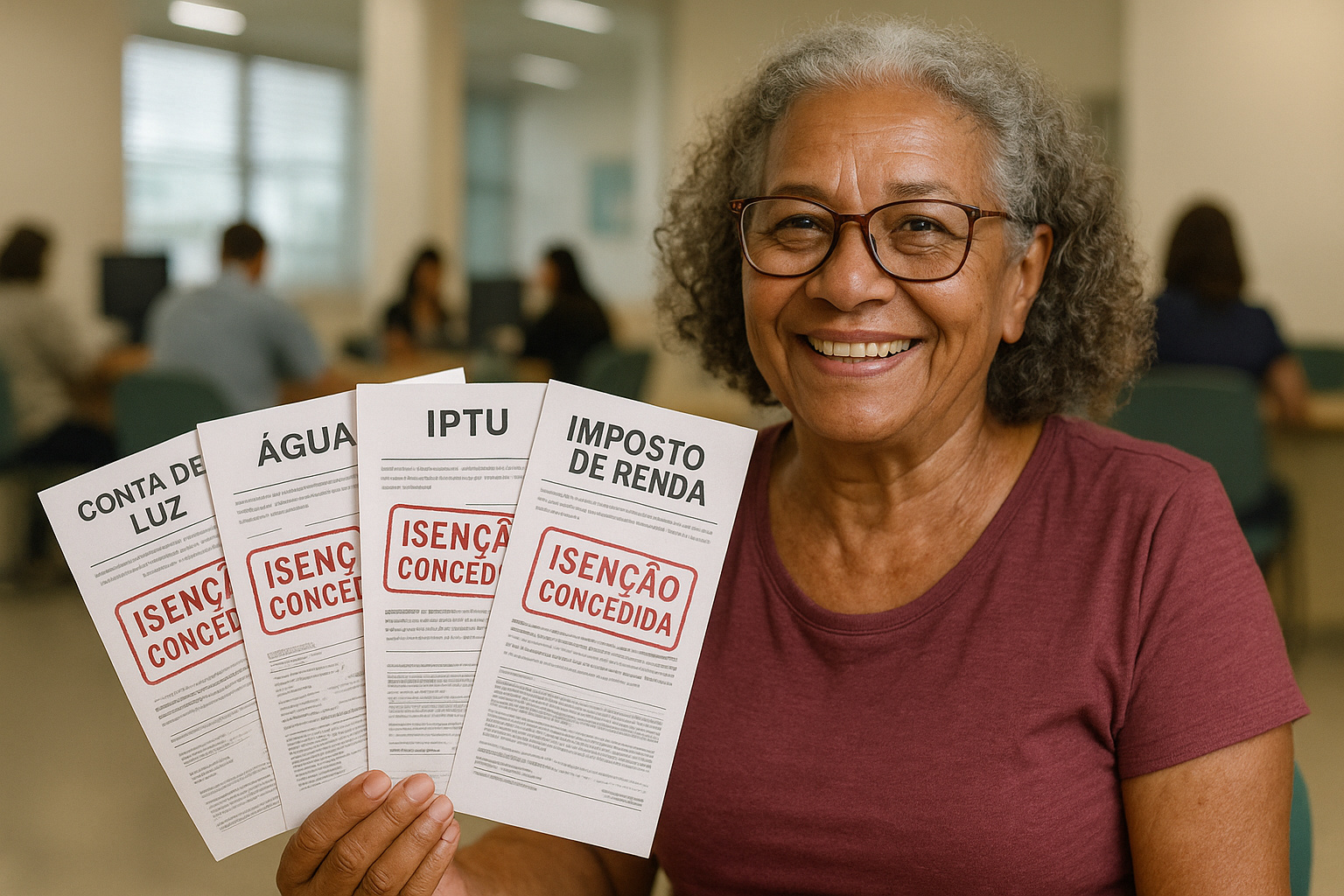


Brazilians Over 60 Can Now Guarantee Exemption on Electricity Bills, Property Tax, and Even Income Tax and Water. See Who Is Eligible, How to Request It, and What the New Rules Are That Ease the Burden on Seniors.
The monthly expenses of many Brazilians over 60 can be heavy, especially when retirement does not keep up with the cost of living. In recent years, however, different programs and changes in the law have opened up opportunities for this segment of the population to find some relief. Exemptions from electricity bills, property tax, and even income tax and water do exist, but they depend on clear rules and actions that the seniors themselves must take.
The combination of federal legislation, municipal regulations, and senior protection policies has been opening doors to benefits that were previously limited to much smaller groups.
None of this happens automatically. And that is precisely why understanding every detail has become a matter of rights and planning.
-
Corn ethanol attracts R$ 23 billion in 21 new plants and prepares for a nearly 50% jump in Brazilian production by 2027, even with high interest rates.

-
A newly opened terminal in the middle of the Amazon has begun transporting soy and corn through Amapá, eyeing the queue of ships that is congesting the ports in the South.
-
Tesla injected an additional $250 million into the German factory, doubled the battery cell target, and opened its own production line for startups.
-
A 180-meter ship with a deck the size of a football field was christened to carry 25,000 tons of giant energy modules around the world.


Who Is Over 60 Can Pay Less on Electricity Bills
The first opportunity for savings appears in the electricity bill. Many people do not know, but the Social Tariff Program for Electricity (TSEE), created by the Federal Government and administered by ANEEL, guarantees significant discounts for low-income families. The complete rules can be checked directly on the agency’s website.
Within the program, Brazilians over 60 can receive the discount if they are registered in the Single Registry (CadÚnico) and meet income and consumption limits. For seniors aged 65 and older who receive the Continuous Cash Benefit (BPC), inclusion in the benefit is automatic. No additional request is needed — just keep the CadÚnico updated, which can be done at the CRAS in each municipality.
Additionally, registered indigenous and quilombola families in the CadÚnico have an even greater advantage: total exemption on monthly consumption of up to 50 kWh and a 40% discount for consumption between 51 kWh and 100 kWh. These figures are confirmed by ANEEL itself and are part of the official structure of the Social Tariff.
Experts in the electricity sector emphasize that the benefit particularly helps seniors living alone or in homes with low consumption.
According to a statement from the Ministry of Mines and Energy, “the Social Tariff represents a tool for protection and ensuring access to the essential energy service for those who need it the most.”
Exemption from Property Tax Depends on Each Municipality’s Laws
Unlike the electricity bill, property tax does not follow a single rule throughout the country. It is a municipal tax, and consequently, each city establishes its own regulations. Most municipalities offer exemptions for seniors, but require some basic requirements:
- be over 60 years old
- own a single property
- reside at the address that will benefit
- meet the locally established income limit
- request the exemption within the deadline set by the city hall
Examples of these rules can be seen in cities such as São Paulo and Rio de Janeiro, where exemptions are granted to retired seniors who use the property as their main residence and prove low income.
In these municipalities, thousands of people over 60 no longer pay property tax. The general guidance is to check the official website of your city’s city hall.
To obtain the benefit, it is usually necessary to present ID, CPF, proof of residence, proof of income, and, in some places, the property value certificate issued by the municipality itself. Nothing is done automatically, and failing to apply means continuing to pay the tax even when eligible for exemption.
Income Tax: When Seniors Can Be Exempt
When it comes to income tax, the situation is more complex. Under current law, there is exemption for amounts received as retirement income up to the limit established by the Federal Revenue Service.
This means that Brazilians over 60 do not stop paying income tax simply due to their age.
The determining factor is annual income. Additionally, seniors with serious illnesses listed in the legislation, such as cancer, severe heart disease, and Parkinson’s disease — may also be exempt, according to Law 7.713/1988.
There are also projects underway that seek to expand the benefit. One of them is PL 4.198/2019, which proposes reducing the exemption age from 65 to 60 years for retirement income up to the INSS ceiling.
Another, PL 5965/2023, expands the exemption to people over 75, as long as they do not exceed the limit of pension income. The progress of these projects can be followed on the Chamber’s portal.
Today, those who receive up to the exemption limit or are retired due to a severe illness may be entirely exempt from paying income tax. It is necessary to prove the condition and formally request it from the Federal Revenue Service.
Even those who are exempt must file a return. The Federal Revenue Service makes it clear that “the tax exemption does not eliminate the obligation to declare when the taxpayer meets the criteria for filing.”
Water Bill: Exemption Depends on Each Municipality’s Laws
The exemption can also extend to the water bill, depending on the rules of each municipality and the company responsible for local supply.
Although there is no federal law that guarantees this benefit automatically for all seniors, many cities already offer social tariffs or partial exemptions for people over 60 or 65 years who have low income, own a single property, and have reduced consumption.
In some areas, the request must be made directly to the sanitation company, upon presentation of documents proving age, income, and fixed residence.
This means that, just as with property tax and electricity bills, seniors can indeed stop paying the water bill, as long as they meet the criteria established locally.
How to Ensure Each Right and Avoid Losing Benefits
For the electricity bill, the first step is to keep the CadÚnico updated and check if the indication “Social Tariff” appears on the bill. If absent, the senior should seek the nearest CRAS.
For the property tax, it is essential to consult local regulations, verify deadlines, and gather the necessary documentation before approaching the city hall.
Exemption on the water bill: In some regions, the request must be made directly to the sanitation company, upon presentation of documents proving age, income, and fixed residence.
As for the income tax, it is advisable to monitor monthly income, keep track of potential changes in the law, and file the return even when there is no tax to pay.
In many cases, accountants and public defenders recommend reviewing income and pension benefits to avoid losing exemptions provided by law.
What many Brazilians over 60 do not know is that, by adding up all available programs, thousands already achieve real exemptions from the three main costs mentioned.
The combination of social tariff, municipal property tax rules, and specific income tax legislation can represent significant savings at the end of the month and ease essential expenses.
But none of this happens magically. It requires attention, information, and monitoring of the rules to ensure that each right is guaranteed.
If this content helped you or someone in your family, leave a comment or share the post; your participation helps others understand and take advantage of their rights.





Obrigada pelas informações. Foram de grande ajuda.
POXA EPARA UM HOMEN,QYE MORAR SOZINHO, EM CASA ALUGADA,PAGO ALUGUEL,LUZ,ÁGUA, GÁS IPTU, MESMO TENDO 75ANOS
Pra ter esse direito o velhinho tem que ser basicamente um mendingo… Kkk já um político tem um monte de regalias e ganha milhares por mês… Kk esse Brasil não é para qualquer um… Kkk