






 Portuguese
  Spanish


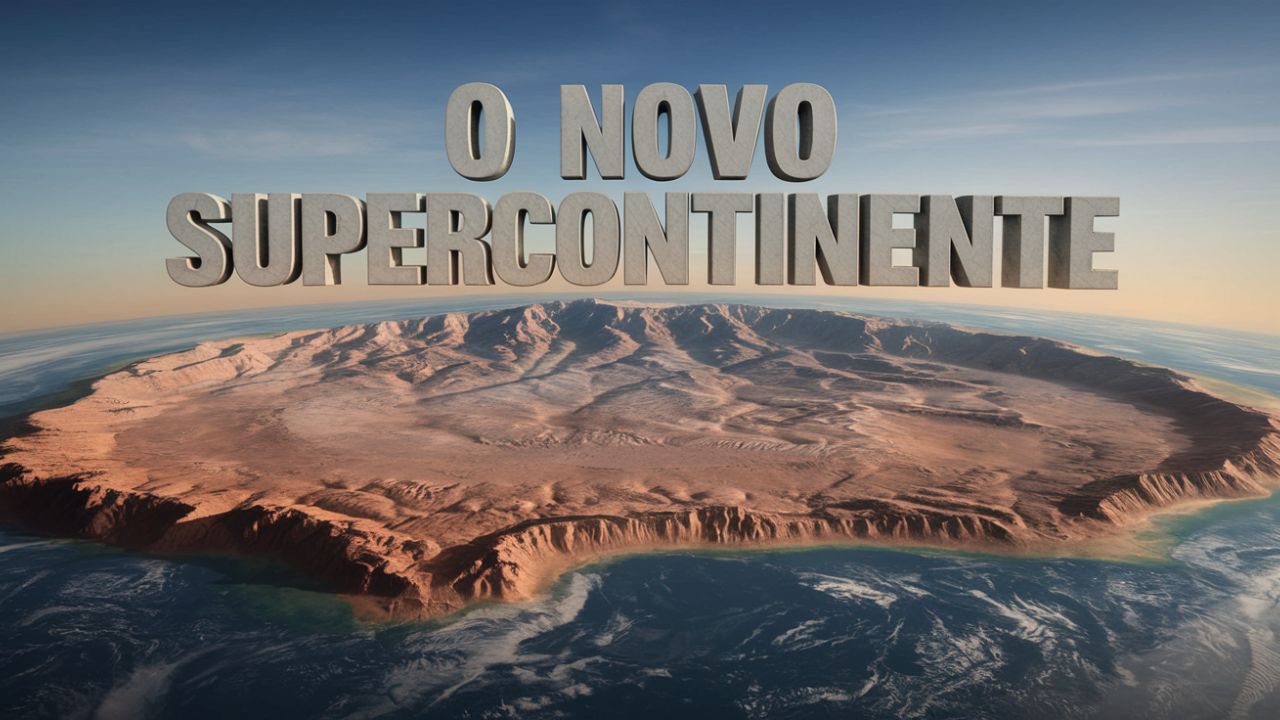


Expected to emerge in 200 to 300 million years, the new supercontinent Amasia will be formed by the collision of the Americas, Asia, and Australia, with the complete closure of the Pacific Ocean, drastically changing the climate, sea levels, and global biodiversity.
A world where the continents we know today form a single gigantic landmass. This scenario, predicted to occur in 200 million years, will be marked by the disappearance of the Pacific Ocean and the emergence of a new supercontinent called Amasia. But how did we come to this conclusion? And what does that mean for the future of Earth?
Since humanity began studying the movement of tectonic plates, we have known that the continents are in constant motion. Now, scientists are modeling the future of Earth’s geography with supercomputers and revealing changes that will reshape the planet.
The Disappearance of the Pacific Ocean

The Pacific Ocean, the largest and oldest on the planet, is decreasing in size due to the constant movement of tectonic plates. This process is driven by the cooling of the Earth, which causes the thinning of oceanic plates. The result? The Pacific shrinks a few centimeters each year, bringing the Americas closer to Asia and Australia.
-
China Develops Custom 140-Ton Electric Mining Truck with 770 kWh Swappable Battery, Deploys 290 Units in Xinjiang’s Largest Zinc Mine

-
Meta to Launch Arena, a New Prediction App Targeting 3.56 Billion Users, Competing with Polymarket and Kalshi

-
Scientist Challenges Famous Human Evolution Theory, Argues Homo Sapiens Evolved Gradually Over Thousands of Years
-
15-Year-Old American Builds Ocean Generator with PVC Pipe and 3D-Printed Propeller for $12, Wins National Prize, Presents at White House, and Makes Forbes 30 Under 30 List




With the gradual closure of the Pacific, we will see a dramatic change in global geography. This process has happened before, with supercontinents like Pangaea and Rodinia. Now, it’s Amasia’s turn to transform the planet.
The Emergence of Amasia
Earth has gone through a cycle of formation and separation of supercontinents over billions of years, occurring approximately every 600 million years. The formation of Amasia is another chapter in this cycle, a reminder of how our planet is in constant evolution.
Interestingly, Australia will be a key piece in the geographical puzzle of Amasia. Researchers believe it will collide first with Asia, serving as a bridge between the Americas and the rest of the continents.
Impacts of Amasia on the Planet
The formation of Amasia will bring radical changes to the global climate. Sea levels are expected to drop, and the vast interior of the supercontinent will become arid and subject to extreme temperatures. This could completely transform the climate patterns we know today.
The unique habitats of the current continents will merge or disappear, challenging species to adapt or face extinction. This could mean the end of entire ecosystems, but also the evolution of new ones.
Although Amasia is the most accepted theory, other ideas, such as Pangaea Proxima, suggest different configurations for the future of the Earth. Regardless of the shape, the inevitability of these changes lies in the continuous movement of tectonic plates.






Gostei i
Informação inútil, a coisa vai acontecer, se acontecer a 200 milhões de anos, nem meu po vai estar por aqui, poderiam gastar o tempo de pesquisa em coisas mais úteis, tipo a movimentação das aguas no planeta, desenvolver equipamentos que retirem nuvens carregadas de chuva de um lugar ja saturado de água e mandar pra outro que ta em falta, no Brasil fazer um aqueduto norte sul e leste oeste que pegue o excesso de agua no sul e envie pro centro oeste no periodo de seca….
Muito fraca a matéria, não disse para onde irá a água do Oceano Pacífico.