





 Portuguese
  English
  Spanish
  5 min of reading
  0 comments


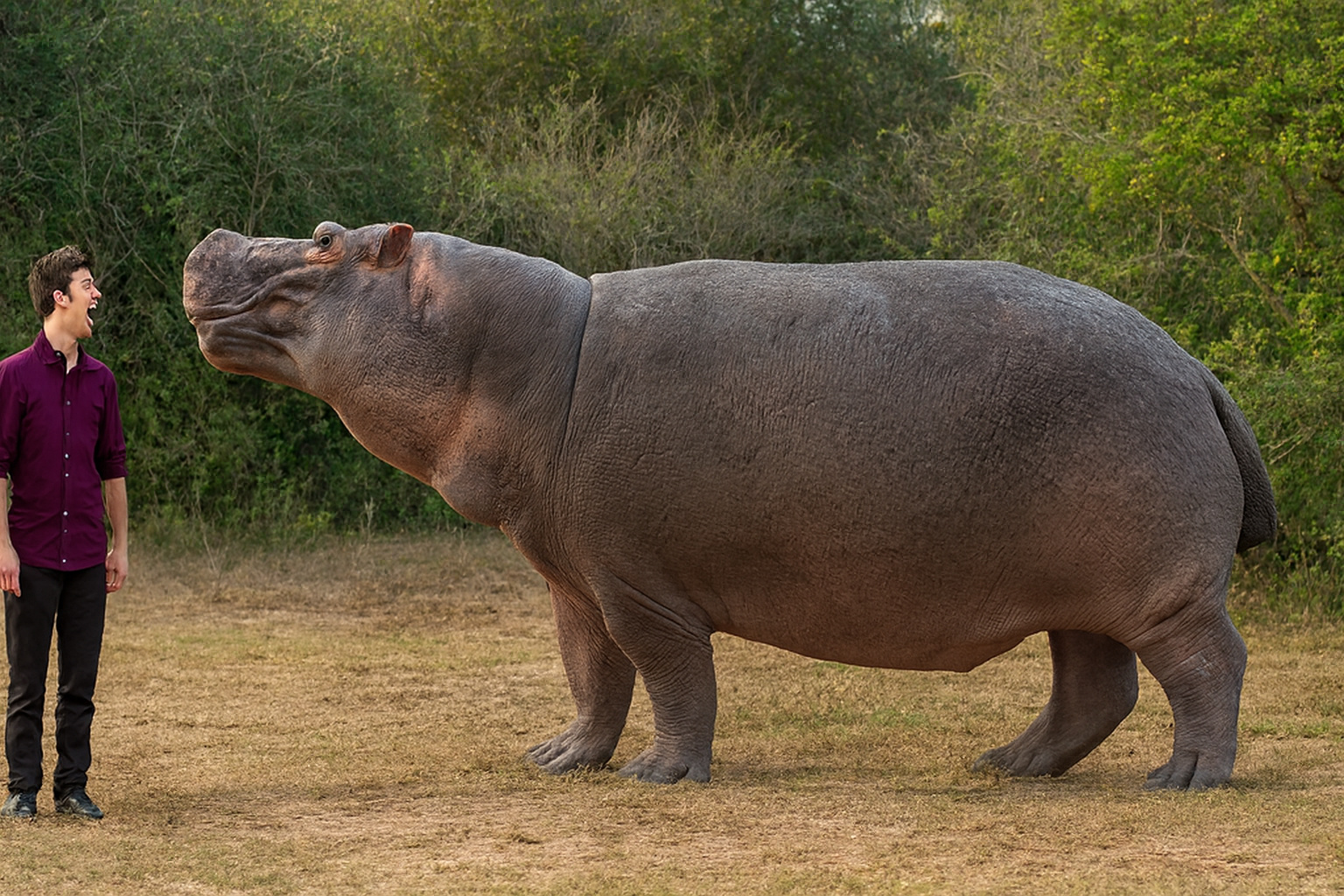
Weighing about 4.5 tons and nearly 5 meters long, the largest hippopotamus ever recorded revealed the extreme limits of size and strength of one of the most dangerous animals in Africa.
When talking about giant animals, elephants and rhinoceroses often dominate the popular imagination. However, a specific hippopotamus recorded in the 20th century showed that this apparently “short and stocky” animal can reach dimensions that challenge any modern reference. With an estimated weight of about 4.5 tons and a length close to 5 meters, this individual entered history as the largest hippopotamus ever reliably documented.
This is not an African myth or folkloric exaggeration. The animal was recorded, measured, and cited in zoological and museological sources, becoming a real landmark of modern megafauna.
The Hippopotamus gorgops is considered by paleontologists to be the largest hippopotamus to have ever existed in the history of the planet. This extinct species lived during the Pleistocene, about 2 million to 500 thousand years ago, in regions of Africa, at a time when terrestrial megafauna reached proportions unimaginable today. Unlike the modern hippopotamus, which is already impressive in size and aggression, the H. gorgops took these characteristics to another level.
-
A farmer left 5 heads of cattle on an island and ‘magic’ happened: the herd turned into 2,000 animals in 130 years, survived isolated in a volcanic territory of 55 km², and developed wild behavior revealed by genetics.

-
While the Senate stalls the end of the 6×1 schedule, a supermarket takes the lead and delights its employees by adopting a 5×2 schedule with two days off, testing reduced wear and tear, and maintaining salaries even as the workweek is set to decrease from 44 to 40 hours.
-
Young person creates system that transforms plastic into gasoline and even says: ‘people call it trash; I call it a resource’; 22-year-old self-taught individual goes viral for using pyrolysis to convert waste into fuel on a planet that produces 440 million tons of plastic per year.
-
“We take care of our own criminals,” stated José Múcio while criticizing the U.S. decision regarding PCC and Comando Vermelho and defending that Brazil should resolve the issue without external interference.


The Common Hippopotamus Is Born a Giant and Can Go Much Further
The common hippopotamus (Hippopotamus amphibius) is, in itself, one of the largest living terrestrial mammals. Adult males typically weigh between 1.6 and 3.2 tons, with an average length around 3.5 meters. Even within these already impressive standards, the record-holding individual exceeded any known average.
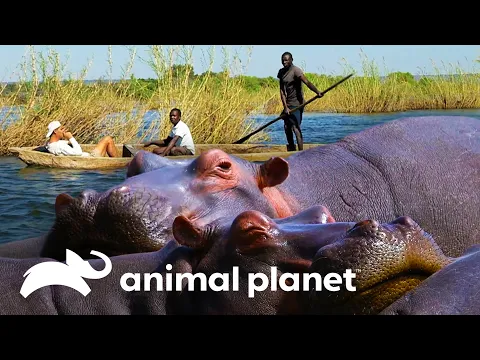

While most hippopotamuses reach their maximum size around full maturity, this animal continued to grow for longer, accumulating body mass and trunk width at levels rarely observed.
The Dimensions That Shocked Researchers
The records associated with the largest hippopotamus in the world indicate:
– Approximate weight of 4,500 kg, almost double that of many adult individuals
– Estimated length close to 5 meters, including head and trunk
– Body circumference so large that several adult men could not embrace the animal
These numbers place the record-holding hippopotamus on a scale comparable to that of a fully loaded small truck, something absolutely out of the norm for the species.
The fossils found indicate an animal with an estimated length of over 4 meters, significantly greater height, and weight that could exceed 4.5 tons, directly rivaling some of the largest current African elephants. Its body was longer, with sturdier bones and an overall structure adapted to support a colossal mass.
Hippopotamus gorgops
One of the most striking features of the Hippopotamus gorgops was its skull. The eyes were positioned even higher than in modern hippopotamuses, an adaptation that suggests a life strongly linked to deep aquatic environments and wide rivers. This anatomical detail indicates that the animal spent long periods submerged, observing the environment above the water with minimal exposure of its body, a defensive and predatory advantage.
The jaws of H. gorgops were true natural weapons. The incisors and canines reached extreme sizes capable of generating devastating bite forces. Even being predominantly herbivorous, like its modern relatives, this hippopotamus had enormous defensive potential, making it practically untouchable by the predators of its time.
The environment in which the Hippopotamus gorgops lived favored this gigantism. Pleistocene Africa was marked by abundant rivers, extensive wetlands, and great availability of vegetation, allowing large animals to thrive. Moreover, competition among megaherbivores drove the selection of larger and stronger individuals.
Where the Largest Hippopotamus Was Recorded
The most accepted data suggest that this hippopotamus lived in captivity in Europe, in a German zoo, during the 20th century.
The controlled environment, with a constant food supply and absence of predators, allowed the animal to fully express its physical potential.
This detail is important: in nature, few hippopotamuses can live long enough — and with continuous food access — to reach such extreme sizes.
Why Hippopotamuses Can Reach Such Absurd Weights
The hippopotamus’s body is a growth machine. It combines:
– Extremely dense bones
– Voluminous musculature
– Thick layer of subcutaneous fat
– Metabolism adapted for long periods of high caloric intake
In addition, hippopotamuses continue to grow throughout their lives, unlike many mammals that stabilize in size after maturity.
An Even More Dangerous Giant
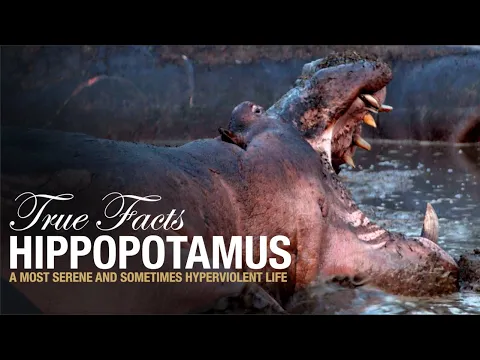
Despite their slow appearance, the hippopotamus is considered one of the most dangerous animals in Africa, responsible for hundreds of human deaths every year. An individual weighing nearly 4.5 tons elevates this risk to another level.
Jaws capable of opening almost 180 degrees, enormous tusks, and aggressive territorial behavior make the hippopotamus an extremely lethal defensive predator, especially in riverine environments.
Comparison with Other Terrestrial Giants
Even though it does not surpass the largest African elephants, the largest hippopotamus ever recorded:
– Surpassed many rhinoceroses in weight
– Matched or surpassed light utility vehicles
– Became the third largest modern terrestrial mammal, behind only elephants
This position reinforces the hippopotamus’s status as a true living colossus.
A Rare Limit of Modern Megafauna
Today, similar records are unlikely. Environmental pressures, hunting, habitat reduction, and shorter life expectancy make it increasingly rare for a hippopotamus to achieve extreme dimensions like those of this historical individual.
Therefore, the largest hippopotamus in the world is not just a curious record — it represents the real biological limit that the species managed to reach before the intensification of human impact.
The case of this hippopotamus showed that even in modern times, nature is still capable of producing individuals that seem to belong to another era. Just like Big Bill among pigs or Lolong among crocodiles, the largest hippopotamus ever recorded made its mark in history as an absolute outlier, impossible to ignore.
The Hippopotamus gorgops was not only the largest hippopotamus that ever existed, it was a symbol of the era when the Earth was dominated by giants.
With tons of weight, crushing force, and extreme adaptations to aquatic life, this animal represents a lost chapter of natural history that can never be repeated. While today we are impressed by modern hippopotamuses, the gorgops remains a fossil proof that nature once operated on a scale far beyond what we know.







-

-

-

-

-

-

24 people reacted to this.