






 Portuguese
  Spanish


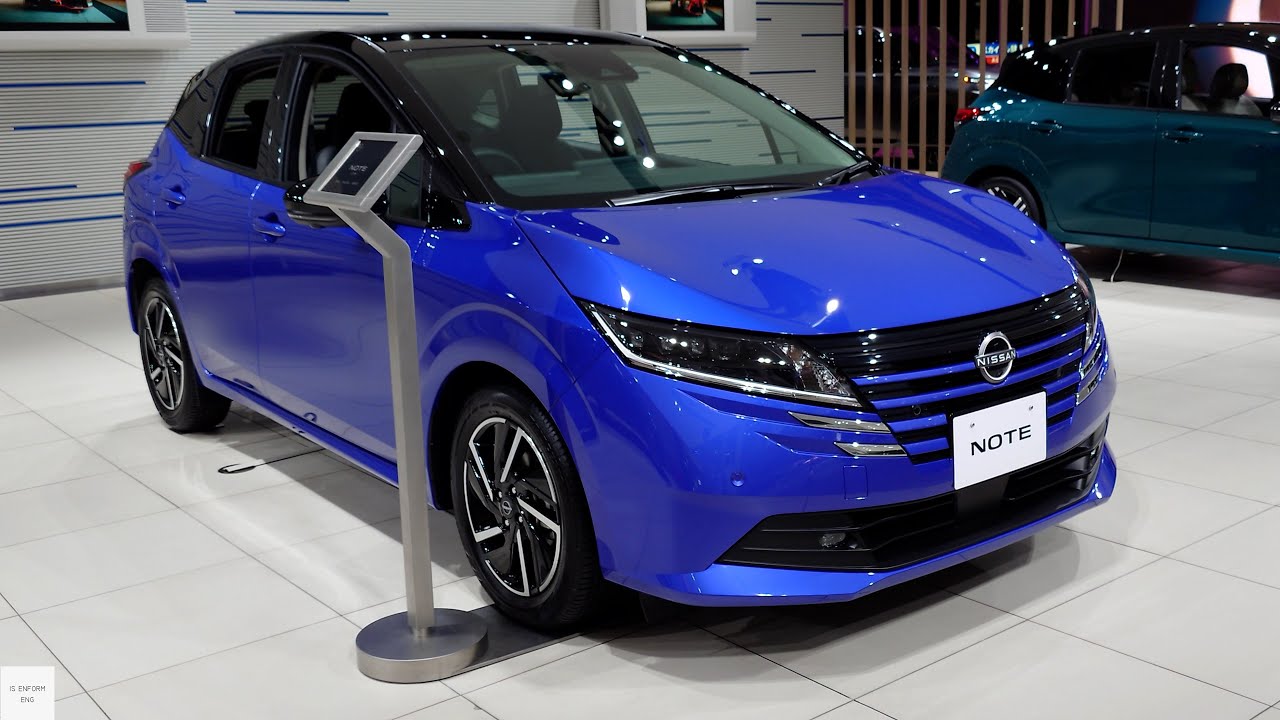

Nissan Note e-POWER always runs with electric traction, but without charging stations. Discover the hybrid system that transformed the hatch into one of the most unique cars in Japan.
For years, the automotive industry divided consumers between combustion cars, traditional hybrids, and electric vehicles that rely on external charging. Nissan decided to take a different path and created a solution that mixes characteristics of both worlds without fitting perfectly into either. The result was the Note e-POWER, a compact hatch sold in Japan that operates in an unusual way: the wheels are driven exclusively by an electric motor, while the gasoline engine never directly participates in traction. Its sole function is to generate electricity to power the system.
How the e-POWER system works, transforming a gasoline car into an electric one without a plug
The secret of the Note lies in the e-POWER technology, developed by Nissan as a series hybrid system. Unlike conventional hybrids, where the combustion engine can help move the vehicle, in e-POWER the wheels are driven exclusively by the electric motor.
The setup combines a high-voltage battery, generator, inverter, electric motor, and a gasoline engine. When the battery charge decreases or more energy is needed, the thermal engine starts up only to produce electricity. It has no direct mechanical connection to the wheels.
-
2027 Toyota Corolla Cross Unveiled: New Design, Enhanced Fuel Efficiency, Reduced Maintenance Costs, Advanced Technology, Connected Services, and Up to 10-Year Warranty

-
Fiat Cronos Precision 2018: Affordable Sedan with Spacious Trunk and Reliable Maintenance
-
Volkswagen to Cut Production by 1 Million Cars by 2030, Reducing Jobs and Platforms, Focusing on More Profitable Models

-
Toyota Launches First 100% Electric Car in Brazil: bZ4X with 343 HP, All-Wheel Drive, 361 km Range, Priced at $419,990 BRL, Limited to 99 Units



In practice, the driver experiences a drive similar to that of an electric vehicle, with immediate acceleration and instant torque delivery, but without the need to search for chargers or connect charging cables.
Why the Nissan Note e-POWER is not a conventional hybrid like Toyota Prius and Corolla Hybrid
In traditional hybrid models, such as the parallel systems widely used by the industry, the car alternates between the electric motor, combustion engine, or a combination of both to drive the wheels.
In the Note e-POWER this does not happen. The traction remains electric at all times. The gasoline engine acts only as a small onboard power plant, producing energy to power the electric set.

This architecture makes many experts describe the system as an “electric with onboard generator” rather than a traditional hybrid. Nissan itself highlights that the driving behavior is similar to that of a pure electric car.
The technology was born from Nissan’s experience with electric cars like the Leaf
When it first introduced the e-POWER, Nissan explained that the technology leveraged knowledge acquired during the development of the Leaf, one of the brand’s most well-known electric vehicles.
The manufacturer was looking for a solution capable of offering an electric driving sensation even in markets where charging infrastructure was still limited. This led to the idea of using a small gasoline engine exclusively to produce energy when necessary.
The system was commercially launched in the Nissan Note and quickly became one of the main technological differentiators of the hatch in the Japanese market.
Electric motor ensures immediate acceleration and quieter operation
As all the power sent to the wheels comes from the electric motor, the car delivers instant torque from the start, a characteristic normally associated with fully electric vehicles.
Another advantage pointed out by Nissan is the quiet operation. Since the gasoline engine can operate at more efficient speeds and does not need to respond directly to accelerator commands, the cabin tends to be quieter than in a conventional car.

According to the manufacturer, at low and medium speeds the system prioritizes electric operation, activating the generator only when necessary to maintain the battery’s adequate charge.
Technology is no longer exclusive to Japan and is already approaching 2 million vehicles sold
The success of the concept led Nissan to expand e-POWER to other models and markets. Currently, the technology is present in vehicles such as Qashqai, X-Trail, Kicks, Serena, and other products sold in different regions of the world.
Recent reports on the automaker’s global plans indicate that the system is already approaching the mark of 2 million units in circulation and has become one of the company’s strategic bets for the coming years.
The technology is also being prepared for new international launches, including models intended for the North American market.
The Japanese hatch shows a path that almost doesn’t exist in the Brazilian market
The Brazilian market is already accustomed to conventional hybrids, mild hybrids, and plug-in electrics. However, the concept used by the Note e-POWER is still little known by a large part of the country’s consumers.

Nissan’s proposal eliminates the need for external recharging without giving up the electric driving sensation. Instead of constantly switching between two traction systems, the car remains electric all the time and uses fuel only to produce energy.
In an industry seeking to balance electrification, autonomy, and charging infrastructure, the Note e-POWER shows that there is an intermediate path between the traditional combustion car and the electric one that depends on a socket.
The question is whether this solution still has room to grow as the global charging network continues to advance.









