






 Portuguese
  Spanish


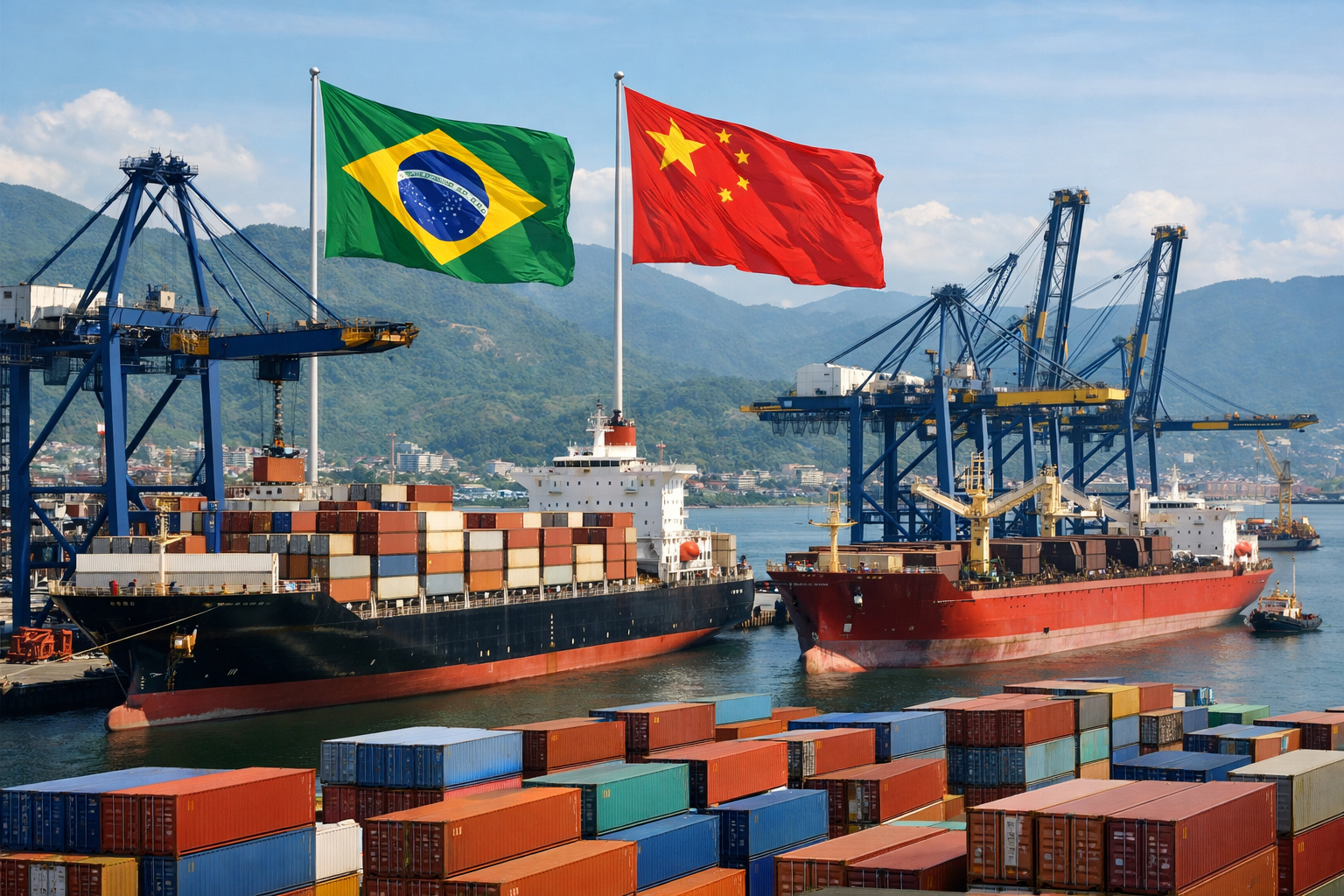


The Advancement Of Brazilian Exports To The Asian Country, Driven By Soy, Oil, And Minerals, Happens Amid Global Trade Tensions And Consolidates China As The Central Axis Of Brazilian Foreign Trade
Trade Between Brazil And China Reached A New Historical Record And Exceeded US$ 170 Billion, Consolidating A Commercial Relationship That Is Already By Far The Most Relevant For The Brazilian Economy. The Volume Traded In 2025 Was More Than Double That Registered In The Exchanges With The United States, The Country’s Second Largest Trading Partner, Which Moved US$ 83 Billion In The Same Period.
This Information Was Disclosed By The Brazil-China Business Council (CEBC), In A Report Leaked To The Newspaper O GLOBO, And Confirms A Trend That Has Been Intensifying Over The Past Decade: The Progressive Displacement Of The Axis Of Brazilian Foreign Trade Towards Asia, Especially China.
In Total, The So-Called Trade Flow — The Sum Of Exports And Imports — Between The Two Countries Reached US$ 171 Billion, With Growth Of 8.2% Compared To 2024, Establishing The Highest Value Ever Recorded In The Historical Series.
-
Global Race for Rare Earths Intensifies as U.S. and China Compete, Putting Brazil’s Vast Reserves in the Spotlight

-
Not even the end of the ‘roller coaster’ described by the price of Brent crude oil (the main global benchmark) – which jumped from a price of $72 to $120, then dropped to $76 per barrel – due to the recent peace agreement between the US and Iran, was enough to relieve the Brazilian economy from inflationary pressures.

-
European Union looks again at Brazilian seafood after a nearly 8-year ban and may unlock a coveted market for lobster, tuna, tilapia, and shrimp.

-
Japanese retro sneakers become a sales phenomenon, help Asics achieve record profits, and gain their own operation to target Los Angeles, Milan, and Seoul.




Brazilian Exports To China Reach US$ 100 Billion And Renew Historical Highs

Within This Record Volume, Brazilian Exports To China Totaled US$ 100 Billion, Configuring The Second Highest Value In 29 Years Of The Historical Series Started In 1997. The Result Was Only Behind The Absolute Record Of US$ 104 Billion Recorded In 2023, Evidencing The Resilience Of The Brazilian Export Agenda Even In An Unstable Global Scenario.
The Performance Was Driven Mainly By Soy Shipments, Which Accounted For Just Over A Third Of The Total Value Exported To The Asian Country. Sales Of The Commodity Grew 10% Compared To 2024, Reinforcing The Centrality Of Brazilian Agribusiness In The Bilateral Relationship.
This Growth Occurred In A Context Of Global Trade Tensions, Marked By Protectionist Policies And Changes In International Flows. In The Previous Year, The United States Imposed Additional Tariffs On Several Countries, A Move That Led Brazil To Seek New Markets To Mitigate Trade Losses.
During This Period, China Even Temporarily Suspended The Purchase Of Soy From The US, As A Direct Reflection Of The Tariffs Implemented During The Administration Of Donald Trump, Opening Space For Alternative Suppliers — Including Brazil.
Trade Relationship With The US Loses Strength After Tariffs And Exports Decline 6.6%
While Trade With China Advanced, The Trade Relationship Between Brazil And The United States Faced Retraction. According To Calculations By The Ministry Of Development, Industry, Commerce And Services (Mdic), About 22% Of Brazilian Exports To The US, Equivalent To US$ 8.9 Billion, Remain Subject To The Tariffs Imposed Last July.
— It Was A Very Complicated Year For The Brazil And United States Relationship In The Commercial Area — Stated Tulio Cariello, Content Director Of CEBC.
According To Official Data From Mdic, Brazilian Exports To The United States Fell From US$ 40.37 Billion In 2024 To US$ 37.72 Billion In 2025, A Decrease Of 6.6%, Equivalent To US$ 2.65 Billion.
According To Cariello, The Tariffs Imposed By Trump Expanded The Brazilian Deficit In The Bilateral Relationship, Since Few Products Managed To Compensate, In Other Markets, The Loss Of Competitiveness In The American Market.
Although There Was Some Redirection Of Exports, As In The Case Of Coffee, Which Gained Ground In China While Losing Competitiveness In The US Due To The Tariffs, The Overall Impact Was Limited. This Is Because The Export Agendas For China And The United States Are Structurally Distinct.
While Brazil Exports Mainly Agricultural And Extractive Industry Products To China, Sales To The US Are More Diversified And Based On Manufactured Goods, Which Account For About 80% Of The Goods Sent To The American Market.
— These Are Markets That Have Little To Do With Each Other. Brazil’s Agenda For China Is Very Different From The Agenda For The United States — Explained Cariello.
Chinese Imports Hit Record And Expand Presence In The Brazilian Market
In Addition To The Advance In Exports, The Volume Of Brazilian Imports From China Also Reached A New High. In 2025, Purchases Of Chinese Products Totaled US$ 70.9 Billion, An Increase Of 11.5% Compared To 2024 And The Highest Value Ever Recorded In The Historical Series.
The Growth Was Driven By Specific And High-Value Factors, Such As The Billion-Dollar Purchase Of A Drillship For Oil Exploration, As Well As An Increase In Imports Of Electric And Hybrid Cars, Fertilizers, And Chemical Products.
There Was Also A Significant Increase In The Purchases Of Medicines And Pharmaceutical Inputs, A Move That Led China To Occupy The Fourth Position Among The Main Suppliers To Brazil In This Segment, Reinforcing The Strategic Dependence Of The Asian Country In Sensitive Productive Chains.
China Now Accounts For More Than A Quarter Of All Brazilian Foreign Trade
The Weight Of China In Brazilian Foreign Trade Has Become Even More Expressive. According To The CEBC Study, The Asian Country Already Accounts For 27.2% Of All Of Brazil’s Trade Flow With The World, Which Totaled US$ 629 Billion, With Growth Of 4.9% Over The Analyzed Period.
China Remained The Primary Destination For Brazilian Exports, Although Other Markets Showed Faster Percentage Growth. Sales To Argentina Grew 31.4%, While Exports To India Increased 30.2% Last Year.
Nevertheless, The Chinese Performance Outpaced Traditional Partners. Exports To The United States Fell 6.6%, While Spain Recorded A Retraction Of 11.8%, And The Netherlands Showed A Marginal Growth Of Only 0.2%.
In Total, Brazilian Exports To The World Grew 3.5%, Reaching US$ 348.7 Billion, Reinforcing The Role Of Foreign Trade As A Pillar Supporting The Economy.
For Cariello, The Brazilian Effort To Diversify Markets, Especially With The Increase In Sales Of Meats And Foods To Asian Countries, Is A Positive Sign To Reduce Excess Dependence On A Single Partner.
— The Growth Of The Middle Class And The Demand For Food In Southeast Asia Tends To Reinforce, In The Coming Years, The Orientation Of Brazilian Foreign Trade Towards The Asian Axis — He Evaluates.
— The Axis Of Brazilian Foreign Trade Today Tends To Move More And More Towards Asia.
With China Concentrating More Than A Quarter Of All Brazilian Foreign Trade, Is Brazil Building A Long-Term Strategy Or Just Trading One Dependence For Another?


