






 Portuguese
  Spanish


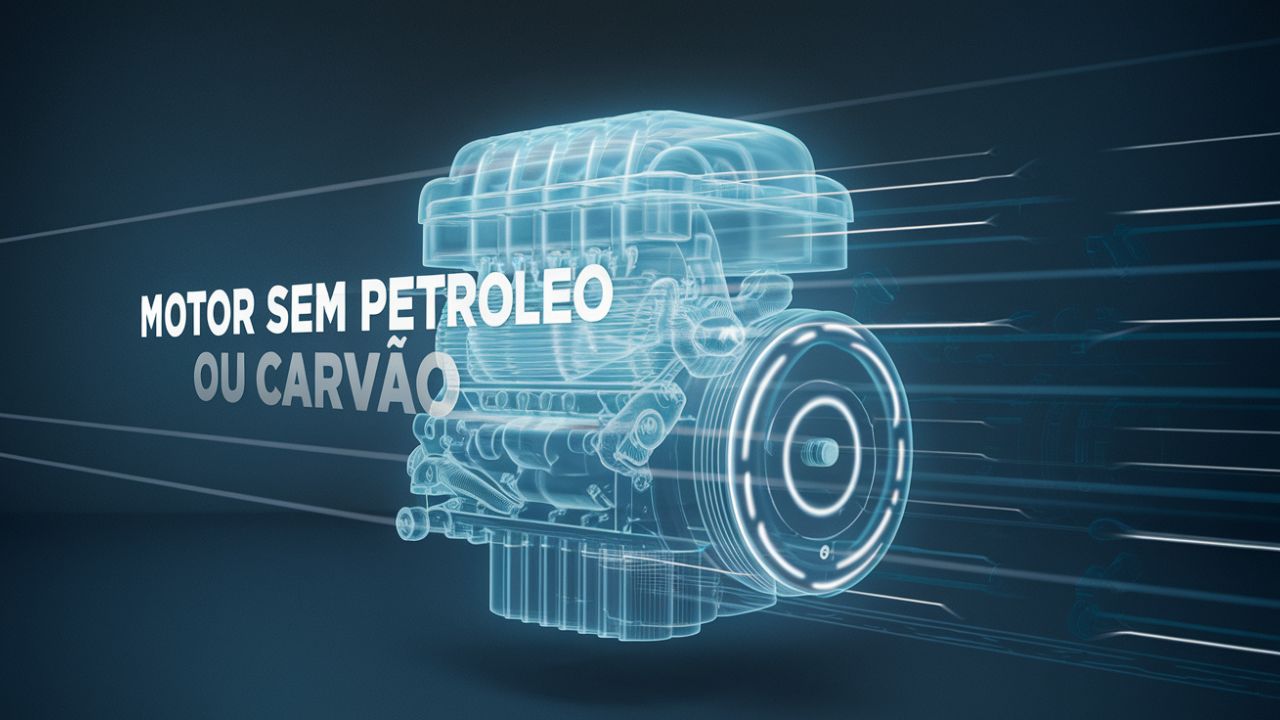


An Energy Revolution: The New Type of Engine Uses Quantum Particles to Achieve Unprecedented Efficiency, Eliminating Fossil Fuels and Operating at Extremely Low Temperatures, All Thanks to Cutting-Edge Science.
Have you ever imagined an engine that doesn’t burn fuel, doesn’t emit smoke, and doesn’t rely on heat? Well, this is no longer science fiction. Thanks to quantum entanglement, scientists are developing a new type of engine that promises to revolutionize our relationship with energy.
While traditional engines rely on combustion or heat, these new devices take advantage of the bizarre and fascinating properties of quantum particles. Get ready to explore a technology that is rewriting the rules of physics.
How Quantum Entanglement Works
To understand this innovative engine, we need to talk about quantum particles. Imagine two particles so connected that what happens to one immediately affects the other, even if they are separated by thousands of kilometers. This is the magic of quantum entanglement, an idea that Einstein called “spooky action at a distance.”
-
China Develops Custom 140-Ton Electric Mining Truck with 770 kWh Swappable Battery, Deploys 290 Units in Xinjiang’s Largest Zinc Mine

-
Meta to Launch Arena, a New Prediction App Targeting 3.56 Billion Users, Competing with Polymarket and Kalshi

-
Scientist Challenges Famous Human Evolution Theory, Argues Homo Sapiens Evolved Gradually Over Thousands of Years
-
15-Year-Old American Builds Ocean Generator with PVC Pipe and 3D-Printed Propeller for $12, Wins National Prize, Presents at White House, and Makes Forbes 30 Under 30 List




In practice, these particles do not follow the common rules of the physical world. While in everyday life things need external energy to function, in the quantum world, the exchange of states between particles can generate movement. This is what makes this engine so unique.
The Emergence of the New Type of Engine

The concept of a quantum engine was born from research conducted by scientists at the Okinawa Institute of Science and Technology, in partnership with German universities. Unlike conventional engines that need heat generated by burning fuel, the quantum engine takes advantage of the energy difference between two types of particles: fermions and bosons.
Think of a puzzle game where you swap pieces to create different patterns. In this engine, particles exchange states, generating energy efficiently and without emitting pollutants. It’s a radical change that challenges centuries of traditional engineering.
Energy Without Fuel: The Magic of Quantum Mechanics
So, how does it work in practice? The key lies in the interaction between fermions and bosons. Fermions, like electrons, avoid sharing the same energy state, while bosons, like photons, do exactly the opposite. This difference creates an “energy slack” that can be harnessed to do work.
To transform fermions into bosons, scientists combine two fermions to form a molecule. When this molecule breaks apart, the fermions return to their original state. This continuous cycle of transformation powers the engine, all without the need for heat or combustion.
Benefits and Challenges of the Quantum Engine
The benefits are impressive. With an efficiency of up to 25% under laboratory conditions, the quantum engine proves that the effects of quantum mechanics can be useful. More importantly, it keeps the system at low temperatures, essential for maintaining the behavior of quantum particles.
However, the challenges are numerous. Keeping the engine stable in an environment outside the lab requires advanced technology for temperature control and isolation. Additionally, the cost and complexity remain significant barriers to large-scale applications.
A Look to the Future
Even with obstacles, the idea of quantum engines opens the door to incredible innovations. Imagine using them to power small devices like sensors and high-precision batteries. It’s a vision that challenges our understanding of what energy is and how we can harness it.
These engines also connect with other quantum technologies, such as ultra-fast computers and super-secure communication channels. They show that quantum physics is not just a theoretical field, but a source of practical solutions for the future.
The quantum engine is not ready to replace the engines in our cars, but it gives us a preview of how science is reinventing energy. Based on quantum entanglement and the exchange of states between particles, it represents a clean and efficient alternative to current technologies.







E meu smartphone ainda é 4G.
Eu vou é pedalar pra desgastar a picanha de final de semana. Ah! Só pra lembrar, tem que ralar pra comer picanha o tempo das machadinha acabou e da loja de chocolate também. Fica a dica
Por enquanto eu vou me contentando com meu motor Fire 1.0 mesmo 😅