






 Portuguese
  Spanish
  3 min of reading
  2 comments


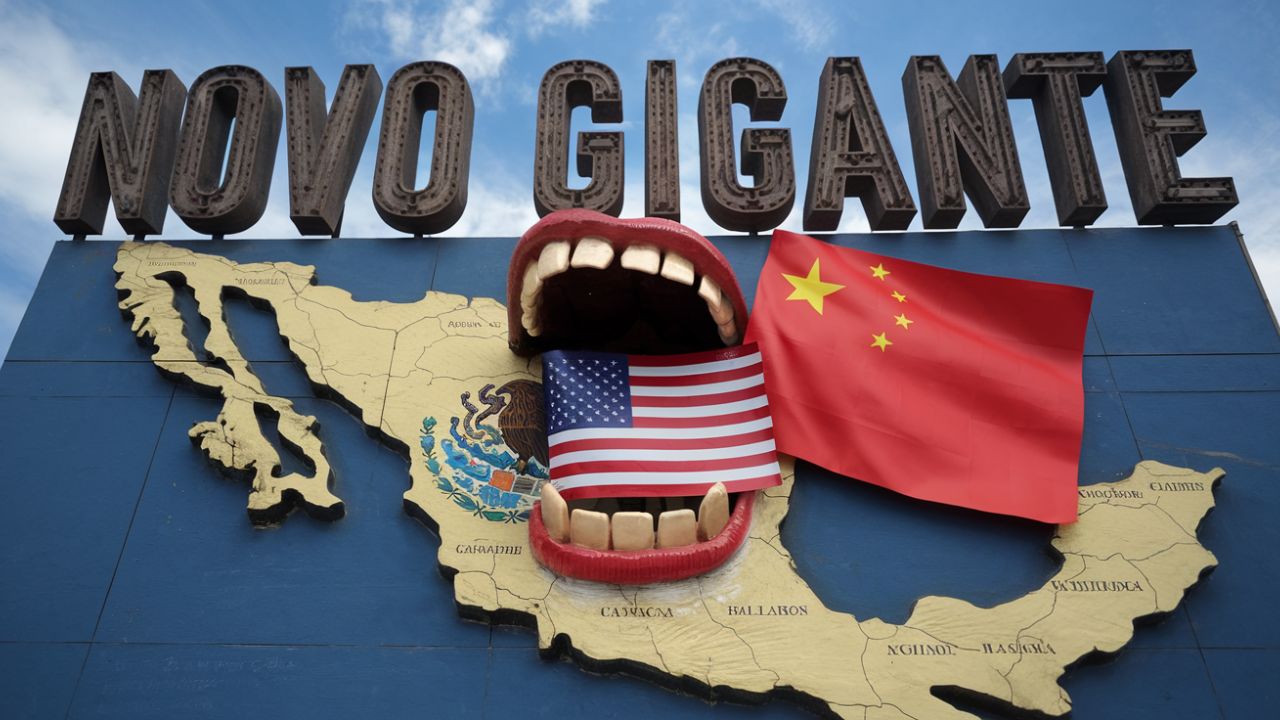


With an Ambitious Plan to Strengthen “Made in Mexico,” Reduce Dependence on Asian Imports, and Attract Investments from the U.S., Mexico Aims to Enter the Top 10 of the World’s Largest Economies While Facing Challenges Imposed by China and Trump’s Tariffs.
In recent years, Mexico has been undergoing a significant economic transformation, trying to solidify its position as one of the ten largest economies in the world. Intertwined with its largest trading partner, the United States, and facing an ambiguous relationship with China, the country finds itself at a crossroads that could define its economic future.
With an audacious plan presented by President Claudia Sheinbaum, Mexico proposes to strengthen its local production and reduce dependence on Asian imports. But is this strategy enough to overcome the challenges posed by global powers such as China?
The Current Context: Mexico Between the U.S. and China
Mexico has a deep historical and economic relationship with the United States. Geographical proximity and the United States-Mexico-Canada Agreement (USMCA) ensure a robust trade exchange, positioning the U.S. as the primary destination for Mexican exports.
-
Land Rover to Halt Production in July, Putting 371 Jobs at Risk, as Chinese Automaker Negotiates to Convert Factory to 100,000 Vehicles Annually by 2027

-
Mexican Pest Threatens U.S. Cattle Herds at Historic Lows, Potentially Boosting Brazilian Beef Exports as Burger Prices Soar

-
Brazilian Freight Bill Progresses in Congress with $5,000 Minimum Wage, 70% Advance Payment, and Fines Up to $1 Million, as Agriculture and Industry Warn of Rising Costs and Legal Uncertainty

-
High Interest Rates and Record Defaults Lead to Surge in Vehicle Repossessions and Crowded Car Auctions in Brazil by 2026


On the other hand, China plays a strategic role in Mexican trade. Since 2016, China has become Mexico’s second-largest trading partner, using the country as an entry point for Chinese products into the North American market. This dynamic, however, faces criticism and challenges, especially in the context of global trade tensions.
The Impact of Trump’s First Term on Global Trade
During his first term, Donald Trump implemented strict tariffs on Chinese products, significantly altering global trade. For China, this meant seeking alternatives, and Mexico became one of those strategic routes. Chinese companies took advantage of Mexican logistics chains to circumvent tariffs and access the U.S. market.
This situation, while beneficial for Mexico in terms of investments, also generated criticism from Trump, who accused the country of being a “backdoor” for Chinese products. Now, with the possibility of a second term, new tariffs may target not only China but also Mexico, putting even more pressure on the Mexican economy.
A Strategic Response to Dependency on China
To face these challenges, Mexico has launched an ambitious plan aimed at revitalizing its local production. The strategy is clear: reduce Asian imports and strengthen internal value chains.
The project includes the creation of 100 industrial parks in 12 strategic regions, known as “Well-Being Poles.” The government offers tax incentives, financing for small and medium enterprises (SMEs), and support for the adoption of advanced technologies. These efforts echo the strategy used by China in the 1990s and 2000s when the country massively invested in its production chain to become a global giant.
Nearshoring and Strengthening “Made in Mexico”
Another crucial point of the plan is nearshoring, a trend that leverages Mexico’s geographical proximity to the United States to attract investments and reduce transportation costs. This strategy aims to transform “Made in Mexico” into a mark of quality and competitiveness in the global market.
The textile, technology, footwear, and furniture sectors are at the center of this transformation. The goal is to increase Mexico’s share in international trade to 15%, solidifying the country as one of the leading global players.
Mexico in Global Trade
Despite promising initiatives, Mexico still faces considerable challenges. Trump’s second term may bring new tariffs and trade tensions while China remains a powerful competitor in the global market.
However, with a clear strategy for economic self-sufficiency and regional integration, Mexico has the potential to position itself as an economic leader in North America. Time will tell if the country can turn its ambition into reality and balance its relationship with the U.S. and China.






Ou seja, fazem questão de continuar e viver na dependência dos EUA.
O mundo tem que escolher: CHINA ou EUA.