Portuguese
  Spanish


Zealandia, the “Lost Continent” Submerged in the Pacific, Intrigues Scientists and May Change the Way We Understand Earth’s Geology
In school, we learn that the world has six continents: America, Africa, Asia, Europe, Oceania, and Antarctica. But this division is not fixed. It is merely a convention. There are other ways to divide the planet, and one of them, based on geology, shows seven continents. Among them is a lesser-known one: Zealandia.
Zealandia is considered by many scientists to be a separate continent. Also called Te Riu-a-Māui, it is the youngest and thinnest region of the Earth’s crust. Its existence was officially recognized only in 2017.
With an area of about 5 million km², it is enormous. But 95% of its area is submerged in the ocean. On the surface, what is visible are just New Zealand and New Caledonia. Therefore, it earned the nickname “lost continent.”
-
Tesla injected an additional $250 million into the German factory, doubled the battery cell target, and opened its own production line for startups.

-
No more TV stuck on the wall: Samsung The Freestyle+, the new projector with over 400 lumens projects on walls, floors, and ceilings, bringing cinema to any corner of the house.

-
A Japanese governor single-handedly stalled the construction of the world’s fastest train for nine years, and only now has he agreed to allow a tunnel excavated at a depth of 1,400 meters.
-
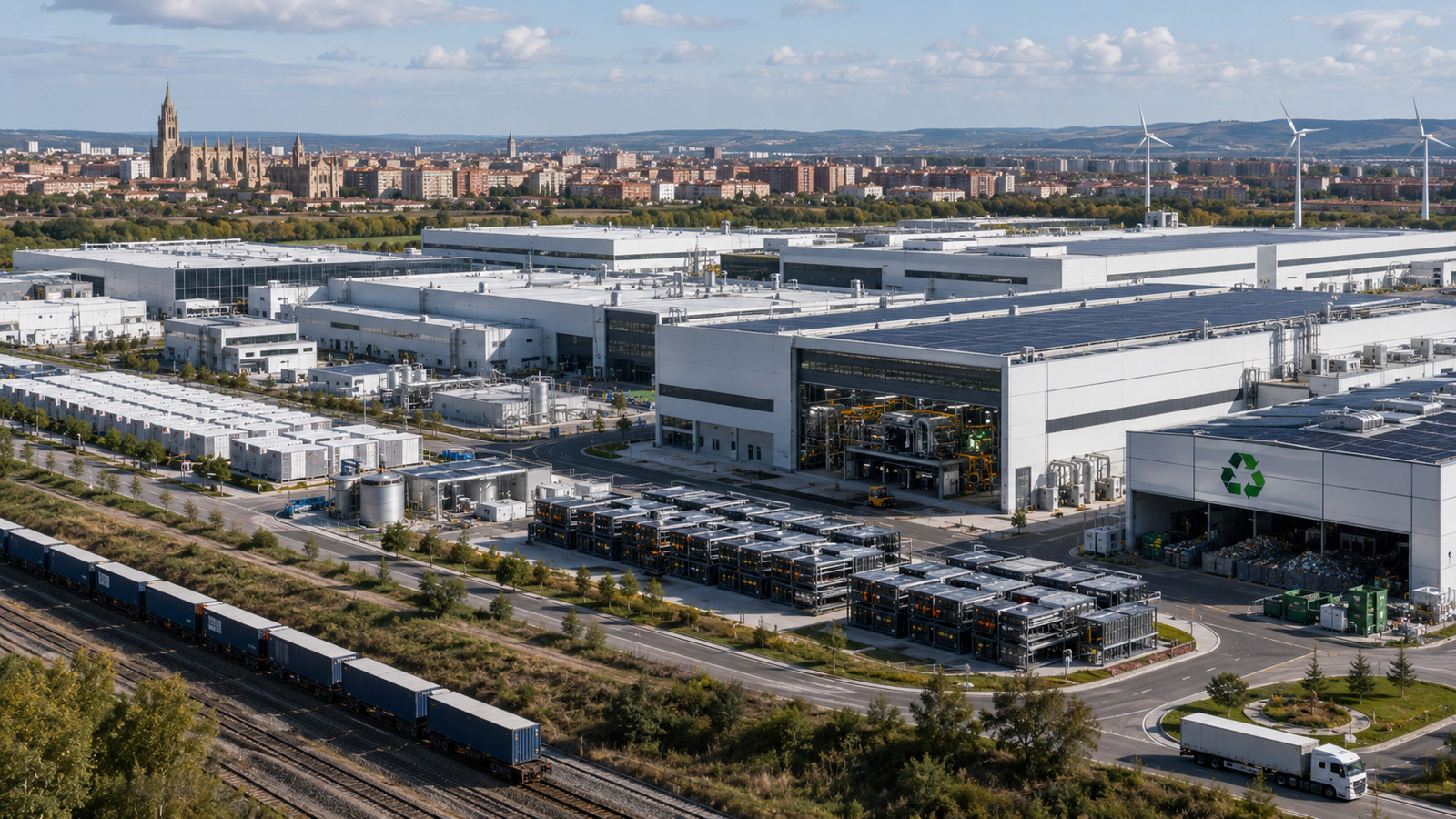
Almost 1 billion euros, two gigafactories, and a million-dollar public investment, Chinese company aims to turn Spanish city into Europe’s new battery hub.


Recent Study on Zealandia
To better understand this territory, researcher Nick Mortimer from the University of Otago proposed a review of studies on Zealandia. The results were published in the journal New Zealand Journal of Geology and Geophysics this Tuesday (17).
Mortimer explains that Zealandia was part of the supercontinent Gondwana for millions of years. Then, between 85 and 60 million years ago, it separated from what is now Australia.
Since then, it has behaved as an independent continent. 25 million years ago, its submersion reached its peak. Over time, the movement of tectonic plates created the North and South Islands of New Zealand.
Different Structure
Zealandia differs from other continents because it has very little land and very wide continental shelves. This is the opposite of what occurs with other land masses, which have large dry areas and narrower seabed platforms.
It is located between the tectonic plates of the Pacific and Australia. This geological position explains the significant seismic and volcanic activity in the region. For Mortimer, this makes Zealandia an ideal place to study the risk of natural disasters and the geological history of the planet.
The Zealandia Project Continues
The idea that Zealandia is a continent is not new; it has existed for almost 150 years. But only recently has it been possible to gather enough evidence. This is thanks to advances in satellite technology and access to data from the seabed.
Even with the new answers, the work is not finished. “We have been able to answer many questions of the ‘what, when, and how’ type, but many ‘whys’ regarding Zealandia are still unknown,” says Mortimer.
Future research should seek to understand the causes of Gondwana’s separation and the reason for the existence of so many extinct volcanoes in the region.
With information from Revista Galileu.