Portuguese
  Spanish


Giant Helicopter That Defies Limits by Transporting Incredible Loads and Saving Lives on Extreme Missions, Operating in Hostile Environments with Surprising Strength and Robust Technology That Impresses Even the Most Demanding Heavy Aviation Experts.
With the power to lift up to 20 tons, the Mil Mi-26 is one of the greatest achievements of aeronautical engineering and has already starred in incredible missions around the world.
Imagine a helicopter so powerful that it can carry an entire house through the air or rescue damaged tanks in combat zones.
This is not science fiction – it’s Russian engineering.
-
Brazil Launches Ambitious Project to Recycle Toothpaste Tubes and Toothbrushes, Aiming to Revolutionize Waste Management

-
The Mystery of Roanoke: Entire Colony Vanished Without a Trace, Leaving Only “Croatoan” as a Clue and Becoming a Historical Legend

-
Namibia Plans to Build Homes for the Homeless Using Mushrooms and Invasive Plants to Tackle Housing Crisis

-
Brazilian Innovator Converts Old Car into Electric Vehicle Using Laptop Batteries and Forklift Motor, Achieves Nearly 90 km/h in Urban Settings




The Mil Mi-26, considered the largest cargo helicopter in operation in the world, is a true legend of the skies.
Designed during the Cold War, the Mi-26 impresses not only with its enormous size but with its ability to operate in extremely challenging missions.
From transporting military equipment to assisting in natural disasters, this giant has participated in operations that seemed impossible even for conventional aircraft.
A Colossus of the Skies
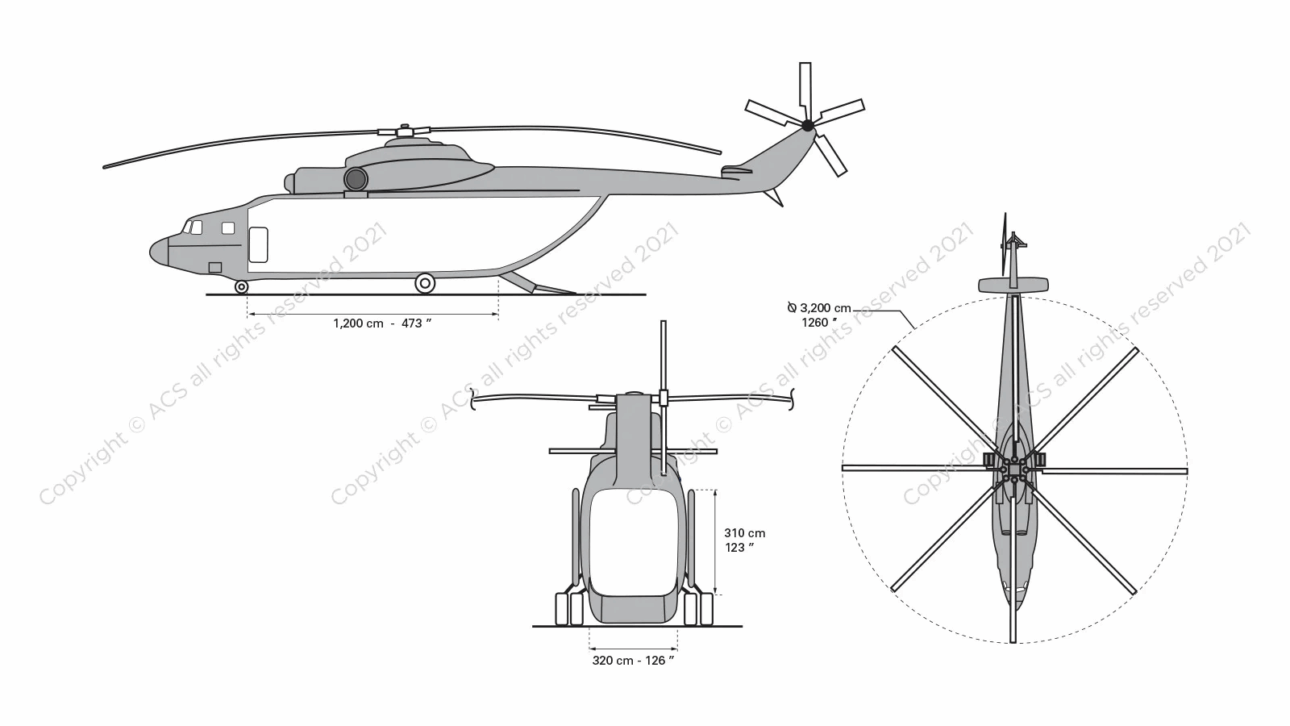
At 40 meters long, 8 meters high, and with a rotor measuring 32 meters in diameter, the Mil Mi-26 resembles a moving building.
But what really catches the eye is its payload capacity: 20 tons, enough to carry a truck, a light locomotive, or even an entire prefabricated house.
The Mi-26 is the only helicopter in operation in the world with this lifting capacity, surpassing even modern models from first-rate armies.
Its internal cargo compartment is so spacious that it can accommodate up to 80 soldiers or medium-sized military vehicles.
Extraordinary Power
To lift such weight, the helicopter is equipped with two Lotarev D-136 turboshaft engines, with an incredible 11,400 horsepower each.
These engines are so powerful that they consume more than 3,000 liters of fuel per hour of flight, making it one of the thirstiest helicopters in history.
Despite the high consumption, the Mi-26 compensates with unmatched logistical efficiency in scenarios where traditional land or air transport is not feasible.
This is why it is widely used in inhospitable regions, such as Siberia, northern Canada, or in relief missions in areas devastated by earthquakes, floods, or wildfires.
Impressive Missions
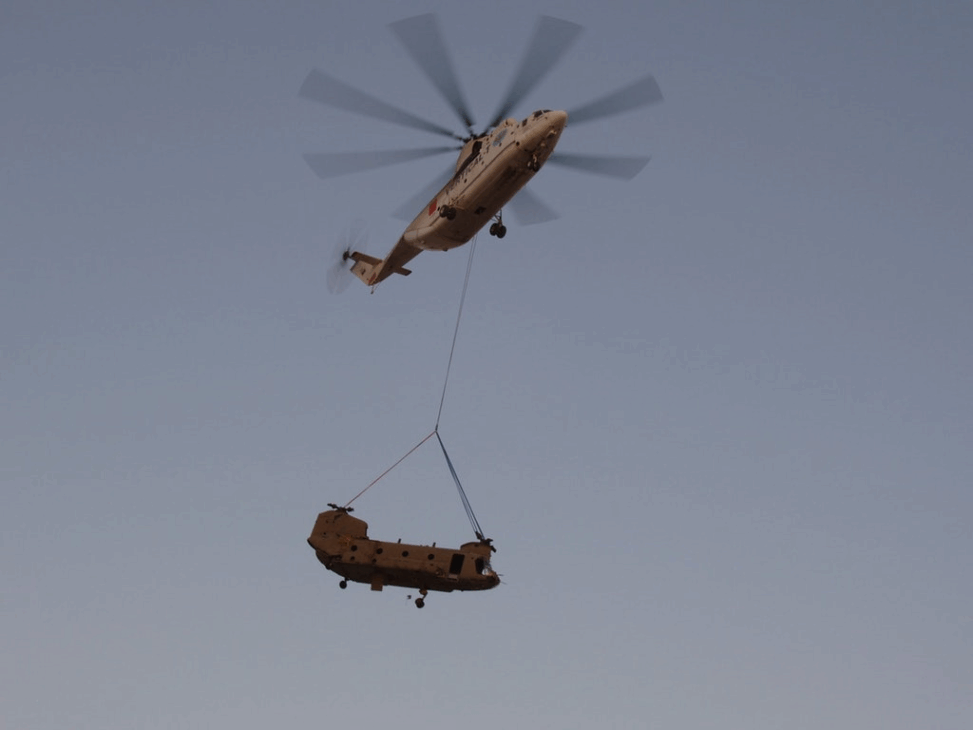
One of the most famous feats of the Mi-26 occurred in 2002, in Chechnya, when a unit was used to rescue a downed American Chinook helicopter.
At the time, the damaged equipment was hoisted and transported to a safe base, in an operation considered historic due to its complexity and weight involved.
Another notable episode was in 2010, in Afghanistan, when a Mi-26 transported a 20-ton armored truck that had overturned in a conflict area.
No other available aircraft could carry out the rescue.
In addition to military functions, the helicopter is also used for humanitarian actions.
In 2005, for example, it was essential in transporting supplies and tents during the earthquake in Pakistan, where it accessed areas completely isolated due to landslides.
Transporting Entire Houses
Yes, the Mi-26 has really transported complete wooden houses, especially in operations in Siberia, where land movement is nearly impossible during winter.
The helicopter’s fuselage accommodates housing modules up to 12 meters long, with a kitchen, bathroom, and complete bedrooms.
This application made headlines when a Mi-26 transported several prefabricated houses to a new workers’ village in mineral exploration areas, reducing construction and settlement time for the team by weeks.
Robust and Durable Technology
Despite being designed in the 1970s, the Mi-26 remains one of the most reliable and robust aircraft on the planet.
It is equipped with redundant navigation and stability systems, as well as armor in strategic parts, allowing operations in conflict zones.
The minimum crew consists of five people – pilot, co-pilot, flight engineer, and two load operators – but can be expanded depending on the mission.
Internally, there are automatic winches and hydraulic ramps that facilitate the loading of bulky cargo.
Civil, Military, and Even Cinematic
Although it is a war machine, the Mi-26 also has civil uses.
Aerial logistics companies in Russia, India, and China use the aircraft for large industrial movements, such as wind power towers, ship engines, and large generators.
Curiously, the helicopter has also appeared in action films and documentaries, becoming an icon of pop culture related to aviation.
Its imposing presence and the characteristic sound of its eight-blade rotor have made it a recognizably figure for technology and engineering fans.

The Future of the Mi-26
The company Rostvertol, responsible for producing the Mi-26, is developing modernized versions of the model, with greater energy efficiency, new electronic systems, and lower pollutant emissions.
The updated model, called Mi-26T2V, promises to operate with greater precision and lower costs while maintaining the same payload capacity.
Even after more than 40 years since its creation, the helicopter remains irreplaceable in various contexts.
Its combination of brute strength, versatility, and reliability keeps it as one of the most admired and respected aircraft in heavy aviation.