






 Portuguese
  Spanish
  4 min of reading
  0 comments



Petrobras Heavily Invests in Revitalization of the Campos Basin, Investing R$ 130 Billion in Technology, Sustainability, and Creating 25 Thousand Jobs. But the Challenge in the Equatorial Margin Still Causes Controversy, with Environmental Barriers and Social Pressure. Discover How This Billion-Dollar Plan Can Transform the Future of Oil in Brazil!
The Campos Basin, an icon of the Brazilian oil industry, is about to be the stage for a historic revolution.
With an ambitious plan that promises to impact the entire economy of Northern Fluminense, Petrobras announced a billion-dollar investment to revitalize the region, bringing technological advancements, job creation, and a focus on environmental sustainability.
However, there is much more behind this project that goes beyond the numbers.
-
FIRJAN’s mega plan of R$ 526.3 billion for Rio de Janeiro aims to revive Brazil’s largest industry, with two-thirds of the investments going to oil and gas.

-
China signals an increase in beef imports, Brazil has already consumed 70% of the 1.106 million ton quota and seeks to renegotiate the tariff that jumps from 12% to 55%, while demand from the US also skyrockets.
-
Food inflation rose 302% in 20 years in Brazil, but the supermarket changed: purchasing power yielded 87% more mortadella and 31% less fruit, and ultra-processed foods took over the cart.
-
Petrobras sells the first batch of 3,800 m³ of aviation fuel made with certified soy, capable of reducing emissions by up to 70%, in an unprecedented project that anticipates the aviation sector’s requirements expected for 2027.


What makes Petrobras bet so heavily on a location where production was already showing signs of decline?
What is at stake in this bold strategy to recover assets deemed mature?
And how does the company position itself in relation to environmental pressures and the regulatory challenges that surround another major potential: the Equatorial Margin?
Discover how this ambitious plan is shaping the future of oil in Brazil.
Petrobras Bets R$ 130 Billion and Promises 25 Thousand Jobs by 2029
Petrobras announced an unprecedented revitalization plan for the Campos Basin, one of the most important regions in the history of Brazilian oil.
By 2028, the state-owned company intends to invest US$ 22 billion (about R$ 130 billion at current exchange rates), aiming to increase production while simultaneously creating 25 thousand direct and indirect jobs by 2029.
This investment will be directed towards drilling new wells, intervening in already operating fields, and installing modern platforms to replace outdated structures.
According to Petrobras, this is the largest global project for recovering mature deep-water fields.
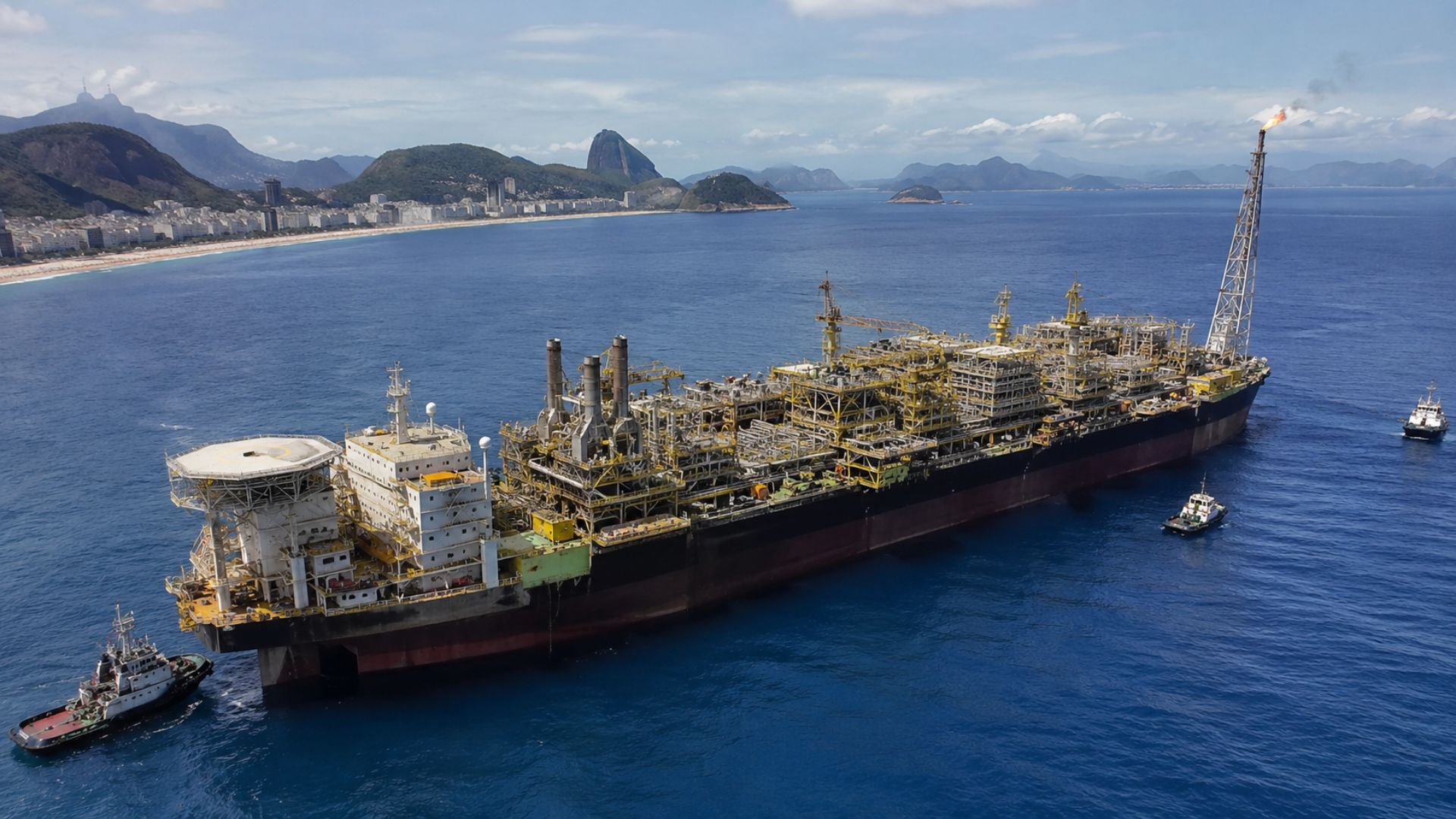
The company stated that four new platforms will be installed in the coming years in the fields of Jubarte, Albacora, Barracuda-Caratinga, and Raias Manta and Pintada, located in the Campos Basin.
In addition, Petrobras announced the replacement of nine old platforms with two floating production storage and offloading units, known as FPSOs, with greater operational efficiency.
The History of the Campos Basin
The Campos Basin, which extends between Espírito Santo and the northern coast of Rio de Janeiro, has played a crucial role in the growth of oil production in Brazil.
Its first commercial field, called Garoupa, was discovered in 1974.
Subsequent significant discoveries such as the Albacora field (in 1984), the first in deep water, consolidated the region’s strategic position.
Although its peak occurred in 2009, with a production of 1.65 million barrels of oil per day, the basin has experienced a gradual decline in recent years.
Currently, production accounts for approximately 16% of the national total, behind the Santos Basin, which dominates with 81% due to pre-salt.
Even so, Petrobras believes that new investments can secure a daily production of 600 thousand barrels by 2028.
Sustainability and Technological Innovation
Another major highlight of this revitalization project is the commitment to reducing carbon emissions.
Petrobras has committed to reduce emissions by 55% in modernized operations.
The strategy involves the use of advanced technologies, such as carbon capture and storage, and renewable energy sources for electrification.
In addition, the state-owned company has established strategic partnerships to implement these decarbonization technologies in both new and old fields.
Alex Murteira, general manager of Petrobras in the Campos Basin, highlighted the relevance of the project:
“This is the largest initiative for revitalizing mature fields in the world, reaffirming the pioneering role of the Campos Basin in innovation and the development of deep-water technologies.”
The Environmental Stalemate in the Equatorial Margin
While advancing with the revitalization of the Campos Basin, Petrobras is facing a significant challenge in the Equatorial Margin, a maritime strip between Rio Grande do Norte and Amapá, considered the “new pre-salt” due to its estimated potential of 10 billion barrels.
Despite the promise, the project is still stalled due to the lack of an environmental license.
Petrobras is awaiting approval from Ibama but is facing resistance due to concerns about leaks that could threaten sensitive biomes and indigenous and riverside communities.
In September, Ibama’s technical area recommended the filing of the license application for exploration in block FZA-M-59, at the Mouth of the Amazon.
The president of the agency, Rodrigo Agostinho, chose not to file the process but also did not approve the project.
The state-owned company remains optimistic, promising to deliver a detailed emergency plan to prevent environmental damage.
Sylvia dos Anjos, director of Exploration and Production at Petrobras, stated that once the license is approved, exploration could begin in just three months.
A New Era for Brazilian Oil?
With the largest investment ever made in mature fields and the promise of job creation, Petrobras seeks to strengthen its position in the international market and meet growing domestic demand. But the challenges are not small.
The revitalization of the Campos Basin brings hope for economic recovery in Northern Fluminense but also raises questions about long-term sustainability and environmental impacts.
Now, the question remains: do you believe that Brazil can balance economic development with environmental preservation in its oil projects?




-

-

-

-

13 people reacted to this.