






 Portuguese
  Spanish


With 57 Km In Length, The Gotthard Base Tunnel Becomes A Historic Landmark Of European Engineering
Europe has inaugurated what is now officially the longest and deepest tunnel in the world. Located beneath the Swiss Alps, the Gotthard Base Tunnel represents an unprecedented engineering feat. With a length of 57 kilometers and a depth of up to 2.3 kilometers, the construction took 17 years to be completed, with a total cost exceeding US$ 12 billion.
The new structure establishes a high-speed rail link between northern and southern Europe, replacing heavy truck traffic with a more sustainable logistics system. The railway runs through the base of the alpine mountains and is considered one of the most ambitious projects on the continent in the last 100 years.
World’s Longest And Deepest Tunnel Unites Logistical Efficiency And Environmental Innovation


With 57 km in length, the Gotthard Base Tunnel has surpassed historical records. It exceeded the Seikan Tunnel in Japan, which is 53.9 km long, and the Channel Tunnel between the United Kingdom and France, which is 50.5 km long. Besides being the longest, the Gotthard is also the deepest, reaching up to 2,300 meters below the mountain surface.
-
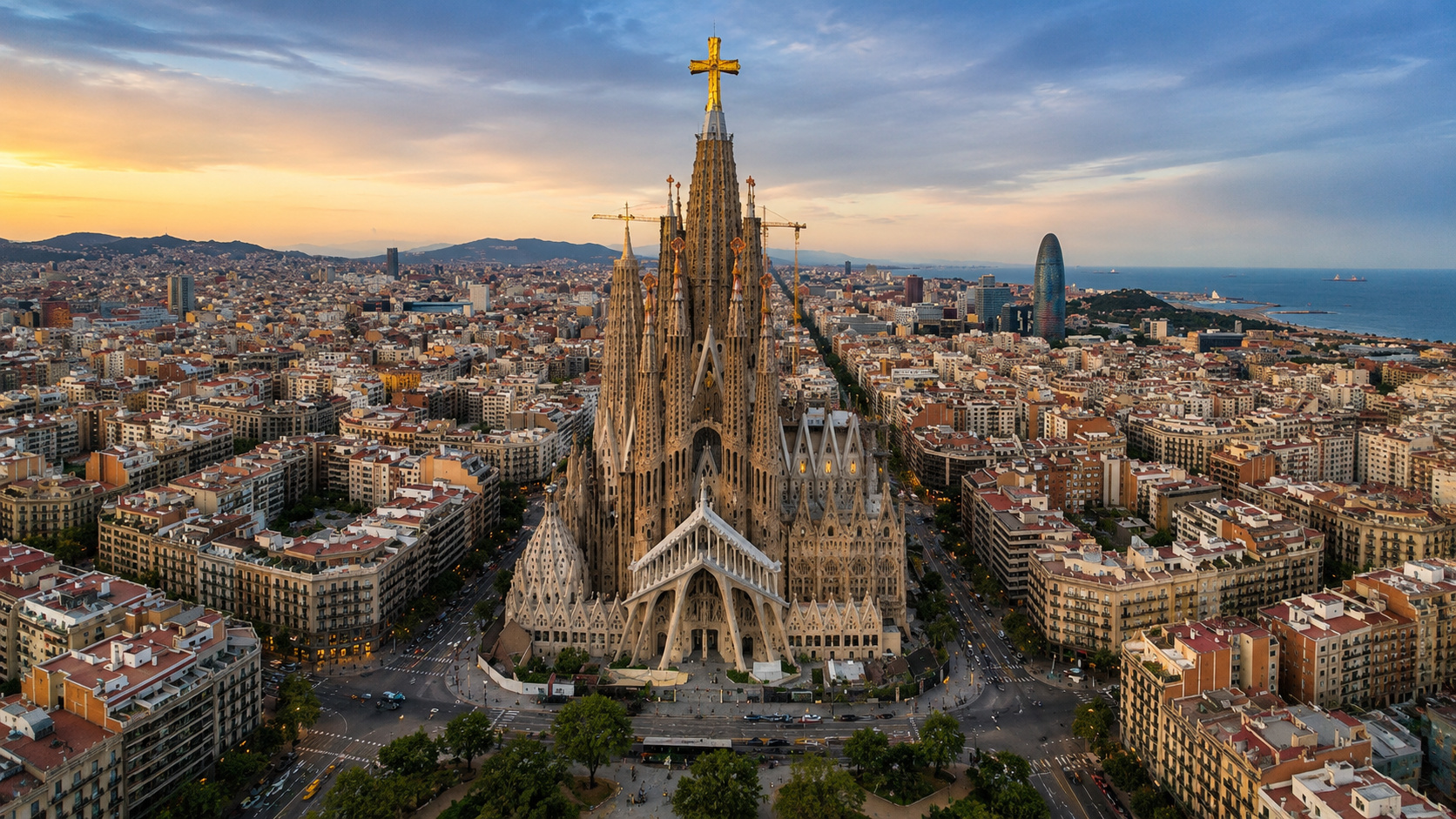
Sagrada Família Becomes World’s Tallest Church at 172.5 Meters, Surpassing German Church with Gaudí’s Design

-
Inspired by São Paulo’s Vila Reencontro, Rio Grande do Sul invests $8 million to provide 18 m² micro-homes for homeless families in four cities, offering amenities and up to two years of housing.

-
Brazil’s Piauí State Invests Over $2 Million in Road Restoration and Urban Asphalt Projects
-
Affordable Rainwater Harvesting: Simple PVC System Collects Up to 5,000 Liters for Under $100, Offering a Cost-Effective Alternative to Expensive Installations



The project offers a railway alternative for crossing the Alps, traditionally done via roads with heavy traffic and adverse weather conditions. It is estimated that around one million trucks per year will cease to operate on Swiss roads, reducing gas emissions and wear on mountain routes.
Switzerland’s Minister of Transport, Doris Leuthard, stated during the inauguration that the tunnel is a symbol of “modern European engineering focused on sustainable development and the logistical integration of the continent.”
Swiss Approved The Project In A Referendum Over 30 Years Ago
The project’s origin dates back to the 1990s. In 1992, the Swiss population approved, via national referendum, the proposal to build a railway tunnel under the Alps. Two years later, in 1994, another referendum determined that all cargo transiting through Switzerland should be shifted from roads to railways — which strengthened the political and financial viability of the initiative.
Throughout the 17 years of construction, engineers faced immense technical challenges. A total of 28 million tons of rock were excavated, necessitating the drilling of 73 different types of material — from hard granite to more fragile and unstable formations. The excavated rocks were recycled to produce concrete used in the construction itself.

The excavations occurred at temperatures reaching 46°C inside the mountain, requiring special cooling equipment and strategies to ensure the safety of the teams.
Inauguration Brought Together European Leaders And Cultural Spectacle In The Swiss Alps
The official inauguration ceremony of the world’s longest tunnel took place in Erstfeld, near the northern entrance of the structure. Heads of state and European leaders attended the celebration, including Angela Merkel (Germany), François Hollande (France), Matteo Renzi (Italy), and Christian Kern (Austria).
The event included live broadcasts, simultaneous speeches at the northern and southern ends, as well as an artistic show with dancers, acrobats, musicians, and singers honoring alpine culture and the workers involved in the project.
Two trains departed in opposite directions through the tunnel, carrying guests who were drawn to experience the first official crossing. The Swiss president, Johann Schneider-Ammann, declared in his speech: “This is a giant step for Switzerland and for all of Europe. We have united the continent beneath the mountains.”
Comparisons With The Channel Tunnel Mark The Symbolism Of The Work
The then French president François Hollande, one of the guests participating in the first crossing of the tunnel, compared the work to the Channel Tunnel, completed in 1994, which connects the United Kingdom to France under the sea. He stated that the Gotthard “reminds the world of how ambitious and efficient European integration can be.”
The statement gained even more weight due to the political context of the time, just before the Brexit vote. “I hope the British remember this when the day comes,” said Hollande, eliciting applause and laughter from the audience in Pollegio, a town near the southern exit of the tunnel.
Engineering Of The Tunnel In The Swiss Alps Required Cutting-Edge Technology And Millimeter Precision
The excavation of the world’s longest and deepest tunnel required the mobilization of thousands of workers and advanced equipment. The use of state-of-the-art drilling machines allowed for handling the variety of rocks and the need for maximum precision to keep the two drillings parallel at an exact distance over 57 km.
The tunnel has two main tubes, each with a railway line, in addition to auxiliary safety and maintenance tunnels. The operation is equipped with sensors, automatic ventilation systems, temperature monitoring, and surveillance cameras along its entire length.
Rail traffic in the tunnel is divided between passengers and freight, with high-speed trains capable of crossing the Alps in just 20 minutes, replacing trips that previously took hours on winding mountain routes.
Tunnel In The Swiss Alps Changes The Future Of Freight Transport In Europe
With the operation of the Gotthard Base Tunnel, Switzerland positions itself as a strategic hub in European transport. The route directly connects industrial centers in northern Germany with regions in northern Italy, cutting directly through the heart of the Alps.
It is estimated that transport time between Rotterdam (Netherlands) and Genoa (Italy) will be reduced by up to 30%. In the long term, the expectation is that the volume of cargo transported by train across the continent will significantly increase, helping to reduce pollution emissions, road congestion, and logistics costs.
A Historic Achievement Beneath The Swiss Alps
The world’s longest and deepest tunnel, built in the Swiss Alps, is not just a feat of modern engineering but also a symbol of cooperation, long-term vision, and commitment to sustainable solutions. It took nearly two decades to complete, but its operation already demonstrates how large infrastructure projects can change the economic and environmental dynamics of an entire continent.
For Switzerland and its European neighbors, the Gotthard Base Tunnel marks the beginning of a new era in rail mobility — an era where crossing Europe’s most challenging mountains no longer requires navigating curves, altitudes, or storms, but instead only a few minutes aboard a fast, quiet, and underground train.





Be the first to react!