






 Portuguese
  Spanish
  3 min of reading
  0 comments


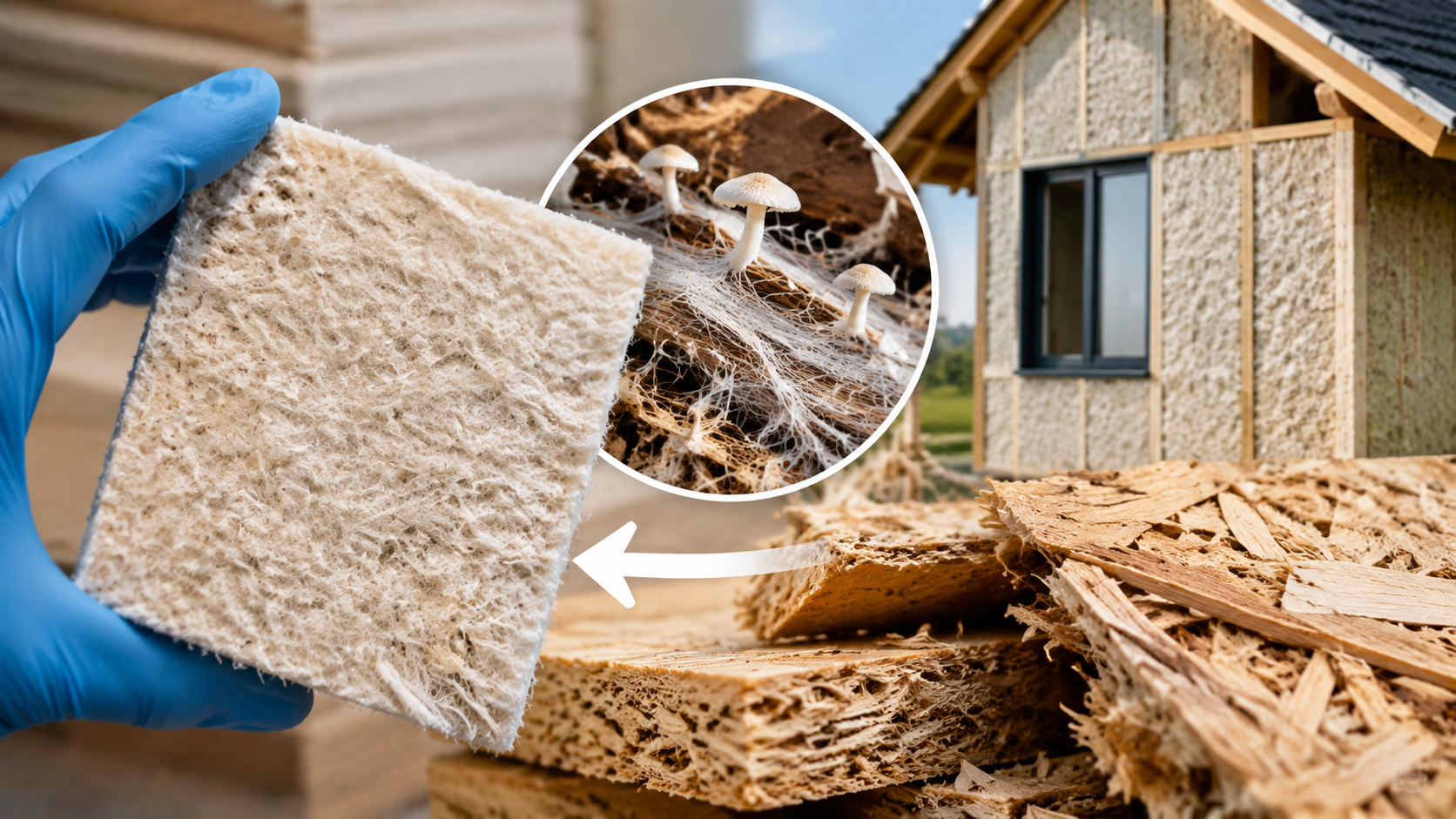
Researchers create sustainable insulation using fungi that repurpose complex wood, reduce waste, lower emissions, and make constructions greener, lighter, and more efficient
Instead of burning or shredding, fungi are being used to transform engineered wood waste that was previously impossible to recycle into low-carbon insulation panels. This technique creates efficient composites, reduces construction waste, and decreases the energy consumption needed for production.
Engineered wood is not like solid wood. It contains layers, glues, and adhesives that make conventional recycling difficult, making the material durable yet problematic for repurposing. With the use of fungi, these wastes can be converted into useful products for walls, floors, and roofs, adding value and reducing environmental impacts.
The University of Bath, a UK university recognized for research in engineering and environmental sciences, detailed the process and potential of the method to transform complex waste into insulation sustainably.
-
Brazil’s WEG to Open New Factory in China by 2027, Expanding Production of Large Rotating Electric Machines and Low to Medium Voltage Motors in Rugao

-
Chinese Shipyard Secures $1 Billion in Orders for Low-Carbon Container Ships Amid Global Fleet Renewal Efforts
-
Brazilian Planned Community Provides Housing for Over 420 Formerly Homeless, Aims to Reach 1,900 Residents
-
Minneapolis Warehouse Transformed into Village of 100 Tiny Homes, Helping 851 Homeless People and Securing Permanent Housing for 343


Why engineered wood is difficult to repurpose
Industrial woods like plywood, laminated panels, and MDF contain resins and adhesives that bond the layers of fibers or particles. This composition makes traditional recycling expensive or unfeasible.

The conventional method of repurposing involves shredding or burning, which generates pollution and consumes energy. With the biological action of fungi, it is possible to break these barriers and generate usable materials with lower environmental impact.
The University of Bath provided the technical details and emphasized that the biological process overcomes barriers that chemical methods cannot bypass.
How fungi transform waste into composite
Fungi feed on wood, degrading its fibers and releasing substances that can be molded into light and resistant biocomposites. During cultivation, it is possible to control the density and thickness of the material, creating panels with efficient thermal and acoustic properties.
This biological approach allows transforming complex waste into insulation products that can be used in sustainable constructions without resorting to aggressive chemical processes. The University of Bath, a university in the United Kingdom, detailed that monitoring the growth of the fungus ensures uniform quality of the final product.
Why insulation is a promising application
The insulation produced with wood degraded by fungi offers environmental and economic advantages. It reduces carbon emissions, prevents waste from being burned or discarded, and decreases energy consumption compared to conventional insulators.

The material is light, efficient, and moldable, and can be used in walls, floors, and roofs. Applying this insulation in constructions contributes to more sustainable and efficient buildings, while utilizing waste that would otherwise be discarded.
Process limits: time, control, and scale production
Despite the potential, the method faces challenges. The growth time of fungi is longer than conventional industrial processes, requiring monitoring of temperature, humidity, and contamination to maintain quality.
Large-scale production still requires adjustments and tests for the biocomposites to maintain uniformity. Although promising, the process does not immediately replace traditional insulators but offers an efficient environmental alternative for complex industrial waste.
Impact of technology on civil construction
The use of fungi to reuse engineered wood can transform the construction sector, reducing landfill disposal and promoting low-carbon materials. The innovation contributes to more sustainable constructions and energy savings in the production process.
The University of Bath, a university in the United Kingdom, reinforced that the research addresses a growing problem of industrial wood waste and offers practical solutions that combine science and sustainability.
Do you believe that the use of fungi to recycle complex waste can become a common practice in future constructions?





Be the first to react!