Portuguese
  Spanish


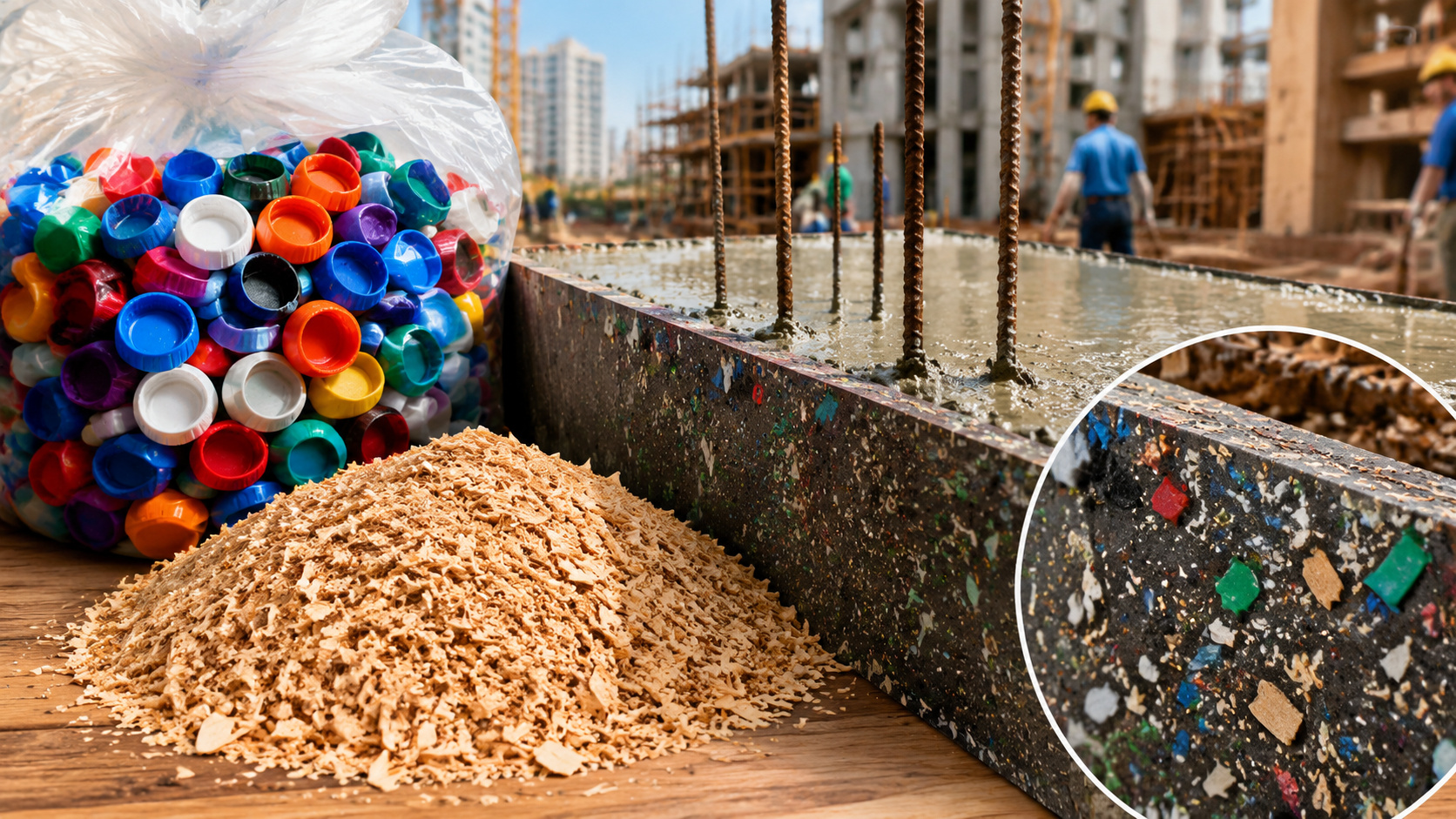

Project transforms plastic caps and sawdust into temporary molds, reducing tons of discarded wood, utilizing household waste, and promoting more sustainable construction with less environmental impact and greater reuse of recyclable materials
Before there is a concrete wall, there is a mold that can become waste. Temporary molds shape fresh concrete until it hardens, but the wood and plywood used in most constructions end up discarded, generating a large volume of waste and increasing disposal costs.
A 2025 study showed that wood-plastic composites made with high-density polyethylene bottle caps and pine sawdust can replace traditional wood in temporary molds. The MDPI, an international scientific publisher, provided data on resistance, reuse, and sustainability, confirming that recyclable materials can reduce the environmental impact of construction.
The use of caps and sawdust increases the reuse of household waste and decreases the amount of discarded wood without compromising the quality of the concrete work.
-
Santa Catarina Launches $1.4 Billion, 145-Kilometer Highway Project with Six Lanes and Speeds Up to 120 km/h

-
Couple Transforms 1913 School into 370 m² Home with Four Bedrooms After $175,000 Purchase and Three Years of Renovation

-
Bamboo Houses Built in 7 Days for the Price of a Smartphone: 26 Survived Intact in Myanmar’s 7.7 Earthquake
-
Prefabricated Home Assembled in Days Offers Cleaner, More Efficient Construction with Factory-Made Panels, Requires Technical Design to Prevent Moisture Issues




Why molds generate so much waste
Temporary molds are essential for shaping concrete, but wood and plywood are generally used only once because handling and moisture damage the material. The disposal of these products contributes to the accumulation of waste in construction sites, as well as increasing transportation and disposal costs.

The MDPI, an international scientific publisher, detailed that a large portion of conventional wooden molds ends up in landfills or as industrial waste. Partially replacing wood with recyclable composites represents a sustainable and economical alternative, maintaining the necessary functionality in construction projects.
How caps and sawdust become composite
The process combines crushed HDPE bottle caps with pine sawdust in controlled proportions. The mixture forms a lightweight, strong, and moldable composite, capable of reproducing the structural function of wooden molds.
The sawdust provides rigidity, while the recycled plastic ensures cohesion and water resistance, a critical point during concreting. This method transforms household waste into useful material, reducing the need for new wood and the environmental impact of construction.
What needs to withstand during concreting
The composite must support the weight of fresh concrete, lateral pressure, and moisture without deforming or breaking. The MDPI, an international scientific publisher, showed that composites of bottle caps and sawdust can withstand the typical loads of a residential wall, being recommended only for temporary molds and light structural uses.

The resistance ensures that the concrete maintains the desired shape and prevents finishing failures or wall problems. Prior testing of each mixture is essential to ensure safety and efficiency on the job site.
Why the application is temporary but strategic
The composite does not completely replace wood in all types of construction but works as a strategic solution in temporary molds, where maximum durability is not required.
The greatest benefit lies in waste reduction, material reuse, and more sustainable construction. The measure reduces disposal costs, encourages innovative solutions, and opens paths for research in recyclable materials in the construction sector.
The practical impact is evident: less discarded wood, less waste on the job site, and the use of recyclable waste that already exists in daily life.
Do you believe these solutions could become standard in large-scale projects in Brazil and transform the way we handle construction waste?