






 Portuguese
  Spanish


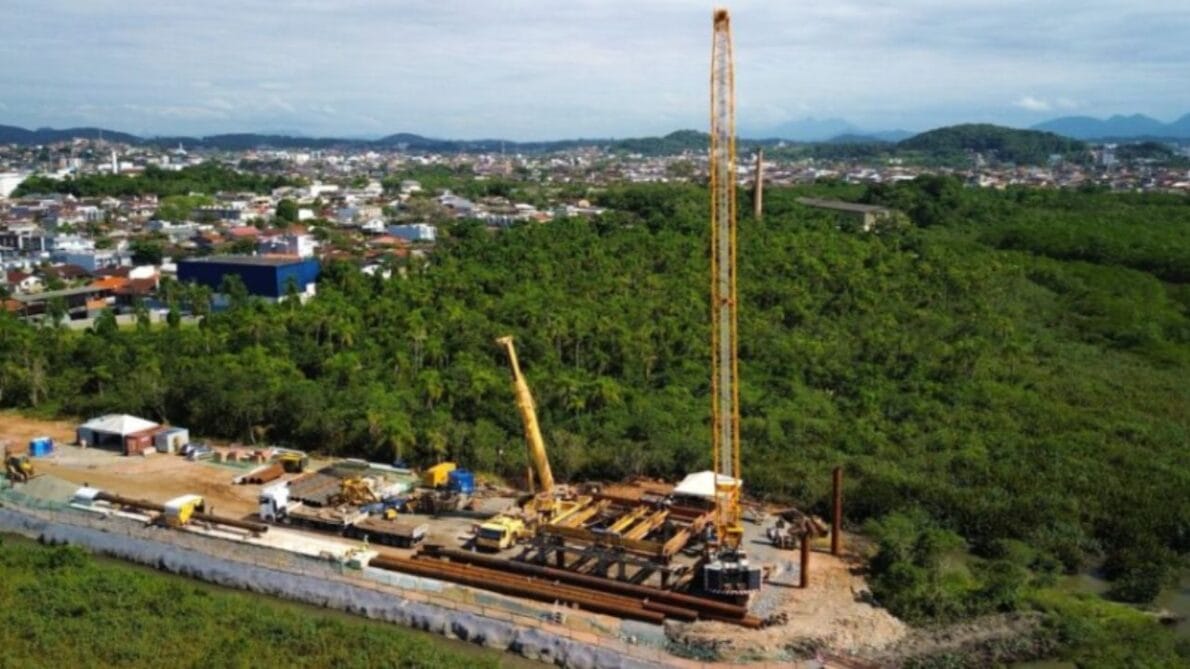

Common Equipment in Port Construction Starts Being Implemented over the Cachoeira River to Enable a New Phase of the Structure
The construction of the Joinville Bridge, which will connect the South and East zones of the city, has entered a new phase with the installation of the cantilever, a large piece of equipment used in port construction. The advancement marks an important stage of the project, allowing for pile driving with less environmental impact and greater technical accuracy.
Port Equipment is Highlighted in the Current Stage of Construction
According to the Joinville City Hall, the cantilever began to be installed in the Adhemar Garcia neighborhood. The equipment, which weighs 350 tons, moves on tracks over the bridge supports and will be used to position and drive metal casings into the bed of the Cachoeira River, an essential procedure for the foundation of the structure. The use of this technology, unprecedented in the city, aims to optimize the work and ensure greater efficiency in execution.
Construction of the Project Aims to Reduce Environmental Impacts
In addition to speeding up the schedule, the use of the cantilever brings environmental benefits for the construction of the bridge. By operating on the structure itself under assembly, the equipment avoids excessive movement of machines on the riverbanks, reducing impacts on the soil and native vegetation, especially the mangrove present in the area. The choice of technique was determined based on environmental and engineering criteria.
-
U.S. City Builds Tiny Home Village on Water Company Land to House 136 Homeless People: Inside the Social Housing Units

-
Woman Turns Shipping Container into Home, Embraces Rural Life to Cut Monthly Expenses to Just Over $330
-
France Revamps 530 Social Housing Units with Large Balconies and Glass Facades Without Demolishing Existing Buildings

-
Facing high rent, couple transforms parents’ garage into a fully functional apartment, creating a complete home at a fraction of the market cost.




Bridge Will Be 980 Meters Long and Will Benefit Thousands of People
The Joinville Bridge will be about 980 meters long and 26 meters wide, with two lanes in each direction, a bike lane, shoulders, and sidewalks. When completed, the new link will facilitate movement between neighborhoods and enhance the connection between four urban public transport terminals, directly serving around 65,000 users per day. According to the City Hall, the construction is part of a set of structural works aimed at improving urban mobility in the municipality.
Simultaneous Operation of Two Fronts Should Accelerate the Schedule
Two cantilevers will operate simultaneously, one on each bank of the Cachoeira River, allowing for a more dynamic progress in pile driving and beam launching for the bridge. The current phase is considered crucial for consolidating the central pillars of the crossing. The project, funded with municipal and federal resources, is proceeding in accordance with the planned schedule.








