Portuguese
  Spanish


The social housing retrofit in Bordeaux showed that old buildings can gain more light, space, and comfort without turning into rubble, provided the work includes technical study, responsible design, and care for the residents
Old social buildings in France gained giant balconies, winter gardens, and glass facades without being demolished. In Bordeaux, the Grand Parc project underwent renovation, transforming 530 occupied social apartments and offered a different solution for aging housing blocks.
The information was published by Lacaton & Vassal, the architecture firm responsible for the project. The work involved three social housing buildings, known as G, H, and I, in a housing estate built in the early 1960s.
The practical impact is in what changed for the residents. Instead of replacing the buildings with a new construction, the retrofit expanded the use of the apartments, improved light entry, and created outdoor spaces that did not exist before.
-
Woman Turns Shipping Container into Home, Embraces Rural Life to Cut Monthly Expenses to Just Over $330

-
Facing high rent, couple transforms parents’ garage into a fully functional apartment, creating a complete home at a fraction of the market cost.
-
10-Year-Old Max Makes History with Paris Fashion Show, Launches Own Brand, Hires Staff, and Sets World Record as Youngest Runway Designer

-
MIT Scientists Develop Method to Transform CO₂ into a Construction Ally, Boosting Cement Strength by 13% in 24 Hours for More Sustainable Infrastructure





The renovation preserved old buildings instead of turning everything into rubble
The Grand Parc is located in Bordeaux, France, and is part of a housing area with more than 4000 homes. Within this complex, three buildings of 10 and 15 stories were chosen for a deep transformation.
The work affected 530 social apartments, without erasing the existing blocks. Social housing is aimed at families needing more affordable access to housing, usually with public support or specific service rules.
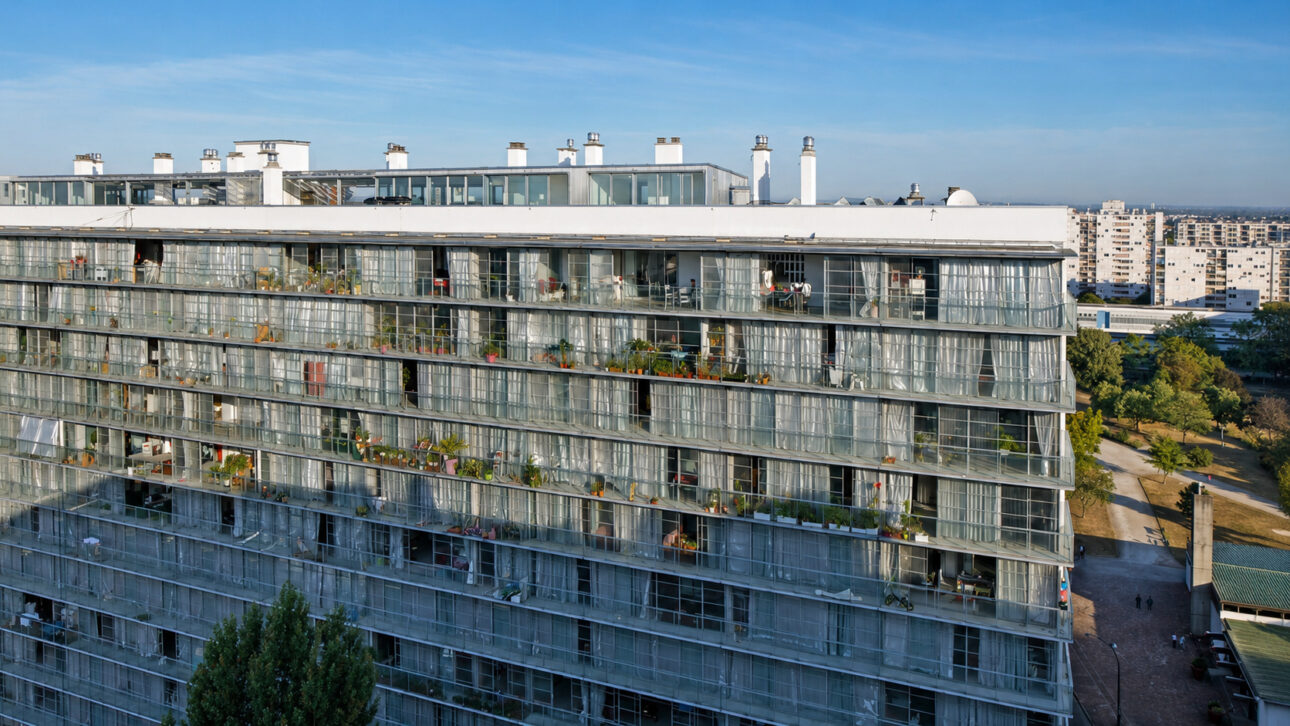
The most important aspect of the renovation was the decision to preserve as much as possible what was already standing. The main structure, stairs, and floors did not undergo major changes. In simple terms, the work did not alter the central skeleton of the buildings.
This choice reduced the logic of complete demolition. Instead of tearing down, removing residents, and rebuilding everything, the project focused on improving the old building with new areas and a new facade.
Residents remained in the apartments during the transformation
The renovation took place in occupied buildings, which makes the case even stronger. It wasn’t an empty building waiting for a new purpose. These were social apartments used by residents.
This changes the way we look at the work. When an intervention takes place with people living on-site, more care is needed because the building is not just concrete, glass, and stairs. It is home, routine, and address.
The project avoided treating residents as obstacles. The transformation sought to improve the comfort of the units without replacing the housing complex with a total demolition.
For Brazil, this part needs to be read with caution. Not every old building can receive a balcony or new facade. Before any similar idea, engineers need to evaluate structure, weight, safety, and city regulations.
Balconies of 3.80 m created truly used outdoor spaces
The most visible change appeared on the facades. The apartments received winter gardens and balconies in extension, creating protected and open areas for residents to use daily.
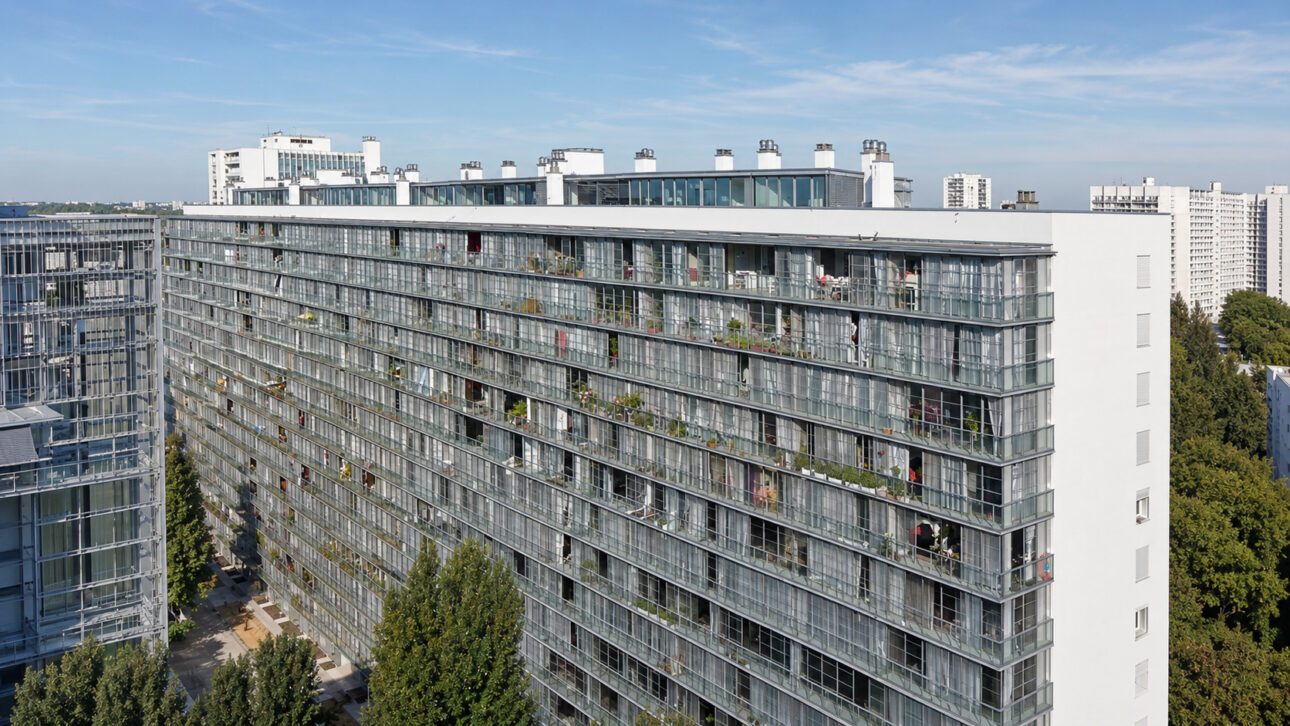
A winter garden is an area enclosed by glass, connected to the apartment, which increases the entry of light and creates a transition space between the house and the outside. At Grand Parc, this solution helped to enhance the sense of space.
The balconies reached 3.80 m on the facades of buildings H, I, and G. This size is large for an apartment because it allows for more real use of the outdoor space, not just a small narrow exit.
With this, the residence gained more brightness, more view, and more freedom of use. The resident gained a kind of extension of the living room, without the old building needing to disappear.
Glass facades changed the relationship between apartment and city
The new facade was not just to make the buildings more beautiful. It changed the way the apartments open up to Bordeaux, a city with a lower profile, where the view from the upper floors gains strength.
The glass facades created a second layer for the blocks. This layer functions as protection, light entry, and extra space, while also altering the appearance of the old buildings.
Lacaton & Vassal, the architecture firm responsible for the project, noted that the intervention sought more natural light, more fluidity of use, and more views for each apartment. In simple words, the goal was to make the housing clearer, more open, and more comfortable.
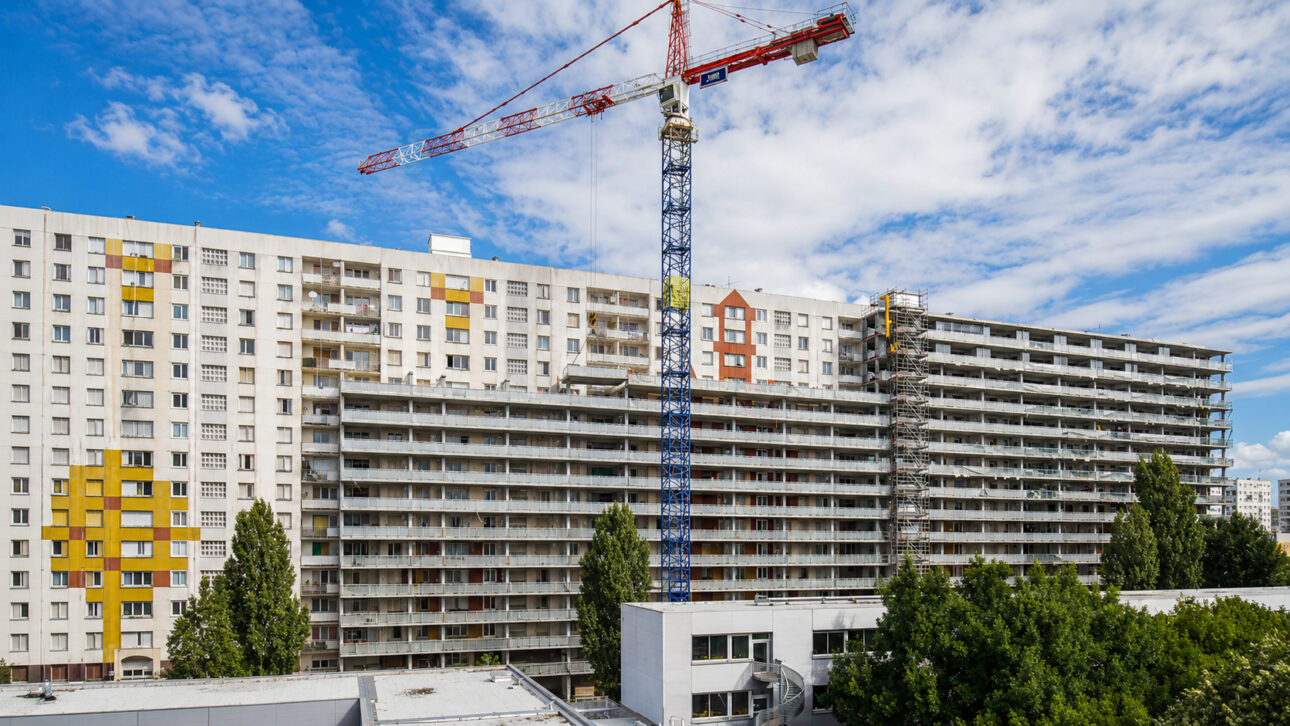
The project also included internal improvements, reorganization of bathrooms, changes in access, entrance halls, and vertical circulation. Vertical circulation is the path used to go up and down in the building, such as stairs and elevators.
The numbers show the scale of the social housing retrofit
The Grand Parc Bordeaux was not a small renovation. The program included 530 transformed homes and 8 new homes.
The recorded area was 44,210 m² existing and 23,500 m² of extensions. With the winter gardens included, the total area reached 68,000 m².
The reported cost was 27.2 million euros for the rehabilitation and 1.2 million euros for the new homes. Rehabilitation, in this case, means recovering and improving the existing building so that it returns to offering good conditions for use.
The project competition took place in 2011 and delivery was in 2016. The record also notes the year 2017 in the project’s registration, with the status of completed work.
The case helps to think about aging Brazilian housing complexes
Many Brazilian cities have old housing complexes, with tired facades, worn-out common areas, and small apartments. The French case should not be copied automatically, but it helps to raise an important question: when is it worth renovating before demolishing?
The answer depends on a technical study. A building may look simple from the outside, but inside each structure has limits. Adding balconies, glass, and new metal pieces requires calculation, authorization, and responsibility.
Even so, the Bordeaux experience shows that an old social building does not need to be seen only as a problem. In some cases, it can be a starting point to improve housing, reduce waste, and enhance the neighborhood.
The main lesson lies in the change of logic. Instead of just thinking about demolishing and rebuilding, the construction industry can assess what already exists, what can be saved, and what can be given a second life.
The retrofit of the 530 social apartments in Bordeaux became a reference because it combined housing, reuse, and comfort in a single project. The old blocks were not erased. They gained balconies, winter gardens, and glass facades to better serve those who already lived there.
This type of renovation is not a miracle nor a solution for every building, but it shows a powerful alternative for cities with aging complexes. In Brazil, do you think it’s worth investing more in deep renovations of popular buildings before considering demolition? Leave your opinion in the comments and share with those interested in construction and housing.