Portuguese
  Spanish


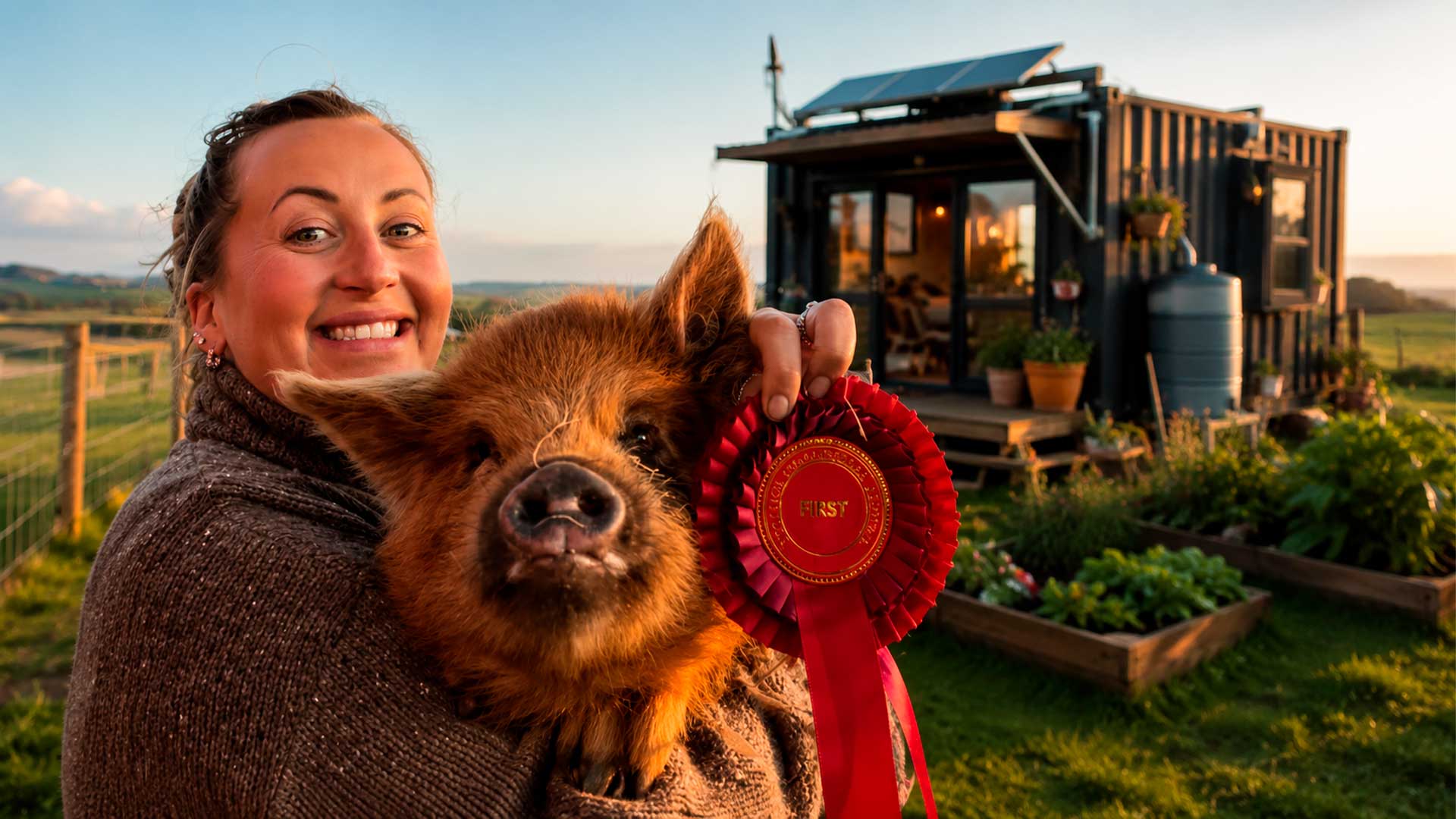

Robyn Swan sold belongings, bought land near Stirling, and started living in an adapted shipping container, where she tries to produce her own food, collect rainwater, and rely less and less on the supermarket. The radical decision reduced her monthly expenses but also exposed the harsher side of off-grid life.
The pressure of rent and the cost of maintaining a house led Robyn Swan, 33, to make an unusual decision in Scotland. She left conventional life, sold some belongings, bought rural land, and started living in a shipping container adapted as a home.
As reported by SWNS, in a story reproduced by the New York Post on March 13, 2025, Robyn lives near Stirling, Scotland, with her partner Luke, 29. The housing has no monthly rent, and her expenses are just over US$ 330 per month, including food, phone, and local tax.
The change began in 2023, when she left her old house, sold furniture, car, and television, refinanced the property, and bought about seven acres of land. The land cost approximately US$ 240,000, while the 40-foot by 8-foot container cost about US$ 5,400.
-
U.S. City Builds Tiny Home Village on Water Company Land to House 136 Homeless People: Inside the Social Housing Units

-
France Revamps 530 Social Housing Units with Large Balconies and Glass Facades Without Demolishing Existing Buildings

-
Facing high rent, couple transforms parents’ garage into a fully functional apartment, creating a complete home at a fraction of the market cost.
-
MIT Scientists Develop Method to Transform CO₂ into a Construction Ally, Boosting Cement Strength by 13% in 24 Hours for More Sustainable Infrastructure


The idea was not just to live cheaply. Robyn states that she wants to get as close as possible to self-sufficiency, with a garden, animal husbandry, rainwater collection, and solar energy. Today, she estimates being around 40% self-sufficient, with a goal to advance in the coming months.
From expensive rent to a 12-meter container in the countryside
The story draws attention because it’s not just about swapping a house for a small dwelling. Robyn reorganized her entire financial life to buy land, reduce fixed bills, and transform the rural space into a self-production base.
The container was installed directly on the land, without a comfortable transition phase. According to the account, she ended up sleeping on a mattress on the floor while the structure was still being assembled, because the trailer that was to be used temporarily had problems.
The decision took place in a country where rent continues to be a significant burden on the budget. According to the Office for National Statistics, the average private rent in Scotland reached £1,019 per month in April 2026, a 2% increase in 12 months. Although the data is after Robyn’s move, it helps explain why compact housing alternatives continue to attract attention in the United Kingdom.
The house started without comfort but gained a kitchen, bathroom, and solar energy
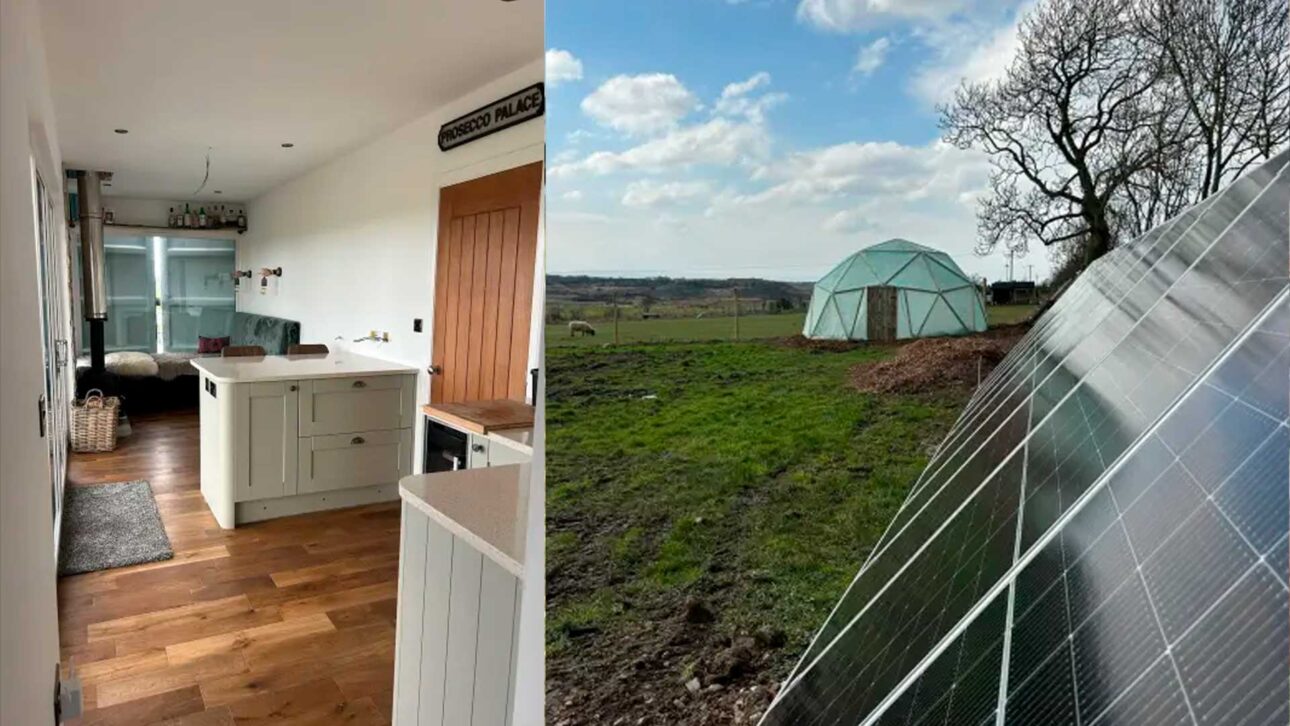
Initially, the container was an almost empty structure. Over time, Robyn installed a bed, kitchen, refrigerator, freezer, and a complete bathroom with a shower and dry toilet, a model used in homes that seek to reduce water consumption.
She also chose thermal insulation and double-glazed windows, which made the space more comfortable than a common trailer. This detail is important because metal containers can suffer from cold, heat, and condensation if not properly adapted.
Energy was another challenge. Robyn spent about eight months using portable batteries before installing solar panels. During this period, she had to adapt her routine to the lack of constant electricity, something she described as difficult but possible with a change of habit.
Today, the house functions as a small rural residence. Even so, Robyn herself acknowledges that the lifestyle is physically demanding and depends on daily work, maintenance, and a willingness to deal with unforeseen events.
Garden, animals, and rainwater became part of the monthly economy
The monthly savings did not come only from the absence of rent. Robyn also reduced trips to the supermarket by growing food and raising animals on the land. She plants items such as potatoes, carrots, turnips, tomatoes, strawberries, kale, and berries, choosing what can withstand the Scottish climate.
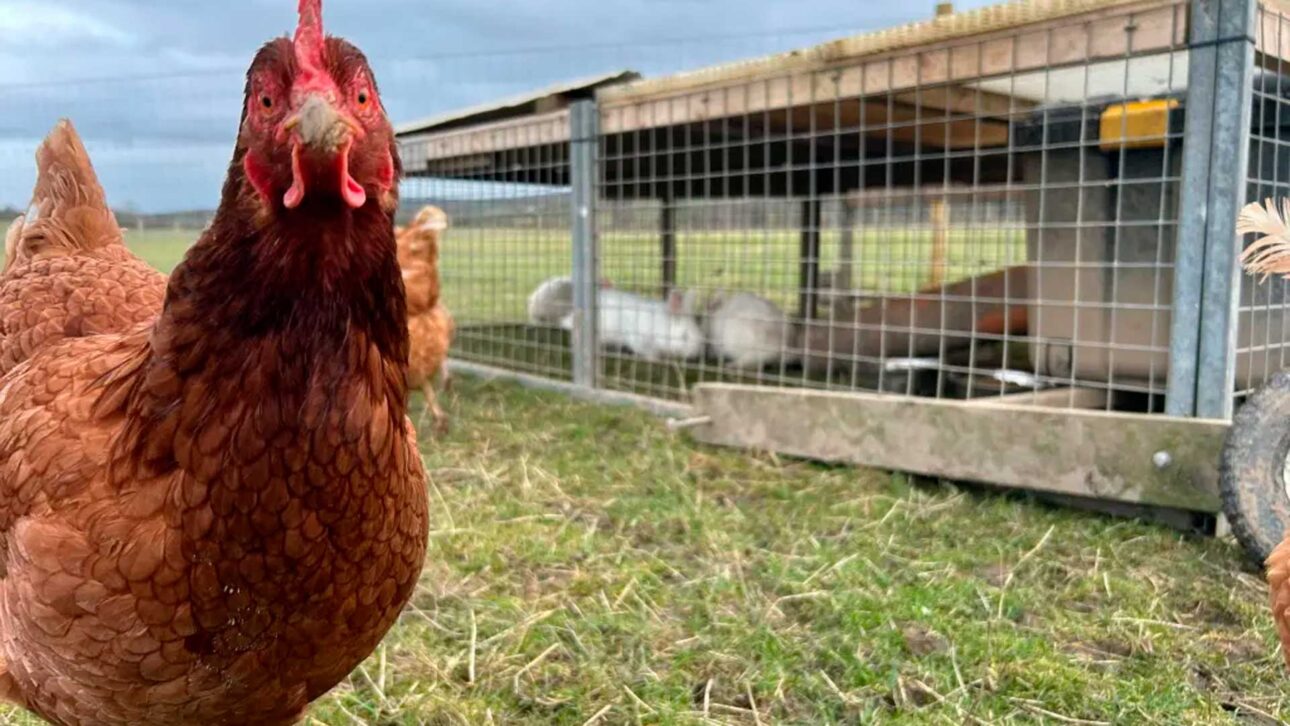
In addition to the garden, she raises chickens for eggs and meat, as well as rabbits and pigs. The intention is to produce more and more protein and vegetables on the land itself, and in the future, sell part of the production in a small commercial garden.
Water is also part of the system. Robyn uses rainwater collection and filtration, a common solution in rural properties but one that requires care. According to Scottish Water, about 3% of the Scottish population uses private sources of drinking water, and this type of supply must be registered with the local environmental health authority.
Another resource she uses is the Olio app, which connects people and establishments with surplus food. According to Zero Waste Scotland, tools like this help redistribute food that could be wasted, bringing donors and local residents closer together.
Cost cutting draws attention, but off-grid living requires planning
Robyn estimates that she spends about US$ 1,000 less per month than she did when living in a conventional house. The difference allows her to reinvest money into her own land, improve the structure, and expand food production.
Even so, the experience should not be seen as a simple or automatic solution for everyone. Living in a container requires land, adaptation, insulation, water, energy, sanitation, transportation, and, depending on the region, authorization from local authorities.
In Scotland, the government maintains specific rules for private water supply. The water regulations for human consumption and small domestic supplies exist precisely to reduce health risks in areas where the public network does not reach.
Therefore, Robyn’s story draws attention less for improvisation and more for planning. She didn’t just place a container in the field. She created a lifestyle system with solar energy, a garden, animals, water collection, food reuse, and strict spending control.
And you, would you live in a container house in the countryside to reduce expenses and rely less on the supermarket? Leave your opinion in the comments and tell us if this lifestyle would make sense for you.