Portuguese
  Spanish


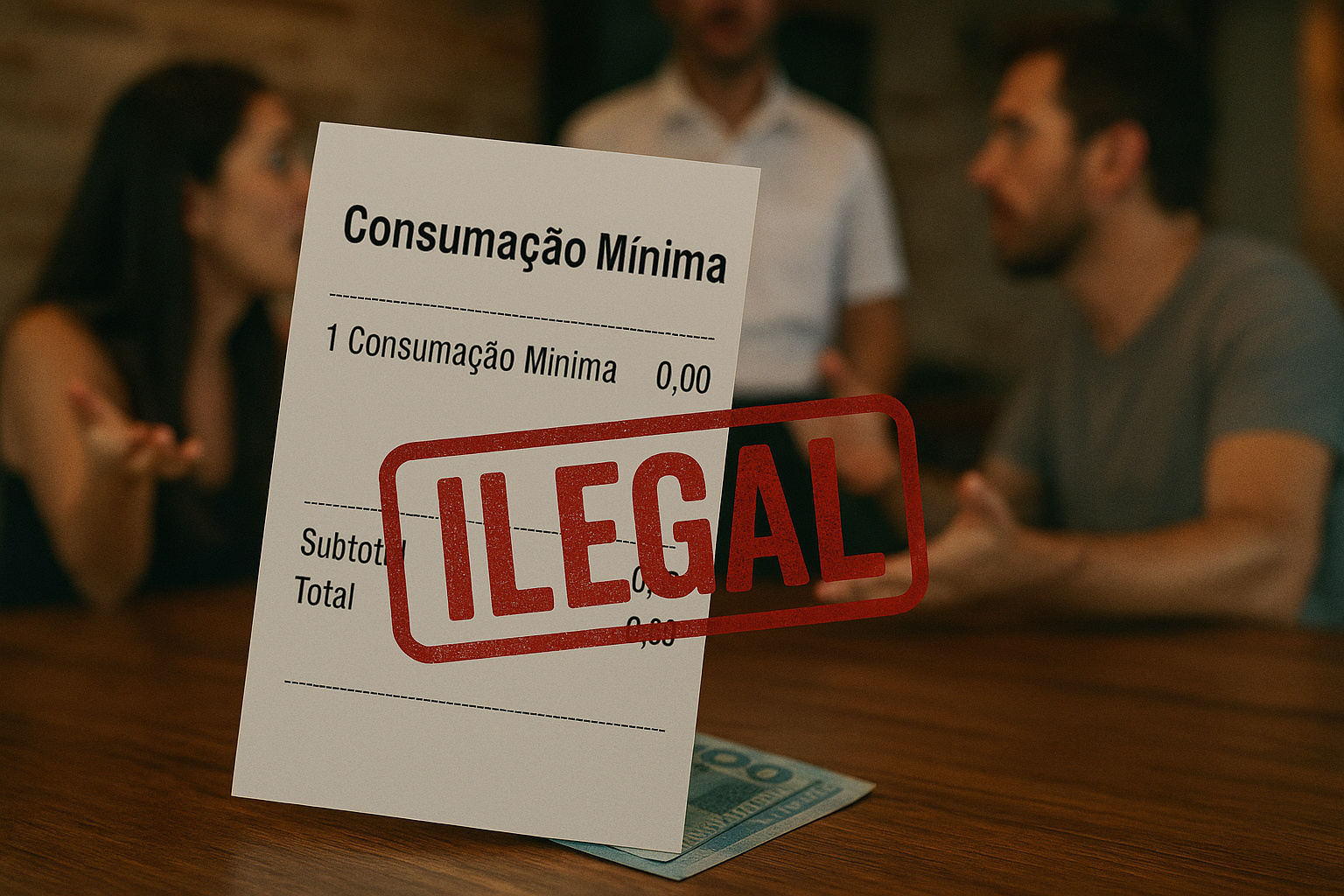

Minimum Consumption in Bars and Restaurants Is Illegal: Courts Have Already Guaranteed Refunds and Damages of Up to R$ 5,000 to Affected Customers.
The so-called “minimum consumption” is a common practice in bars, clubs, and restaurants: the customer, upon entering, is required to pay a certain amount, which may or may not be converted into products or services. The problem is that, in practice, many consumers do not consume the total amount required and end up at a loss. The Consumer Protection Code (CDC), in its article 39, item V, considers illegal any demand for manifestly excessive advantage. By imposing minimum consumption, the establishment takes away the customer’s freedom of choice, forcing them to pay for something they do not necessarily wish to consume.
Therefore, the courts have been clear: this practice is abusive and illegal, potentially resulting in the refund of the amount paid and even compensation for moral damages.
What the Law and Jurisprudence Say
The CDC guarantees consumers the right to freely choose what they want to consume. The charge of minimum consumption violates principles such as:
-
Are Companies Required to Release Employees During Brazil’s World Cup Matches? Understanding Workers’ Rights

-
Brazilian Family’s Homeschooling Success Sparks International Debate: Daughters Read 30 Books Annually and Speak Multiple Languages

-
Piauí Governor Enacts Law Requiring State Contractors to Reserve Jobs for Former Inmates with Minimum Wage and Verification Before Payment
-
Providing Your Tax ID at Supermarkets: A Routine Step That Can Unlock Discounts and Rewards but Also Reveals Your Shopping Habits




- Objective Good Faith, by imposing an disproportionate obligation;
- Contractual Balance, as it transfers to the customer a risk that should be borne by the supplier;
- Right of Choice, one of the pillars of consumer legislation.

The Procon-SP has already manifested itself several times against this practice, classifying it as abusive. During inspections, establishments were fined for forcing customers to pay minimum amounts, regardless of consumption willingness.
In the courts, decisions also reinforce this understanding:
- The TJSP considered the charge of R$ 70 as minimum consumption in a nightclub to be abusive, ruling for the refund of the amount paid.
- The TJDFT has already condemned a restaurant to refund minimum consumption amounts and acknowledged the possibility of moral damages, given the abusive imposition.
- In class actions, consumer associations have managed to suspend the practice in certain cities, arguing that it violates freedom of choice.
What Compensation Can the Consumer Demand
When subjected to minimum consumption, the consumer has the right to:
- Refund of the amount paid: simple or double, in case of proven bad faith, according to the article 42 of the CDC;
- Compensation for moral damages: when the practice generates embarrassment, frustration, or evident loss;
- Collective Protection: possibility of filing a public civil action to prevent the establishment from continuing the charge.
In some precedents, the amounts for compensation for moral damages varied between R$ 2,000 and R$ 5,000, in addition to the refund in cash.
How to Act Against the Minimum Consumption Charge
The consumer can protect themselves and seek compensation by following some steps:
- Keep receipts, tickets, or proof of the charge;
- File a complaint with the Procon of your city, reporting the abusive practice;
- Contact the Special Civil Courts, requesting a refund and compensation;
- Gather witnesses or photos that prove the imposition of minimum consumption;
- Report to consumer protection agencies, which can impose fines and close repeat offender establishments.
What Experts Say
Attorney Lígia Marques states: “If you enter the place and are already informed of the consumption conditions, there is no prohibition. However, if there is no prior information, then it is prohibited.”
Jordão Ulisses, an attorney with approximately 20 years of practice, states: “My advice is for the client not to create confusion and talk to the manager, informing that they will not submit to the minimum consumption payment, under penalty of filing a complaint with the Procon, which could fine the establishment.”
Freedom of Consumption Is a Guaranteed Right
The courts and consumer protection agencies have sent a clear message: customers cannot be forced to consume more than they wish. The charge of minimum consumption is illegal, violates the CDC, and has already resulted in compensation of up to R$ 5,000, in addition to the refund of amounts.
For consumers, the message is simple: do not accept abusive impositions. For establishments, the lesson is direct: customer loyalty should be built by the quality of service, not by financial coercion.