Portuguese
  Spanish


Energy Consumption in Brazil Grows 1.7% in June 2025, Showing Steady Expansion Pace and Reflecting Increased Residential and Industrial Demand in the Country.
Energy consumption in Brazil has consistently shown growth in recent years. This occurs largely because the country has been developing its economy and changing the consumption patterns of the population and industry.
In June 2025, for example, the country recorded a 1.7% increase in electricity consumption, thus maintaining a stable expansion pace, even in the face of climatic and regional variations.
In this way, this growth, though moderate, reveals that despite economic and environmental challenges, Brazil continues to increase its energy demand.
-
USP researcher creates thesis to attract international funds for the country’s electric energy sector

-
Trafigura receives authorization from ANEEL to trade electricity in Brazil and expands its operations in the largest energy market in Latin America.
-
Mobile solar panels promised to share space with corn crops, but the 20% to 25% shade reduced production by an average of 7.7% and opened a new dispute between energy and food.
-
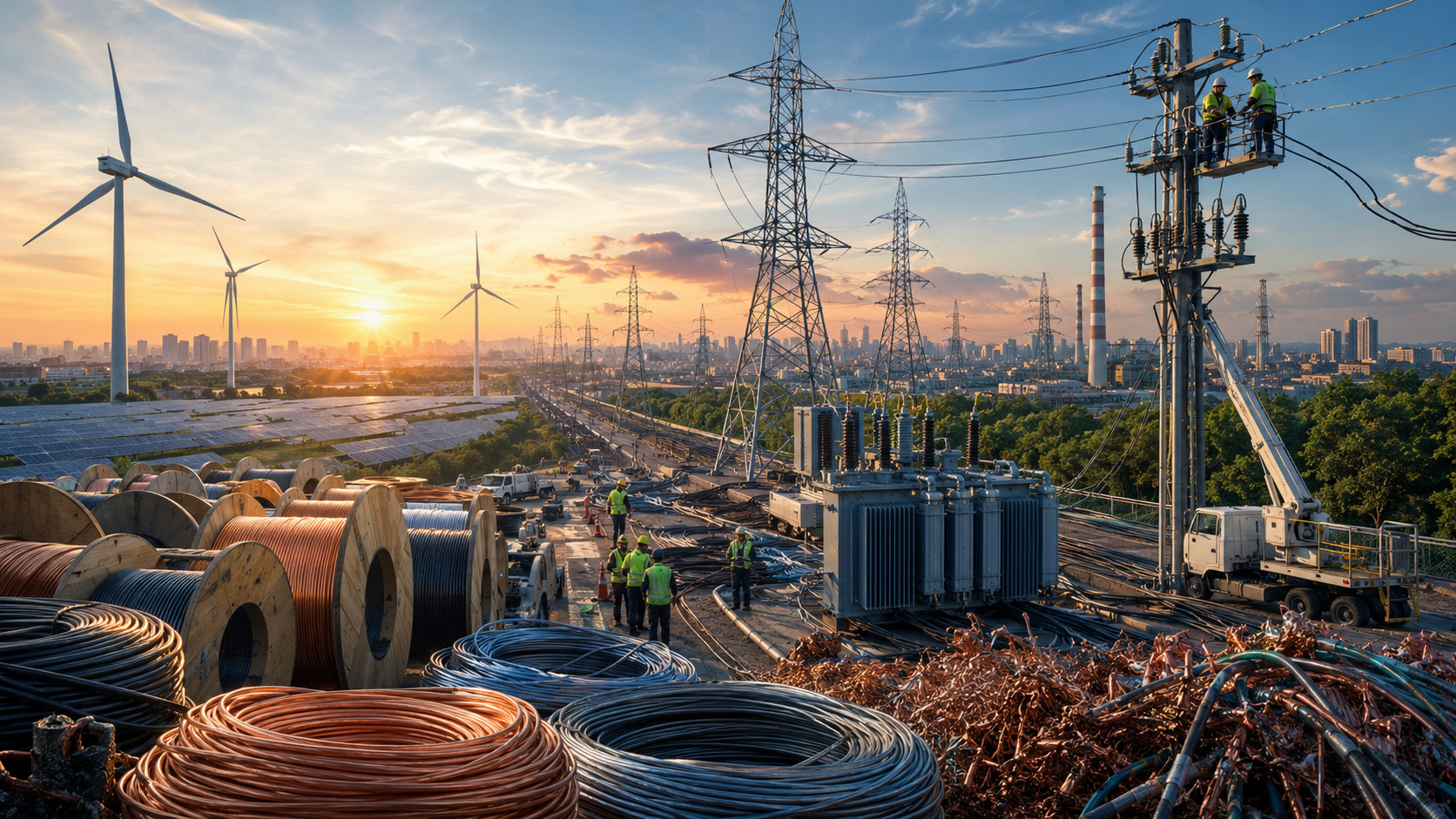
More than 80 million kilometers of wires need to be replaced by 2040: the energy transition doesn’t just depend on panels and electric cars, but on a colossal race for copper, aluminum, transformers, and recycling of old cables.


This somewhat indicates the resumption of development and the increase in the supply of services and products that depend on electricity.
Therefore, to better understand this evolution, we need to analyze the historical context of Brazilian energy consumption, in addition to the factors influencing its demand and the prospects for the future of the sector.
This article, therefore, explores these aspects, showing how energy consumption in Brazil is directly linked to different social, economic, and environmental factors.
Historical Context of Energy Consumption in Brazil
Since the 1950s, Brazil has been expanding its energy matrix to keep up with population growth and industrialization.
Initially, the country relied almost exclusively on hydropower, taking advantage of its vast natural resources, especially in the South and Southeast regions.
However, as time passed, the need for energy diversification led the country to adopt thermal sources such as coal and oil, as well as investing in nuclear energy and, more recently, in renewable sources like solar and wind energy.
This movement reflects, above all, the concern for supply security and the reduction of dependence on water resources, which can be impacted during drought periods.
In recent decades, electricity consumption has grown significantly, driven by population growth, economic development, and a greater supply of goods and services that require electricity.
Moreover, urban growth and industrial expansion have propelled this increase.
However, this growth has not occurred linearly.
For example, the country faced economic crises and drought periods that impacted the pace of consumption.
In the early 2000s, challenges related to water scarcity led to rationing measures and increased energy efficiency.
These experiences were, therefore, important for creating policies and technologies that made the sector more resilient.
Factors Influencing Energy Consumption in Brazil
Various factors influence energy consumption in Brazil, from climatic conditions to public policies and technological advances.
One of the most evident aspects is the influence of climate on electricity use, especially in residential consumption.
During periods of intense heat, people increase their use of cooling appliances, such as fans and air conditioners, raising electricity demand.
Conversely, in milder periods, this need decreases, which can lead to a temporary reduction in consumption.
Additionally, economic growth directly impacts energy demand.
When the industry is expanding, consumption increases since many productive activities depend on electric energy to operate.
Similarly, the increase in the population’s purchasing power favors access to electrical equipment and appliances, elevating residential consumption.
Another important factor is the regionalization of consumption.
Brazil, a country of continental dimensions, presents different levels of development and climatic characteristics that affect energy demand.
Regions such as the South and Northeast show more significant growth in consumption due to increased economic activity and population, while other areas, like the Southeast/Central-West, register more modest variations.
We should also consider the impact of public policies in the energy sector.
Incentives for using renewable sources and energy efficiency programs directly influence the consumption curve.
Moreover, the growing awareness of the population about sustainability, combined with technological advances such as LED lighting and more efficient appliances, contributes to more rational consumption.
The Recent Scenario of Energy Consumption in 2025
In June 2025, the National Interconnected System (SIN), which coordinates most of the country’s electricity supply, recorded a 1.7% increase in electricity consumption compared to the same month of the previous year.
This growth maintains an upward trend that has been consolidating, with a cumulative expansion of 3.2% in the last 12 months.
Analyzing the regions, the South showed the highest increase, with a growth of 5.3%, followed by the North (4.9%) and Northeast (2.9%).
Meanwhile, the Southeast/Central-West recorded a slight decrease of 0.3% in June, although it showed positive growth of 2.2% throughout the year.
These regional variations reflect climatic, economic, and social factors.
In June 2025, the country experienced above-average rainfall and mild temperatures across much of the territory, thus reducing the use of cooling equipment and altering the traditional consumption pattern.
These climatic conditions helped contain demand peaks that could overload the system.
Thus, the National System Operator (ONS) constantly monitors consumption and energy generation to ensure that the system operates safely and efficiently, preventing blackouts and meeting consumer needs.
Additionally, industrial expansion in certain regions has influenced demand in a more localized manner.
Sectors such as agribusiness, mining, and the automotive industry, important in some regions, require increasing levels of electricity for their operations.
Importance of Energy Monitoring and Planning
The growth of energy consumption in Brazil requires careful planning to ensure the energy security of the country.
Therefore, the monthly monitoring of electrical load helps anticipate demand peaks, adjust energy generation, and avoid supply failures.
Brazil is increasingly investing in diversifying its energy matrix, with an emphasis on renewable sources such as hydropower, wind farms, and solar plants.
This diversification thus reduces risks associated with climatic events such as prolonged droughts, which can affect hydropower generation.
Furthermore, energy efficiency programs and incentives for conscious energy use seek to balance consumption growth with environmental sustainability.
The adoption of more efficient technologies and the modernization of electrical infrastructure contribute to meeting the growing demand without compromising the environment.
Energy planning also includes investments in smart grids, which allow better management of consumption, fault identification, and optimization of energy distribution.
These grids are essential for integrating distributed generation, which is growing with self-production by residential and business consumers.
Prospects for Energy Consumption in Brazil
With ongoing economic development and population growth, energy consumption in Brazil is expected to continue on an upward trajectory.
Indeed, the expansion of the industrial sector, urban growth, and the greater supply of electronic services increase the need for electric energy.
On the other hand, the country has the opportunity to make progress in clean and renewable sources, which may change the consumption and generation profile.
Solar energy has gained traction, particularly due to falling equipment costs and interest in self-production of energy in homes and businesses.
At the same time, the digitization and modernization of electrical grids, using smart technologies, enable more efficient management of consumption and energy distribution.
This helps reduce losses, optimize resource usage, and ensure greater reliability of the system.
Advancements in electric mobility are also likely to impact energy consumption.
Indeed, the growing adoption of electric vehicles in Brazil may increase residential and commercial demand for electricity, requiring planning to support this growth without compromising supply quality.
Thus, the challenge for the future will be to balance consumption growth with environmental preservation and economic sustainability, promoting development that meets the needs of the population without compromising future generations.
Brazilian Energy Consumption
The 1.7% increase in energy consumption in Brazil in June 2025 reinforces a trend of energy demand expansion in the country.
This growth is linked to historical, economic, climatic, and social factors that influence the electricity usage pattern.
The regional analysis shows different consumption dynamics, reflecting the particular characteristics of each area of the country.
Therefore, constant monitoring of consumption and energy planning ensure the security of the electrical system and the efficient service of the population.
With investments in renewable sources, energy efficiency, and smart technologies, Brazil is equipped to face the challenges of increasing energy consumption, promoting sustainable and balanced development.
Thus, the country can continue its trajectory of economic growth without compromising environmental preservation and quality of life for future generations.