






 Portuguese
  Spanish


The subfloor costs between R$ 25 and R$ 100 per m² for labor only in 2026, but can range from R$ 60 to R$ 200 per m² with material. The problem arises when leveling, thickness, curing, slope, and waterproofing are ignored before the final floor is correctly installed.
In 2026, the subfloor returned to the center of questions in residential construction after a survey published by Monitor do Mercado on June 30 showed how the price of the subfloor, slope, waterproofing, and cracked flooring can determine whether the finish will be stable or become rework.
The topic involves property owners, bricklayers, and renovation professionals who need to prepare the base before the final coating. The warning applies to houses, apartments, bathrooms, balconies, laundries, and outdoor areas, where low price, haste, and lack of slope can lead to expensive rework later.
How much does it cost to make a subfloor in 2026
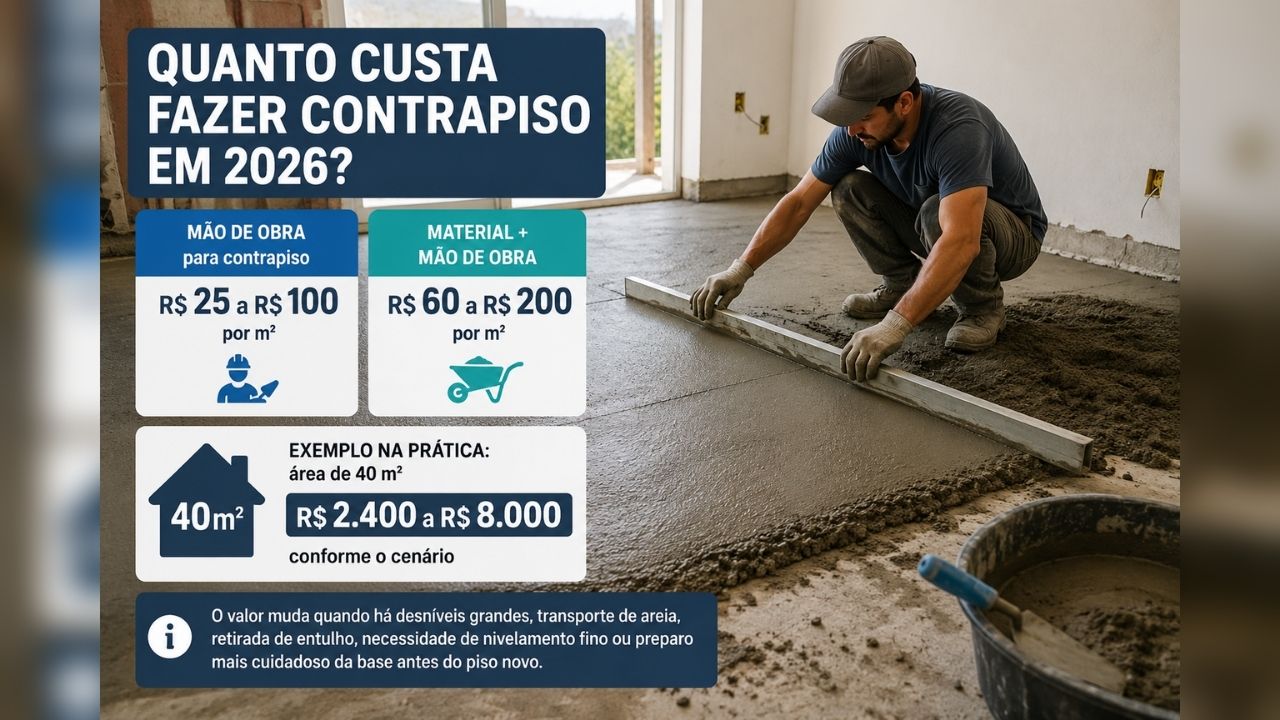
In 2026, labor for subflooring typically ranges from R$ 25 to R$ 100 per m², depending on the city, site access, deadline, and service complexity. When material is included in the budget, the most common range can go from R$ 60 to R$ 200 per m².
-
New Offshore Borehole Mining Technique Extracts Lithium and Cobalt Without Damaging Ocean Floor

-
Vale Doubles Copper Drilling in Brazil’s Carajás, Plans to Drill 120 Kilometers of Rock by 2026
-
Innovative Vertical Cistern Becomes Water Tank in Container Home Amid Pressure Issues, Offering a Compact 1,000-Liter Solution Without a Tower or Underground Tank
-
Rio de Janeiro Traffic Relief: Long-Awaited Change Promises to Cut 15-30 Minutes from BR-040 Commute, Easing Access to Avenida Brasil.



In practice, an area of 40 m² can cost from R$ 2,400 to R$ 8,000, depending on the scenario. The value changes when there are large uneven areas, sand transport, debris removal, need for fine leveling, or more careful preparation of the base before the new floor.
Why the subfloor defines the floor result
The subfloor is a leveling layer made with mortar to prepare the base that will receive the coating. It seems simple because it is hidden, but it is precisely this characteristic that makes the error dangerous: when the problem appears, the final floor may already be installed.
If the base is wavy, weak, or out of square, the coating may come loose, crack, make a hollow noise, or accumulate water. The beautiful finish does not compensate for a poorly made base, because the hidden defect tends to appear later, when the correction is more expensive.
Incorrect slope can leave standing water
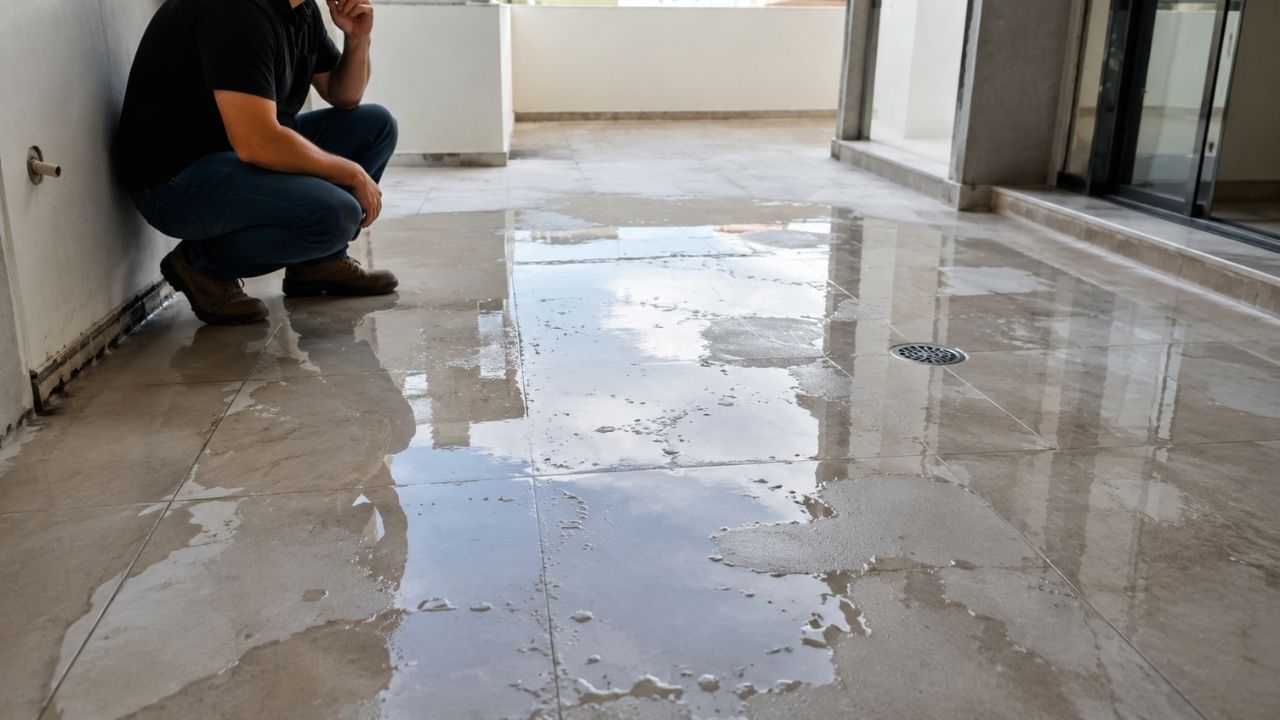
In bathrooms, laundries, balconies, and outdoor areas, the subfloor should not only be flat. It needs to have the correct slope towards drains, grates, or drainage points. If this slope is poorly calculated, water can escape the drain or form puddles in circulation areas.
This error is common because it doesn’t always appear at the time of execution. Standing water only reveals the defect later, when the environment starts to be used. A poor slope can turn an apparently cheap service into a new expense with breaking, correction, and reinstallation of the coating.
Waterproofing changes the risk of the project
Waterproofing is also part of the calculation, especially in wet areas. Depending on the system adopted, it needs to be done before or along with the regularization. When the sequence is reversed or poorly executed, water can infiltrate the slab, stain walls, and loosen coatings.
Therefore, the subfloor budget should not only consider the price per square meter. It’s necessary to understand if the service includes base preparation, slope, waterproofing, and curing time. When these steps are left out of the initial conversation, the cheap option may only appear on paper.
Thickness affects consumption and budget
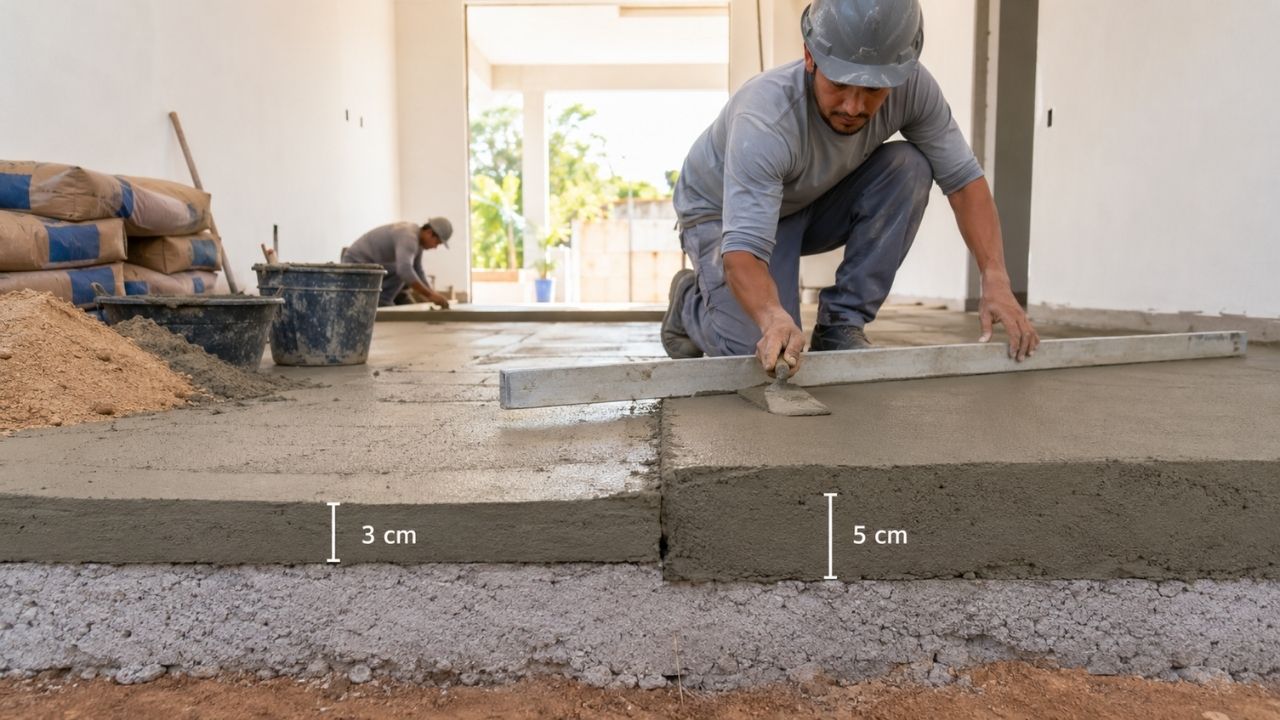
In residential projects, the most common thickness of the subfloor usually varies from 3 cm to 5 cm. It can increase when the slab is very uneven or when there are pipe passages. The greater the average thickness, the higher the consumption of sand, cement, and execution time tends to be.
The technical manual of DER-ES, cited in the source, describes the subfloor as a layer of regularization and leveling over a solid base, with examples of 3 cm and 5 cm. This reference shows why the thickness needs to be defined before the budget, and not improvised during the project.
Poor base harms porcelain, vinyl, and laminate
Floorings such as large porcelain tiles, vinyl, and laminate require a flatter and more stable base. Any waviness, crumbling, or leveling failure can impair the installation and compromise the final result.
In these cases, saving on the subfloor can transfer the problem to a more expensive stage. The flooring usually costs more than the initial leveling, especially when it involves large pieces, fine finishes, or specialized installation. Poorly calculated savings can turn into material loss and double payment.
Most common errors appear before finishing
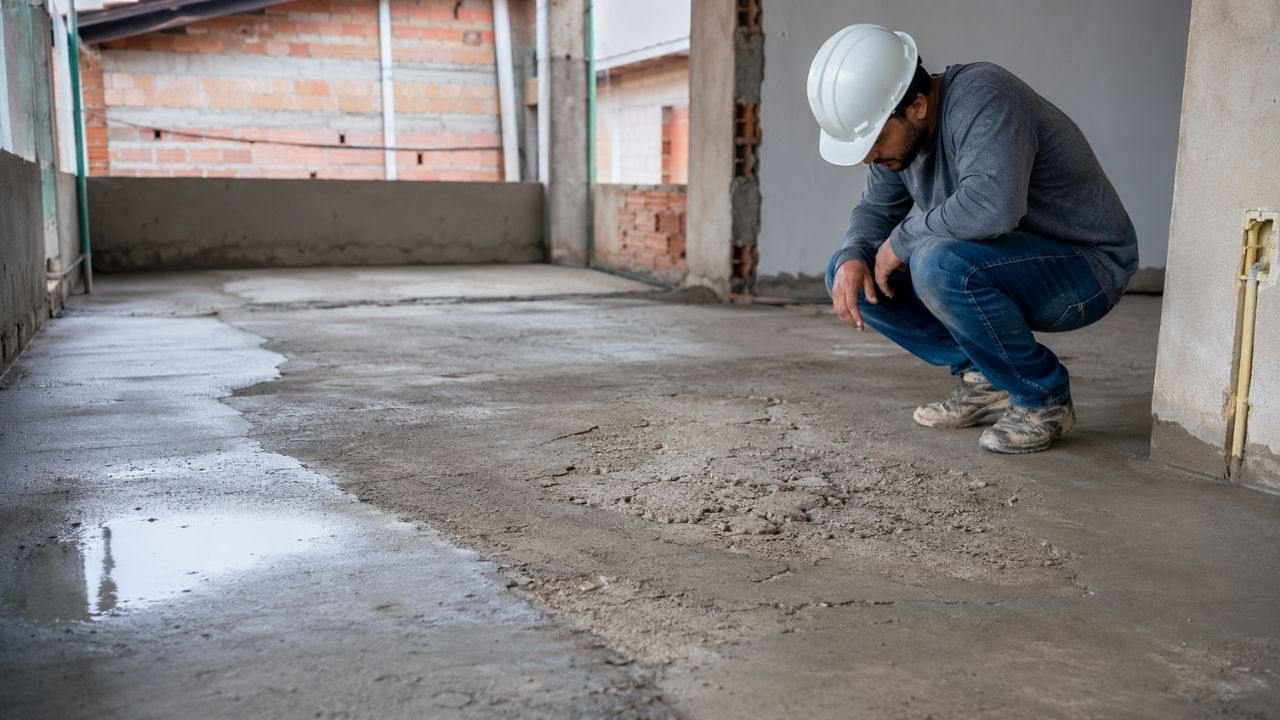
Among the most harmful errors are the lack of guides, poor slope, weak mix, and rushed curing. Without guides, the level can vary from one corner to another. With a weak mix, the surface crumbles and loses adhesion. With insufficient curing, the floor is laid before the base stabilizes.
These problems do not depend solely on the mason’s skill but also on the agreed scope. The project owner needs to know what they are contracting: simple leveling, fine leveling, slope for drain, wet area preparation, or subfloor with complete material. Different services should not be compared solely by the lowest price.
How to evaluate the mason’s budget
Before finalizing the service, the budget should inform the measured area, estimated thickness, mix ratio, base preparation, curing time, and responsibility for the material. It’s also important to define if there will be removal of old flooring, site cleaning, material transport, and debris disposal.
Another point is to ask how the leveling will be done. In some projects, manual leveling may be sufficient. In others, more precise leveling becomes necessary to avoid problems with the final flooring. The best budget is the one that clearly states what will be delivered, not just the lowest price per square meter.
When cheap can become expensive
A cheap subfloor can make sense when the scope is clear, the base is in good condition, and the service does not require major correction. The problem arises when the low price ignores slope, thickness, waterproofing, curing, and surface preparation.
In this situation, the owner of the project pays less at the beginning but assumes the risk of paying twice later. Cracked flooring, standing water, infiltration, and loose tiles may require breaking the new finish to correct a flaw that originated in the previous stage.
What to check before installing the new floor
Before receiving the covering, the subfloor needs to be regular, firm, and suitable for the type of environment. In wet areas, the slope must be tested. In dry areas, the leveling must meet the chosen covering. In all cases, curing should not be treated as a detail.
The central point is simple: the final floor only shows what the base allows. When the subfloor is poorly executed, the problem may remain hidden for a few days but tends to appear in the real use of the house.
Is it worth saving at this stage of the project?
The subfloor is not usually the most desired part of the renovation because it becomes invisible after the finish. Even so, it determines whether the new floor will have stability, adhesion, and proper drainage. In 2026, with values varying according to labor, material, and complexity, comparing budgets requires more attention than just looking at the final price.
And you, have you ever seen a project where the new floor had to be broken due to poorly made subfloor, wrong slope, or infiltration? Do you think it’s better to pay more for a well-executed base or try to save at this stage? Leave your opinion in the comments.


