Portuguese
  Spanish


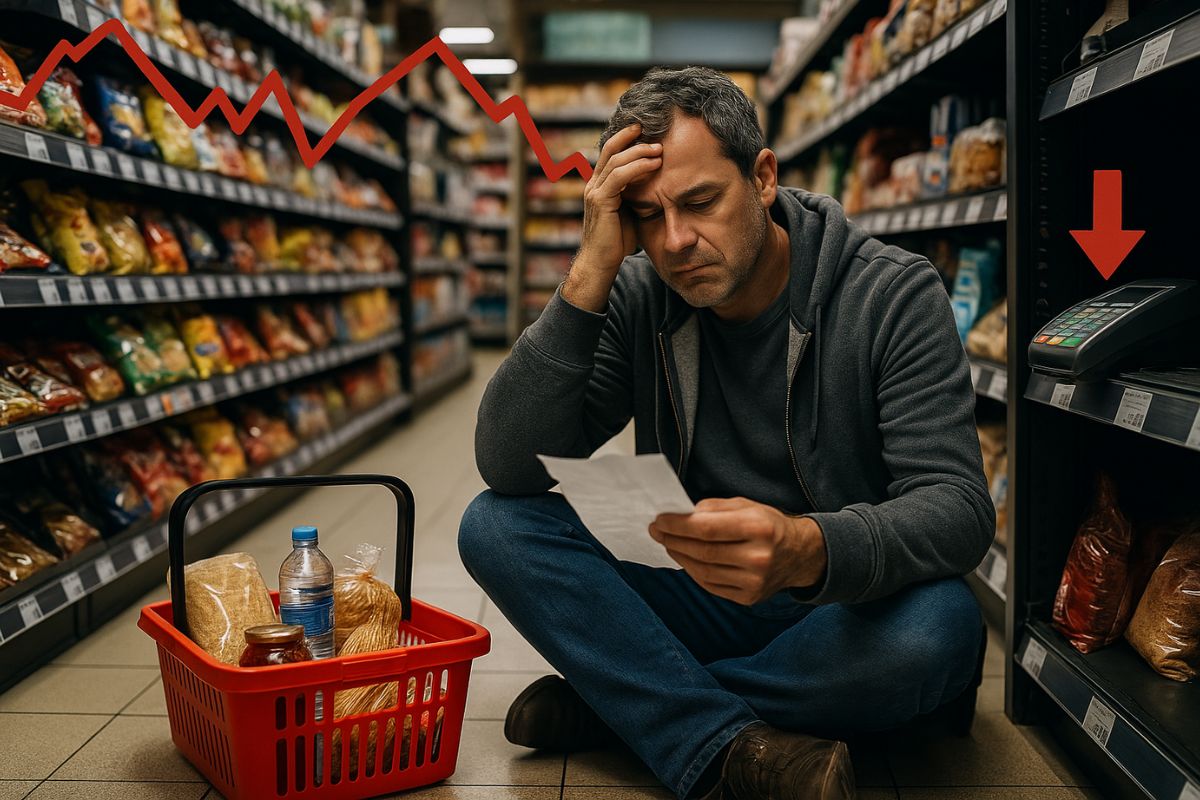


With 78% of Families in Debt and Sales Falling, the Commerce Crisis Deepens in 2025, Igniting an Alert for the Health of the National Economy.
A commerce crisis has quietly yet powerfully settled in Brazil. The latest economic figures reveal a concerning scenario: retail sales are declining, while indebtedness and defaults among families and businesses are reaching record levels. Brazilians simply can no longer consume as they did before.
According to data from the Brazilian Institute of Geography and Statistics (IBGE) and the National Confederation of Commerce (CNC), the combination of inflation, high interest rates, and a heavy tax burden is suffocating the population’s purchasing power. The analysis of indicators shows a country that goes into debt to survive, where economic activity is beginning to show signs of stagnation.
The Alert Signal for 2025: Retail Sales Do Not React
The main thermometer of household consumption has set off the alarm. According to the IBGE, retail sales recorded a 0.4% drop in April 2025 compared to the previous month.
-
Brazilian Brothers Transform Dairy Business into Latin America’s Best Cheese, Boosting Revenue from $80,000 to $4 Million

-
He Left Construction, Partnered with His Wife, and Turned a Homemade Gelato Hobby into Brazil’s Largest Chain with 240 Stores and $100 Million Annually
-
Brazil Faces Caregiver Shortage Despite Having 34.1 Million Elderly, Highlighting a Major Challenge for Families
-
Brazil’s Assaí Generates $4 Billion in Quarterly Revenue, Profits $16.7 Million, Highlighting High Tax Burden


The extended retail sector, which includes areas such as vehicles and construction materials, saw an even larger decline of 1.9%. Although these figures may seem small, they indicate a concerning slowdown since consumption is the main driver of the Brazilian economy.
The Brazilian Wallet: Indebtedness and Defaults at Record Levels
The reason for the decline in consumption is clear: Brazilians are suffocated by debt. A survey by the National Confederation of Commerce of Goods, Services, and Tourism (CNC) revealed an alarming scenario in May 2025:
- 78.2% of Brazilian families are in debt, whether with credit cards, overdrafts, or installment plans.
- 29.5% of families have overdue accounts, the highest level of delinquency since October 2023.
Data from credit bureaus like Serasa confirms the severity of the situation, indicating that over 70 million Brazilian adults have negative credit records.
The “Domino Effect”: Companies Also Ask for Help
The commerce crisis and the strain on family budgets directly reflect on the health of businesses. In 2025, Brazil set a negative record with over 7.2 million delinquent companies, according to Serasa Experian.
This represents about 31% of all businesses in the country. This scenario creates a vicious cycle: indebted companies do not invest and may lay off employees, which in turn further reduces household income and consumption.
Why Has Consumption Stalled? The Main Villains
The current commerce crisis is the result of a “perfect storm” of economic factors.
- Inflation and High Interest Rates: Persistent inflation erodes purchasing power, making the same amount of money buy fewer products. At the same time, high-interest rates make credit more expensive, discouraging installment purchasing.
- Brazil Cost: The high tax burden on products and services increases prices. An emblematic example is the automotive sector, where taxes can represent up to 44% of the final price of a car.
The Danger of Recession: What Happens If Consumption Stops Completely?


The decline in retail is a worrying symptom for the future of the economy. If consumption, which is the main driver of Brazil’s GDP, continues to stall, the consequences could be severe.
The industry and service sector, which depend on retail sales, may reduce their production, leading to increased unemployment. The current commerce crisis is therefore a warning that the country may be heading towards a deeper economic contraction unless measures to relieve household indebtedness and stimulate credit are taken.
How is the situation in commerce in your city? Have you felt the impact of rising prices and interest rates on your purchasing power? Share your opinion in the comments.