Portuguese
  Spanish


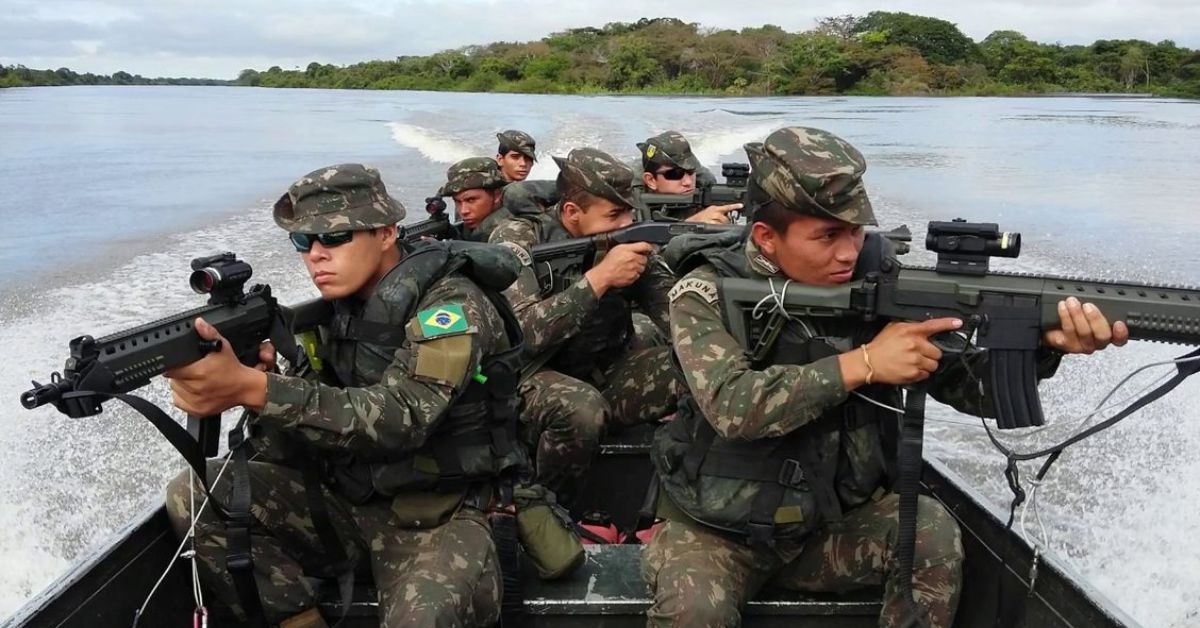


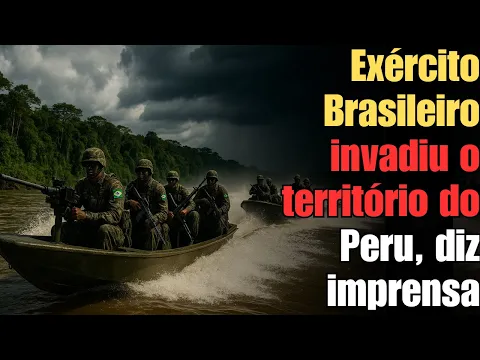
Indigenous Communities Accuse the Brazilian Army of Acting on Peruvian Territory and Rekindle Tensions in One of the Most Overlooked Borders of the Amazon
In the depths of the Amazon, the border between Brazil and Peru is as porous as it is invisible. For the residents of isolated communities in Ramón Castilla province, in the Loreto region, crossing the Javari River into Brazilian territory has become routine. It is on the other side of the bank that they find food, medicine, and often a closer healthcare post. However, this crossing, which was once a matter of survival, has transformed into a diplomatic tension.
Indigenous people from the Nueva Esperanza community reported that soldiers from the Brazilian Army have crossed into Peruvian territory, boarding vessels, demanding documents, and confiscating supplies. The allegations came to light after a video released by Exitosa Noticias, one of Peru’s leading news outlets, showed uniformed military personnel in action in the region.
The Words That Ignited the Debate
The local leader Teddy Alvarado, deputy governor of the community, did not hold back in commenting on the case:
-
Creative Uses for Toilet Paper Rolls That Will Change Your Perspective

-
Crab Trapped in Plastic Bottle for 62 Days Near Okinawa Highlights Little-Known Impact of Marine Pollution on Small Animals
-
Esperanza’s Bamboo Barrier in Oaxaca Redirects River and Reduces Erosion by 85% in Five Years

-
Family Builds Homemade Wind Turbine to Power Off-Grid Home, Video Reaches 555,000 Views on Ngô Thị Huyền’s Channel


“We want river traffic to be controlled by Peruvian authorities and not by foreign forces taking away the little we have.”
The statement resonated both inside and outside Peru. According to him, these approaches are not isolated — they have occurred multiple times, and the affected communities feel abandoned by the state itself. The video went viral on social media, raising an alarm about the instability in relations between the two Amazonian countries.
A Territory Without Visible Ownership
The Javari River meanders through one of the most remote areas of the Amazon rainforest, where the borders between Brazil, Peru, and Colombia blur with the very course of the waters. There are no delimiting markers or fixed control structures. Often, even the residents do not know if they are on Brazilian or Peruvian soil. In such a scenario, confusion is inevitable — and can have serious consequences.
The precariousness of state presence on the Peruvian side forces communities like Nueva Esperanza to increasingly depend on Brazilian infrastructure. It is common for indigenous people to cross the river to Tabatinga (AM) to buy supplies, vaccinate their children, or receive medical care. There are even reports of Peruvian children born in Brazilian hospitals and, consequently, acquiring Brazilian citizenship — adding a new layer of complexity to the conflict.
What Brazilian Military Officials Say
According to the Brazilian Army, its patrols operate exclusively within national territory and follow strict protocols. In response to the allegations, a source interviewed by Agência Brasil stated:
“The military use GPS, topographic maps, and updated location systems. There is no reason to believe they are accidentally crossing into Peruvian territory.”
The patrols are part of the strategy to combat drug trafficking, illegal mining, and smuggling — chronic problems in the Amazon region. These operations include searches of vessels and seizures when there is suspicion of illegal activity. Still, the perception that the Army has crossed the limits of Peruvian sovereignty has spread rapidly among riverside communities and local media.
Video Raises More Questions Than Answers
The images that caused an uproar show armed and uniformed military personnel in small boats interacting with local residents. However, there is no visible geographic marker to prove that they were on the Peruvian side. The calmness with which the soldiers appear in the footage also raises the hypothesis that they were aware they were still on Brazilian territory.
This ambiguity is not new in Amazonian border areas. Sections of rivers serve as divisive lines, roads, and no man’s land at the same time. The lack of formal oversight transforms these spaces into gray zones where rumors grow more powerful than facts.
The Real Problem: Abandonment and Neglect
Behind the allegations of military invasion, what stands out is the institutional abandonment of communities in the region. The absence of the Peruvian government is not new. Schools, health posts, and police presence are nonexistent in many areas of Alto Amazonas. This forces residents to seek help from the Brazilian side — not out of political affinity, but out of sheer necessity.
The Interethnic Association for Development of the Peruvian Jungle (AIDESEP) had already warned about this earlier. In recent reports, the organization pointed out that several communities in the region expressed a desire to be incorporated into Brazilian territory because they feel ignored by Lima.
Reactions and Official Silence
So far, both the government of Peru and the Brazilian Army have avoided strong public statements. On the Brazilian side, the stance has been one of caution. In Peru, civil organizations and indigenous leaders are pressing the Ministry of Foreign Affairs to urgently establish a permanent inspection post in the Javari River region.
In the meantime, the number of allegations is increasing, and tensions persist. In 2023, a series of protests mobilized over 700 residents of the region, demanding more state presence in the border communities. The government promised actions, but little has changed since.
Experts Warn: Lawless Zone is Fertile Ground for Crime
For researchers in the region, the issue goes beyond sovereignty. It is a historical failure in territorial management of the Amazon. Researcher João Meirelles Filho from the Peabiru Institute summarizes the problem:
“The absence of the state in the Amazon border regions invites confusion and the advancement of illegal activities.”
And that is exactly what is at stake. Where there is no government, there is space for anyone: miners, traffickers, militias — or even foreign military forces operating without knowing exactly where they are.
A Border That Exists Only on Paper
The alleged invasion may or may not have occurred. What is certain is that the borders drawn on maps do not always correspond to the reality experienced by those living in the forest. The incident on the Javari River exposes the fragility of institutional presence and the risk that localized tensions could turn into diplomatic conflicts.
And while governments hesitate, it is the indigenous people who pay the price, as they continue to live between two countries — and, often, on the margins of both.