






 Portuguese
  Spanish


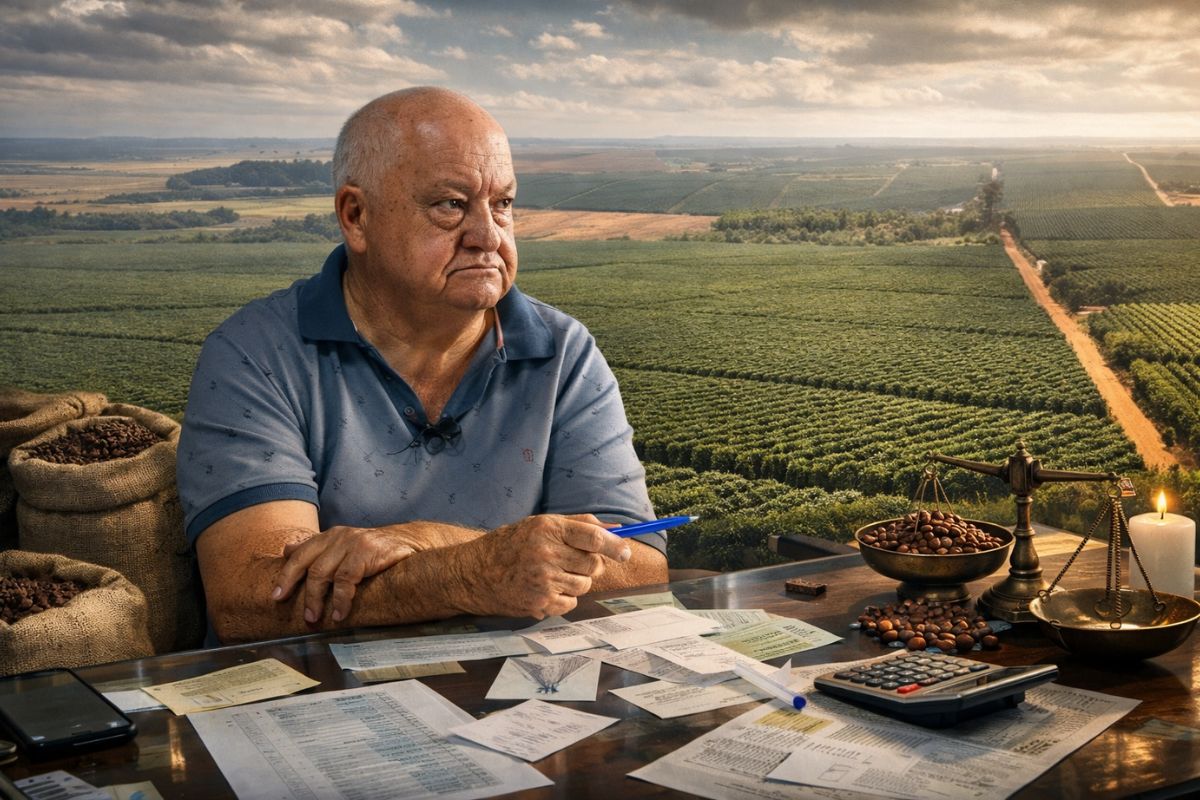
Get to Know the Story of the Greatest Coffee Grower in the World, Who Overcame Frost, Faced Crop Failure, Bet on the Mineiro Cerrado, and Helped Transform Brazilian Coffee.
The story of the greatest coffee grower in the world begins with a small bread divided into eight, nights of hunger, and lots of laundry done in a basin. Today, the same man who was once a bus collector and truck driver runs a coffee empire, spread across several states in Brazil.
Amidst hunger, frost, debt, state change, and crop failure, Mr. Antônio learned to turn crisis into opportunity. From a poor childhood in São José do Rio Preto to his arrival at the Mineiro Cerrado, he survived historic frosts, watched crops burn, purchased discredited farms, and stubbornly built the title of the greatest coffee grower in the world.
Childhood of Hunger, Divided Bread, and First Jobs
Before being called the greatest coffee grower in the world, Mr. Antônio was just a poor boy from the interior of São Paulo.
-
Major Brazilian Supermarkets, Including Carrefour and Assaí, May Close Earlier to Prevent Price Increases

-
Coca-Cola Shuts Down 100-Year-Old Factory in the U.S., Impacting 85 Workers and Shaking Local Community with Historic Consequences
-
Bianca Andrade Invests $30 Million of Her Own Money in Boca Rosa, Launches Over 100 Products in a Year, Aiming for $400 Million by 2026
-
Belo Horizonte Becomes First Brazilian City to Fund Housing, Utilities for 100 Homeless Families with $900,000 Initiative


He was born in São José do Rio Preto and vividly recalls a scene that sums up his childhood: a small loaf of bread shared into eight pieces to feed the whole family.
His mother washed clothes for others, poverty was constant, and patched clothing was the norm. He himself says that “I wasn’t a beggar, but it was even worse”, because it wasn’t just money that was missing; everything was lacking.
As a child, he carried bags of clothes for his mother to wash at the hospital. The foundation of it all was a lot of work and almost no comfort.
In his teenage years, at 15, the first major turning point came. Mr. Antônio went to Paraná, cleared land, planted coffee, became a bus collector, and then a driver, always saving any possible money. Little by little, he transitioned from being an employee to a small owner.
From the First Farm to the Decision That Would Change Everything
In the late 1950s, the family owned only six acres of coffee in Ivatuba, near Maringá, Paraná. There were eight siblings sharing almost nothing.
After their mother’s death, the small plot was sold, and each brother received about 1,500 cruzados, the family’s only real asset.
Over time, Mr. Antônio began buying small farms, always in coffee-growing areas. He would often repeat a simple goal: “when I have 100,000 coffee trees, I’ll stop”.
In practice, that never happened. Each well-executed deal led to another, and that seed of a farmer grew until it became the greatest coffee grower in the world.
The Frost That Destroyed Crops and Raised an Empire
The significant turning point in the story came with the frost of 1963. The day before, he had managed to buy another small farm. He had coffee, he had risk, and he had debt.
When the frost came, the price of coffee skyrocketed, and Mr. Antônio made a bold decision: he sold coffee at a price that seemed unthinkable at the time.
He often says straightforwardly, “what I have today, I earned from the frost”. Instead of complaining about the weather, he took the moment to pay off a farm, buy other small areas, and gradually accumulate properties.
With each decisive harvest, he solidified his position until he was recognized years later as the greatest coffee grower in the world.
This strategy repeated itself at other moments in coffee farming: while many were failing, he bought undervalued areas, took on risks, and rebuilt crops where others only saw losses.
The Arrival at the Mineiro Cerrado and the Definitive Change
In the 1980s, a new challenge arose. The coffee crops in Paraná began to suffer from nematodes, especially in sandy soil areas. The solution was to look at another map.
Curious about the potential of the Cerrado, Mr. Antônio came to know Minas Gerais in 1986 and 1987. He visited farms, talked to producers, assessed the climate and altitude.
It didn’t take long for him to purchase the first farm in Carmo do Paranaíba. After that, he acquired new areas in the Monte Carmelo region until he finally settled in the Mineiro Cerrado.
Today, much of the empire of the greatest coffee grower in the world is planted in this territory of plateaus, dry winters, and ideal altitude for quality coffee. And he himself admits: he never intends to leave Minas Gerais.
How the Greatest Coffee Grower in the World Manages So Many Farms

With the growth of the areas, management became a challenge on its own. It is not simple to care for multiple farms in different states, with crops in various phases and thousands of planted hectares.
Mr. Antônio solved this with something he values as much as fertilizer and technology: trusted people. The group is divided into hubs, each with a manager responsible, local teams, and technical support.
There is agronomic consulting, phytosanitary monitoring, use of simple and functional technology, and a lot of communication via digital tools to integrate Bahia, Minas Gerais, and other regions.
Even so, he remains present. In the closest hubs, like in the Romaria region, the greatest coffee grower in the world is closely involved in daily activities, asking about operations, questioning costs, wanting to know about productivity, and keeping an eye on the finances.
His focus, echoed by the team, is not just on high yields but on harvesting at controlled costs and with profits. For him, it doesn’t matter to break sack records if costs eat into the margins.
Crop Failure, Scarce Labor, and Coffee That Does Not Stop


Even with all his experience, not even the greatest coffee grower in the world escapes the recent challenges in coffee farming.
He reports a crop failure of about 80% in some areas, especially in Minas Gerais. Where he could harvest hundreds of thousands of sacks, he is expected to extract only a fraction of that.
In Bahia, he still has a full harvest, but it is not enough to fully compensate for the losses. Frost, cold, plant stress, and climate irregularity have left deep marks on the crops.
What seemed like a 50% loss worsened as time went by and the crops showed the actual damage.
Another serious problem is the lack of labor. He has previously worked with thousands of temporary workers and hundreds of permanent employees.
Now, he barely finds people willing to pick coffee, especially in the newer fields, where machines can’t be used everywhere. Many workers avoid formal registration for fear of losing social benefits, which hinders manual harvesting.
Coffee x Grains: The Future of Coffee Farming from the View of Someone Who Saw It All
Looking ahead, the greatest coffee grower in the world is straightforward: if the numbers don’t add up, many coffee areas will turn into soy and corn. With soy performing well, easier management, and a shorter cycle, the comparison with coffee is inevitable.
While coffee requires care all year round, from Monday to Sunday, soy and other cereals have a more predictable routine: plant, spray, harvest.
Mr. Antônio recalls that areas affected by severe frosts, like regions near Araxá, may never return to coffee, permanently switching to cereals.
In his view, those who miscalculated on high yields and expected money that didn’t come are now in serious trouble.
He adjusted his expectations early, accepting that production would be lower, allowing him to reorganize finances and plans.
From Collector to the Greatest Coffee Grower in the World: What This Story Teaches
Mr. Antônio’s journey is both a story of coffee and a lesson in resilience. From a boy who divided a loaf of bread into eight pieces and carried a bag of clothes to help his mother, he transformed into the greatest coffee grower in the world, owner of several farms, with coffee stock, management structure, and a respected name throughout the sector.
He endured devastating frosts, crop failures, labor shortages, regional changes, and skepticism from those who didn’t believe that a former collector could buy a farm.
But he persisted, took risks, bought when many sold in despair, and, above all, never lost the habit of closely monitoring every detail of the crops and the numbers.
In the end, the story of the greatest coffee grower in the world shows that crises can be gateways to giant leaps, as long as someone has the courage to go through them with open eyes for opportunity.
And you, what impresses you the most about the story of the greatest coffee grower in the world: the hungry childhood, the courage during the frost, or the vision of the future of Brazilian coffee?






-

-

-

-

-

22 people reacted to this.