Portuguese
  Spanish


Images Captured By The Solar Parker Probe Show Unprecedented Details Of The Winds And Explosions Of Particles Released By The Surface Of The Sun
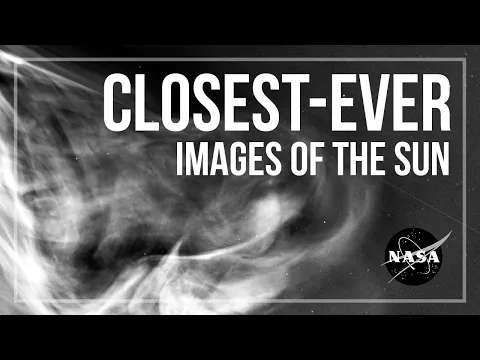
NASA released a video with the closest images of the Sun ever taken in history. The footage was captured by the Solar Parker Probe during a flyby on December 24, 2024. The approach brought the spacecraft within just 6.1 million kilometers of the star’s surface, making it the closest to the Sun to date.
The images show the solar corona and the winds released by the star in unprecedented detail. The material was captured with the WISPR (Wide-Field Imager for Solar Probe) instrument, a wide-field telescope installed on the probe.

Details About The New Record
The release of the images took place last Thursday (10). According to NASA, the recordings help to better understand the dynamics of the star closest to the Earth.
-
Living Robots Made from Human Cells Crawl on Their Own in Lab, Help Heal Neuron “Wounds” and Turn Human Tissue into Microscopic Biological Machines

-
Xlinks Project to Lay 3,800 Kilometers of Cable Across the Atlantic to Export Solar Energy from Morocco Directly to UK Outlets Without Using a Single Turbine

-
Floating Solar Panels Aim for Rougher Seas with Norwegian Rope Mesh Technology, Following DNV Review, Opening New Clean Energy Opportunities in Coastal Areas
-
Olympus Mons: The Solar System’s Tallest Volcano, Over Three Times the Height of Mount Everest, Puzzles Scientists with Its Prolonged Volcanic Activity



NASA’s Associate Administrator for the Science Mission Directorate, Nicky Fox, emphasized the importance of the discoveries.
“The Solar Parker Probe has once again transported us to the dynamic atmosphere of our closest star. We are witnessing, with our own eyes and not just through models, the place where the threats of space weather that affect Earth originate,” Fox stated in a statement.
According to her, the data obtained with the mission will help scientists improve space weather forecasts.
The goal is to increase the safety of astronauts and human technology, both on Earth and beyond in the Solar System.
Behavior Of Solar Wind
The images taken with WISPR brought new details about solar wind just after it was released from the solar corona.
One highlight was the heliospheric current sheet, which is the region where the direction of the Sun’s magnetic field changes from north to south.
Another observed element in the images was the collision of multiple coronal mass ejections, known as CMEs.
These explosions of charged particles are central to understanding the behavior of space weather.
Angelos Vourlidas, the scientist responsible for the WISPR instruments at the Johns Hopkins Applied Physics Laboratory, explained that the images show the CMEs accumulating on top of each other.
“We are using this to understand how CMEs merge, which can be important for space weather,” Vourlidas said.
Risks And Impacts Of CMEs
The collision between coronal mass ejections complicates predictions about their trajectories. When they merge, these explosions can accelerate charged particles and mix magnetic fields, posing risks to astronauts and satellites.
The direct observation of these phenomena is considered an advancement. With the closest view of the Sun ever recorded, scientists can better prepare to analyze the impacts of CMEs on the space environment.
This data allows for a more accurate understanding of events that can affect not only space but also critical communication and energy systems on Earth.
With information from Canal Tech.