Portuguese
  Spanish


A Simple Man, Four Children and a Ruined Workshop: The True Story Behind LEGO, The Brand That Taught The World To Rebuild
A Danish carpenter saw his life collapse during the Great Depression. The crisis took everything he had, his wife passed away, and he was left alone, surrounded by debts and with four small children to raise.
Years later, the small workshop that nearly closed its doors would transform into an empire valued at over US$ 8 billion, present in 140 countries and globally recognized as a symbol of creativity, perseverance, and reinvention.
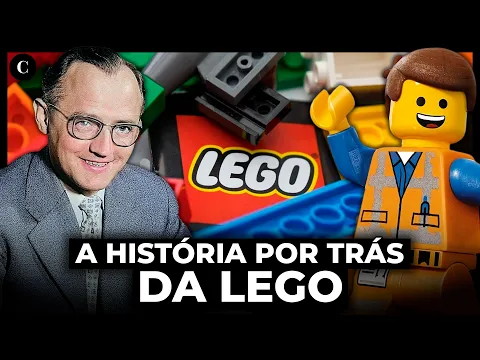
This man was Ole Kirk Christiansen, the visionary who founded LEGO. Before creating one of the most iconic toys on the planet, he manufactured ladders and ironing boards. In 1932, trying to survive the economic crisis that devastated Europe, he began producing wooden toys and sold them door to door for a few coins.
-
Former Atacadão Employee Turns Online Cake-Baking Lessons into a Confectionery Brand with Factory, Store, Delivery, and Nearly $400,000 in Revenue

-
Brazilian Startup Sells Nearly 9 Million Surprise Bags of Near-Expiry Food, Prevents Thousands of Tons of Waste, Aiming for $42 Million Revenue by 2026
-
How to Prevent Brown Recluse Spider Bites: Common Hiding Spots and Free Tips to Reduce Risks

-
Natto: The Unusual Japanese Superfood Gaining Popularity on Social Media and Driving Record Exports




But fate would test him again. In 1942, a fire completely destroyed his workshop, multiplying his debts and jeopardizing the family’s livelihood. At 51 years old, exhausted and disheartened, Ole even considered giving up.
It was then that a new idea rekindled his hope. In 1949, he decided to invest in a material considered promising but underestimated by many: plastic. He created simple, colorful interlocking bricks, believing they could transform how children played and learned.
Most people doubted — “no one will want this,” they said.
Even so, he persisted. In 1958, he registered the definitive interlocking system, an innovation that would revolutionize the toy world and remain unchanged to this day.
Today, LEGO sells over 600 million kits a year, employs around 25,000 people, and remains the most sold and recognized toy on the planet.

The Origins: Faith, Wood, and The First Fire
The story of LEGO begins in a forgotten village in rural Denmark in the early 20th century.
In 1915, the young craftsman Ole Kirk Christiansen heard about a small carpentry workshop for sale in Billund, a province with fewer than 100 inhabitants.
Son of a poor family, Ole grew up taking care of cows and sheep, learning early the value of manual labor and faith.
He was determined to change his own fate. With the help of his brothers, he secured a small loan and bought the long-dreamed White One-Story House, where he set up his workshop.
On the invoices, he proudly stamped the name:
“Woodwork and Carpentry – Billund.”
During World War I, Denmark’s neutrality allowed farmers to prosper by selling grains and meat. Between 1916 and 1918, Ole was so busy that he could barely keep up with the orders.
But with the end of the war, the global economic crisis hit, and money disappeared from the region.
Still, he did not give up. Driven by faith and the responsibility of supporting his four children — Johannes, Karl Georg, Godtfred, and Gerhard — he kept the business alive.
Until, in April 1924, fate tested his resilience: the workshop caught fire.
The fire, accidentally set by the small children, destroyed everything.
With the help of neighbors, Ole rebuilt the house and the workshop — now made of solid bricks.
It was the first of many new beginnings.
From The Great Depression To Wooden Toys
When the Great Depression of 1929 hit the world, Denmark plunged into crisis.
Exports of grains, butter, and meat plummeted.
Wood became expensive, credit dried up, and Ole saw his orders disappear.
But the creative mind of the carpenter found an unexpected way out.
In 1932, he and two apprentices began to manufacture small wooden toys — miniature ladders, Christmas tree stands, colorful little trucks.
They were simple, inexpensive, and carried a silent magic: each toy held a piece of its creator’s hope.
The idea worked.
A local merchant visited the workshop and was impressed by the quality of the pieces.
He made a large order for Christmas, and that order saved the business.
In the same year, a new blow shook Ole.
His wife, Christine, pregnant with their fifth child, fell ill and died at 40 years old.
“I saw my father cry for the first time,” recalled years later his son Godtfred, who would inherit the leadership of the company.
Even devastated, Ole maintained his faith.
When asked years later how he managed to overcome so many tragedies, he simply replied:
“You have to pray. Pray for orders to come. Pray to be able to produce. And pray for them to be paid.”
Over time, the prayers began to be answered.
In 1935, seeking a new beginning, Ole renamed the company.
Inspired by the Danish words “leg godt” — “play well” — the name that would change the world was born: LEGO.
The revenue almost doubled that year, reaching 177,200 Danish crowns.
By 1939, it had exceeded 50,000 crowns annually, solidifying the small factory as a promise in the toy market.
The Turning Point: Plastic, The Interlocking System, and The Global Empire
During World War II, Denmark was occupied by Germany, and the lack of wood threatened the business.
Still, Ole and Godtfred maintained production; between 1940 and 1945, revenues jumped from 74,000 to 357,000 crowns.
In 1947, Ole bought Denmark’s first plastic injection molding machine — something seen as madness at the time.
He and his son studied the British Kiddicraft blocks by Hilary Fisher Page, and improved the interlocking system, making it firm and universal.
In 1949, they registered the patent application.
And in 1958, the definitive LEGO system was born, still used today.
With the death of Ole Kirk Christiansen that same year, Godtfred took over and expanded the company to Germany, where sales soon surpassed those in Denmark.
The Legacy of Three Generations: From Pain to Building Dreams
The 1960s marked the modern era of LEGO.
Under Godtfred, the company stopped making wooden toys and focused on innovation.
In 1962, the launch of the first LEGO wheels allowed for the creation of cars, airplanes, and complete cities.
The LEGO system became the heart of the brand.
In 1968, the first Legoland in Billund celebrated creativity and established the company as a family experience.
In the 2000s, the most severe crisis in the company’s history hit.
Excessive diversification distanced LEGO from its original concept, leading to losses in 2003.
The following year, a new CEO outside the Christiansen family restructured the company, focusing on the blocks and franchises like Star Wars and Harry Potter.
Video games and adult collections restored the brand’s luster.
According to the channel Curioso Mercado, LEGO recorded a growth of 17% in 2022, reaching 64.6 billion Danish crowns (about US$ 9.2 billion) and employing 25,000 people in 140 countries.
Over more than a century, LEGO has survived fires, wars, and crises.
Each tragedy has turned into opportunity: the fire of 1924 led to modernization; the Great Depression created wooden toys; the fire of 1960** consolidated plastic; and the crisis of the 2000s rescued the essence of the blocks.
Today, each LEGO piece represents the human capacity to rebuild and innovate, transforming losses into new possibilities.
From a rural workshop in Denmark to the largest toy producer on the planet, LEGO proves that even the most fragile dreams can be constructed — piece by piece — until they become eternal.
“Only the best is good enough.”
– Ole Kirk Christiansen