Portuguese
  Spanish


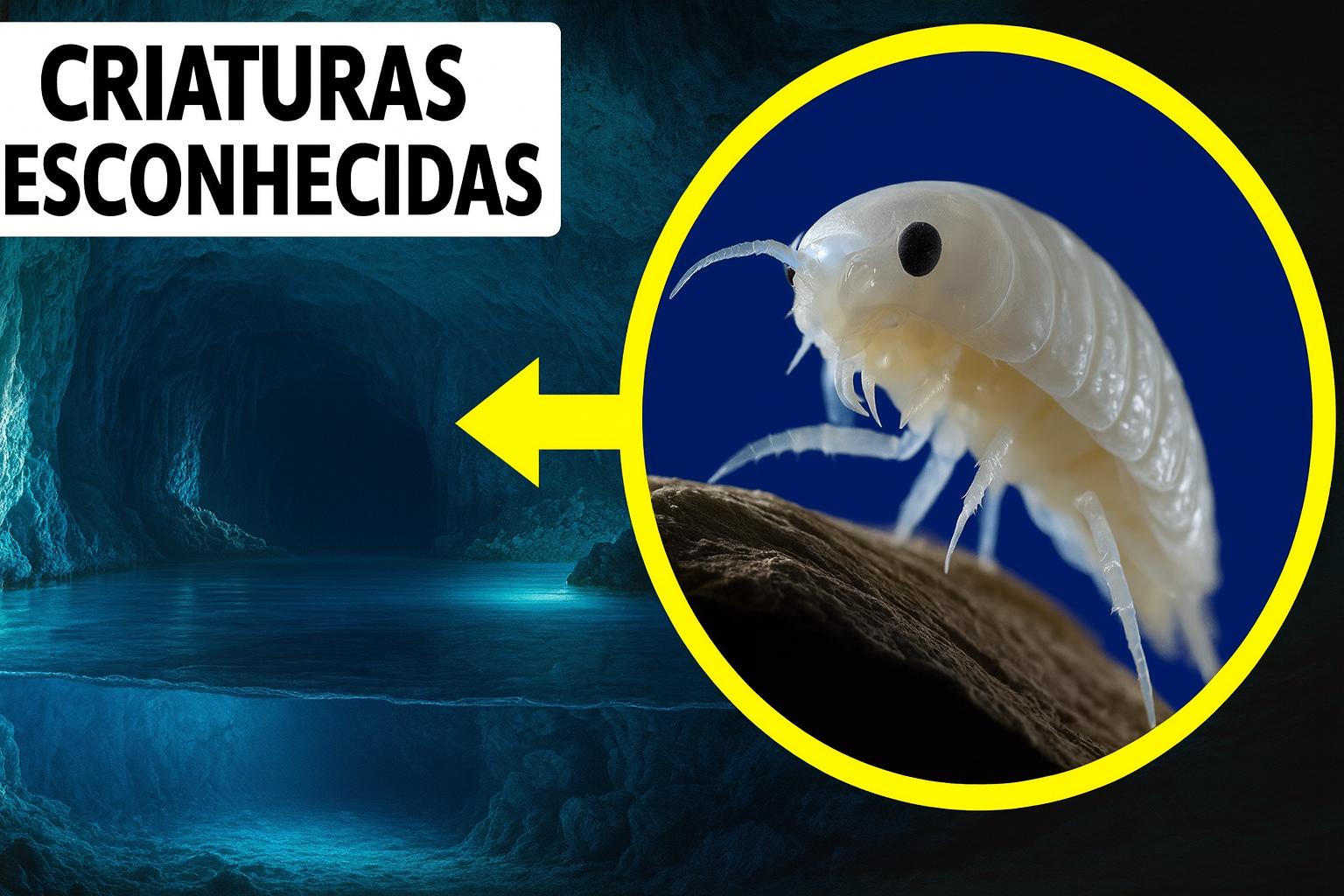


Discovered in 1986, the Movile Cave in Romania houses isolated ecosystems for 5 million years in total darkness and toxic air, challenging the limits of life.
In 1986, during excavations for the installation of a power plant near the Black Sea, workers found something unexpected: a fissure leading to a cave completely sealed off from the outside world. When the first explorers descended, they quickly realized it was not an ordinary cave. The air was heavy, suffocating, and toxic; the darkness was absolute; and surprisingly, life was abundant.
The most extraordinary biological discovery in Romania was born: the Movile Cave, an ecosystem isolated from the surface for about 5 million years.
A Hostile Atmosphere to Human Life
Entering the Movile Cave is to challenge the limits of survival. The air contains levels of carbon dioxide 100 times higher than at the surface and lethal concentrations of hydrogen sulfide, a poisonous gas with a rotten egg smell.
-
Cambridge Scientists Achieve Solar-Powered Plastic Recycling, Converting Waste into Valuable Chemicals Without Fossil Fuels, Paving the Way for a Low-Carbon Circular Economy

-
In Ghana, Makafui Awuku Turns 250-300 Water Sachets Into Each 30-Year-Lasting School Desk, Lifting Children Off Classroom Floors

-
In September 2035, Mars to Shine Brightest Since 2003, Aligning with NASA and China’s Planned Human Mission to the Red Planet
-
Robots Descend Four Kilometers to Operate in the World’s Deepest Mine, Unbearable for Humans



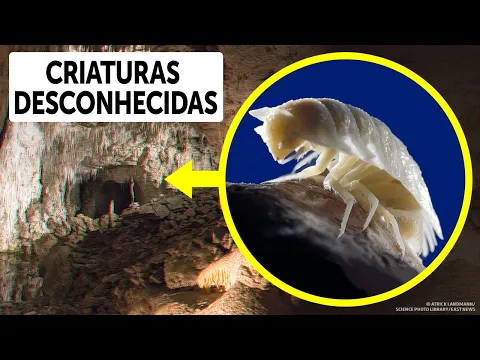

The available oxygen corresponds to only half of what we normally breathe, which would force any human to use special equipment. For us, it is a lethal environment. For the organisms living there, it is the only home they know.
This atmospheric composition transforms the cave into a space where life must find creative solutions. And it has: adapted microorganisms began using chemical compounds instead of sunlight as an energy source.
Life Without Sun: Chemiosynthesis as the Engine of the Cave
On the surface, virtually all life depends on photosynthesis — the process by which plants and algae convert sunlight into energy.
In the Movile Cave, where total darkness prevails, life organizes around chemiosynthesis. Bacteria convert hydrogen sulfide and methane into organic matter, creating the base of a unique food chain.
These bacteria form sticky mats on the water and cave walls. Small invertebrates feed on them, which in turn serve as food for predators like spiders, scorpions, and adapted beetles. This cycle of energy independent of the Sun sustains the entire underground community.
A Catalog of Unique Species
Since its discovery, scientists have cataloged more than 50 endemic species in the Movile Cave — animals that do not exist anywhere else on the planet.
Many have completely lost their eyes, developed translucent bodies, and enhanced their tactile and chemical sensitivity to survive in a lightless environment.
Among the most curious inhabitants are:
- Blind scorpions and spiders, adapted to hunting in total darkness.
- Translucent earthworms and crustaceans, which live submerged in sulfurous waters.
- Specialized insects, that feed exclusively on the bacteria covering the walls.
Each organism stands as proof that evolution shapes life even in the most hostile scenarios.
Isolation That Challenges Biology
Geological studies indicate that the cave has been sealed from the surface for about 5.5 million years, when tectonic changes and sediment depositions blocked the natural entrances. Since then, its ecosystem has evolved in complete isolation.
This means that the Movile Cave functions as a natural laboratory of evolution. The organisms that live there have followed a parallel evolutionary path, separate from the rest of the planet.
For science, studying this “subterranean Noah’s Ark” is like looking at an alternative timeline of life.
Lessons for Astrobiology
Perhaps the most fascinating aspect of the Movile Cave is its value as an analogy for the search for life beyond Earth. If organisms can thrive in complete darkness, in toxic atmospheres, and with food chains based on chemistry, it’s not hard to imagine that extreme environments on other worlds could also support life.
Astrobiologists often cite the Movile Cave as an example of how microorganisms could survive in environments like the subsurface of Mars or the subsurface oceans of the icy moons Europa (of Jupiter) and Enceladus (of Saturn).
The parallel is direct: life based on chemiosynthesis, isolated from light, sustained only by chemical reactions.
A Rare and Protected Gem
Due to its fragility, the Movile Cave is highly restricted. Only a small group of scientists is authorized to enter, always with strict safety protocols. Any alteration in the delicate internal chemical balance could jeopardize an ecosystem that has survived intact for millions of years.
This controlled isolation turns the cave into a scientifically invaluable heritage. Each expedition generates discoveries that help understand not only the resilience of life on Earth but also the potential for life in the universe.
A Reminder of the Resilience of Life
The Movile Cave is, ultimately, a testament to the resilience of life. Even under conditions that would seem impossible — absolute darkness, poisonous air, sulfur-laden water — nature has found ways to persist, create balance, and reinvent itself.
It compels us to rethink the concept of habitability: if life can exist there, then the boundaries of possibility are much broader than we believed.