






 Portuguese
  Spanish
  5 min of reading
  0 comments


Global study with 550 rivers shows pollution and warming are turning rivers into sources of CO₂ and methane, worsening the climate.
According to the University of Georgia, a study published in the journal Science in May 2024 presented the first global analysis combining field experiments with predictive modeling to understand how human activities are altering the functioning of rivers on a planetary scale. The research was conducted by scientists from the Universities of Georgia, Oakland, Kent State, and William & Mary, with the collaboration of over 150 researchers in 40 countries gathered in the Celldex Consortium. The work involved data collection in 550 rivers around the world, including Brazilian tropical regions historically neglected in global studies.
The result was the construction of the first global map of decomposition rates in rivers and streams, revealing that human activities are significantly accelerating this process and transforming rivers into relevant sources of greenhouse gas emissions.
Rivers play a central role in the global carbon cycle and can sequester or release CO₂ depending on ecological balance
To understand the relevance of the discovery, it is necessary to understand the role of rivers in the global carbon cycle.
-
They wanted artificial intelligence, but they drained the water from a village in Mexico: the water consumption of data centers caused a hepatitis outbreak, and big tech companies Amazon, Microsoft, and Google were forced to halt billion-dollar projects.

-
System created to save lives in disasters turned ‘against’ Brazilians overnight: a hacker attack sent out a false alert from Civil Defense with the word “misantropia” that went off on the phones of half the country, even in silent mode, and took down the Cell Broadcast.
-
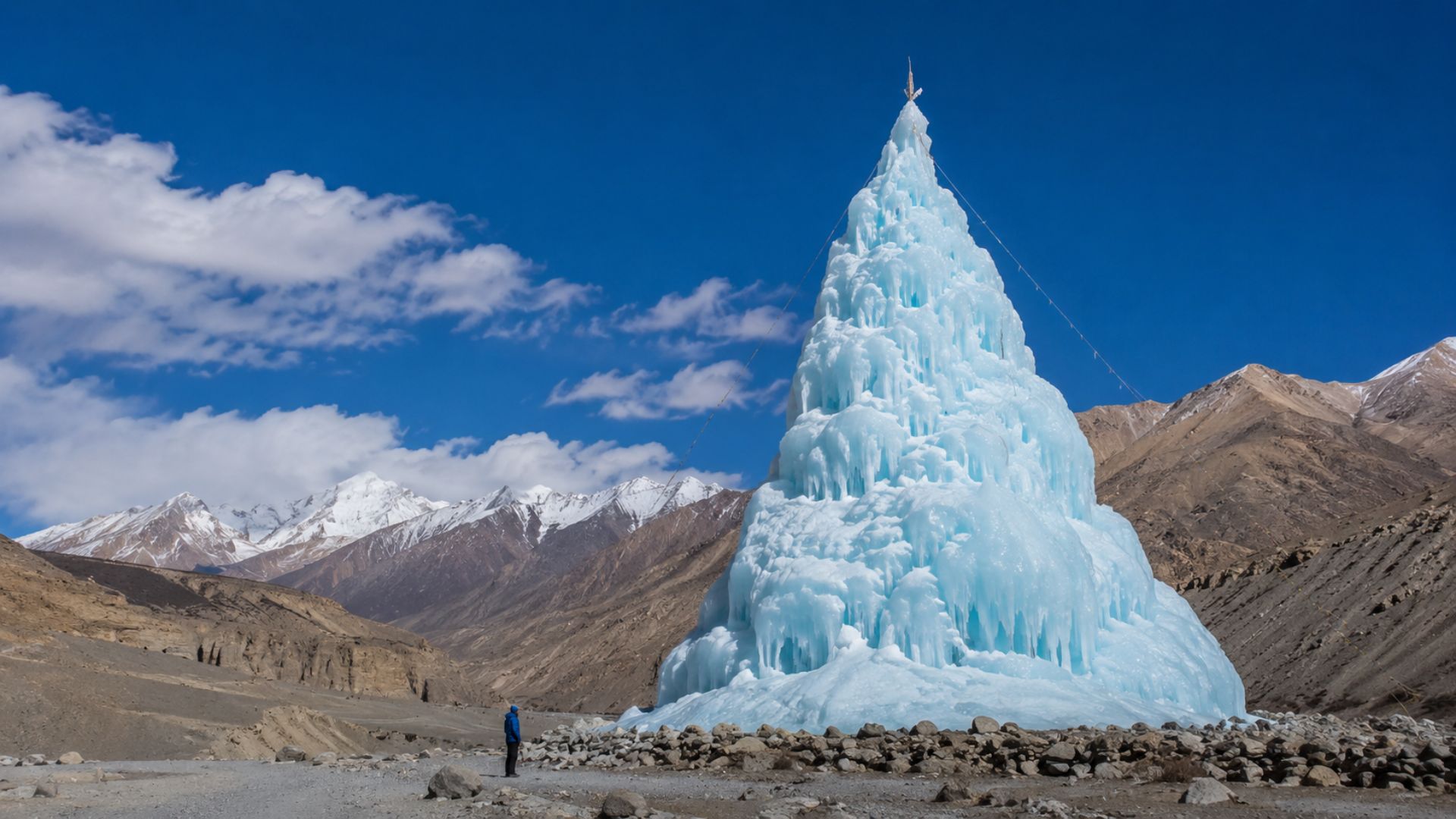
In the cold desert of Ladakh, where it hardly rains, engineer Sonam Wangchuk created the ice stupa, a tower that freezes winter water and stores it for irrigating crops in the spring, a simple engineering feat that mimics nature.
-
For the first time in history, solar and wind energy generated more electricity than natural gas worldwide in a single month, April 2026, a milestone in the energy transition that shows renewable sources taking the lead in the global electric system.



Terrestrial vegetation captures carbon dioxide from the atmosphere and transforms it into organic matter. Part of this matter remains in the soil, while another part is transported by water to rivers and streams.
Once in these environments, carbon can follow two distinct paths. It can be transported to the oceans and remain stored for long periods, functioning as a sequestration mechanism. Or it can be decomposed by aquatic microorganisms, releasing CO₂ and methane directly into the atmosphere. The balance between these two processes determines whether the river acts as a sink or a source of carbon.
Cotton fabric method allowed measuring microbial activity in 550 rivers and standardizing unprecedented global analysis
The method used by the researchers was based on standardized pieces of cotton fabric submerged in the rivers.
Cotton is composed of cellulose, the same substance present in plant organic matter. By measuring the decomposition rate of the fabric, scientists were able to estimate the microbial activity responsible for the degradation of organic matter in each environment.
The faster the decomposition, the greater the release of greenhouse gases. This method allowed for the standardization of analysis on a global scale, something that had not been done before.
Tropical rivers, including Brazilian ones, show greater decomposition acceleration and higher carbon emission potential
The results showed that tropical rivers are the most affected. These environments combine higher temperatures, greater nutrient pollution loads, and intense biological activity, factors that accelerate the decomposition of organic matter.
Historically underrepresented in global studies, tropical rivers now appear as critical areas in the carbon cycle.
Pollution from fertilizers and sewage acts as fuel for microorganisms and accelerates the release of CO₂ and methane
The study identified two main factors responsible for the acceleration of decomposition. The first is nutrient pollution, especially nitrogen and phosphorus from agricultural fertilizers and urban sewage.

These elements act as fuel for bacteria and fungi, increasing the speed at which organic matter is decomposed and converted into gases.
In Brazil, the use of over 13 million tons of fertilizers per year directly contributes to this process, with a significant portion of these nutrients being carried into rivers.
Increased water temperature intensifies chemical reactions and doubles decomposition speed in rivers
The second factor is the increase in water temperature. Chemical reactions follow the so-called Van’t Hoff’s law, according to which a 10°C increase can double the speed of biological reactions.
Global warming and the deforestation of riparian forests raise water temperature, creating even more favorable conditions for accelerated decomposition.
A complementary study published in Nature magazine in 2025 revealed that about 59% of fluvial CO₂ emissions originate from ancient carbon, stored for millennia in soils and geological formations.
This carbon is mobilized by processes such as deforestation, erosion, and soil disturbance, being transported to rivers and released into the atmosphere.
This indicates that rivers are activating carbon reserves that previously remained stable.
Accelerated decomposition compromises aquatic food chain and reduces insect and fish populations
Accelerated decomposition does not only affect the climate. Organic matter is the base of the aquatic ecosystem food chain. When it disappears quickly, organisms that depend on it lose their main energy source.
This reduces populations of aquatic insects, fish, and other organisms, impacting all biodiversity associated with rivers.
Destruction of riparian forests exacerbates problem by increasing water temperature and reducing natural organic matter input
Riparian forests play a fundamental role in river maintenance. They provide shade, control water temperature, and contribute quality organic matter.
When these areas are removed, rivers receive more solar radiation, less natural organic matter, and a greater load of sediments and pollutants.
The study provided an online tool that allows visualizing decomposition rates in rivers around the world.
The map was built based on collected data and machine learning models, allowing the identification of regions with higher decomposition intensity. In Brazil, areas with strong agricultural activity appear as critical zones.
River transformation shows how pollution, climate, and land use are connected in a single global process
The results show that the transformation of rivers is not an isolated phenomenon. It is directly linked to pollution, deforestation, intensive land use, and climate change.
These factors act in combination, creating a process of environmental transformation that occurs continuously and silently.
The acceleration of decomposition and the release of carbon indicate a significant change in the functioning of aquatic ecosystems.
In your view, is it still possible to reverse this process, or have rivers already permanently started acting as sources of greenhouse gases?


Be the first to react!