






 Portuguese
  Spanish


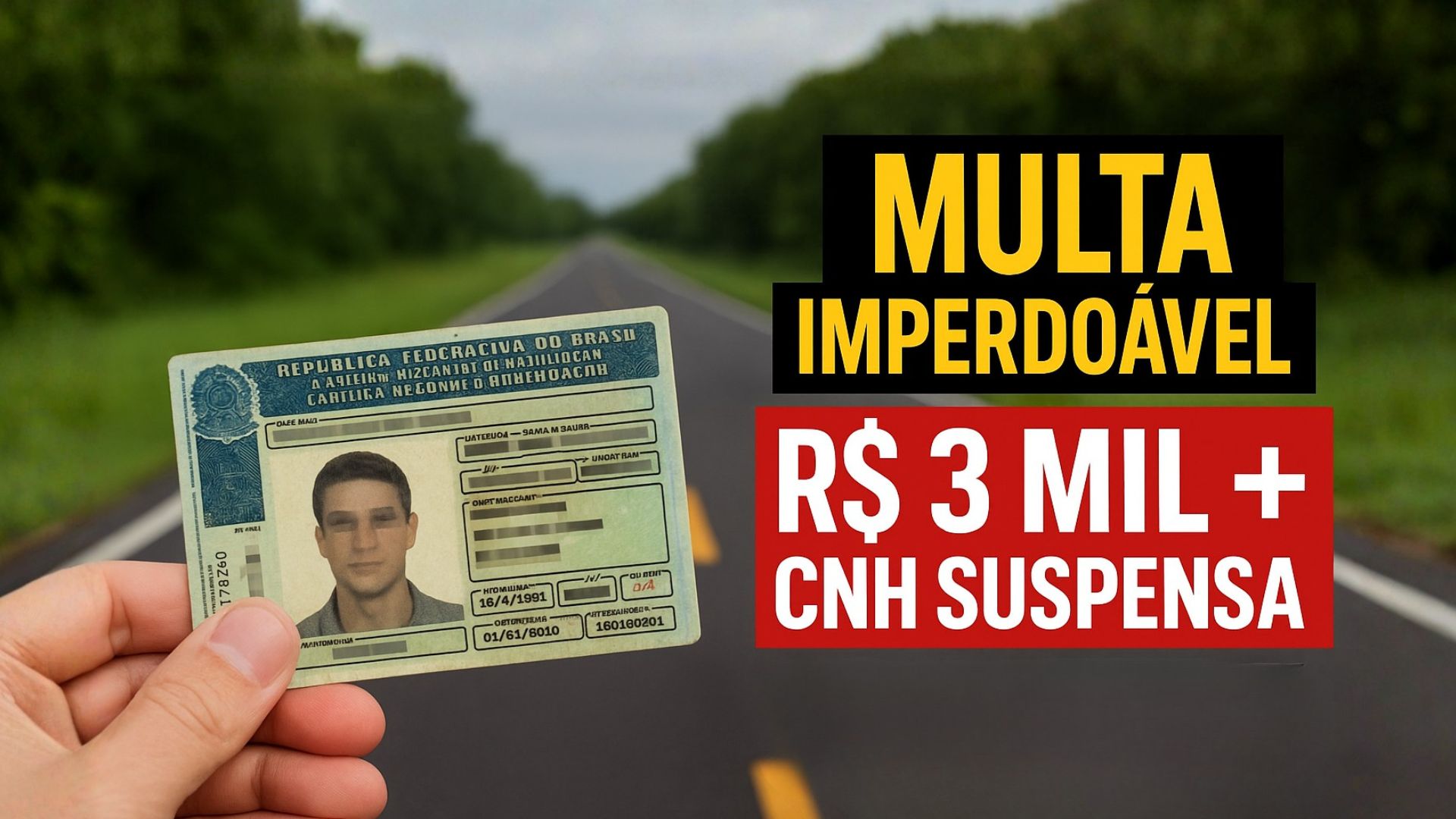


A Proposal Under Discussion in Congress Seeks to Harden Penalties Against Dangerous Overtaking and Risky Driving, Bringing Higher Sanctions and New Restrictions That May Alter the Routine of Drivers Across the Country.
A proposal under analysis in the Chamber of Deputies aims to create a new serious offense in the Brazilian Traffic Code (CTB) to punish dangerous overtaking and reckless driving with fines close to R$ 3 thousand, suspension of the right to drive for 12 months and, in some cases, restrictions on driving on highways.
The text is still under consideration and directly targets maneuvers that usually result in head-on collisions and deaths on Brazilian roads.
What The PL 1405/24 Says About Dangerous Overtaking
The Bill 1405/24, authored by Deputy Clodoaldo Magalhães (PV-PE), adds article 205-A to the CTB to classify as a serious offense the practice of “dangerous overtaking or reckless driving” that causes or threatens to cause a serious accident.
-
Brazil Approves Proposal to Cap Vehicle Tax at 1% of Car Value

-
Brazilian Senate Approves Bill to Automate Child Support Payments Directly from Debtors’ Accounts

-
Brazilian Congress Advances Bill to Ensure Full Pension Benefits for Families Receiving Reduced INSS Death Benefits
-
Unusual Traffic Signs in Brazil: Wheelbarrow Ban, Crosswind Warning, and Customs Stop


Under the text, the driver categorized under this new offense is subject to ten times the value of the serious fine, which today corresponds to R$ 2,934.70, in addition to the suspension of the right to drive for 12 months and a record of seven points on the National Driver’s License (CNH).
In the case of reoffending within a year, the suspension period is doubled.
The proposal also provides an additional consequence: punished drivers will not be able to drive on highways or roads for a minimum period of two years, counted from the date of the offense.
In practice, this restriction mainly affects drivers who rely on intercity and federal routes, such as truck drivers and those who operate in long-distance travel.
In defending the project, Magalhães asserts that “dangerous overtaking is not just an infraction; it is an act of disrespect for life”, emphasizing that the goal is to discourage behaviors that put drivers, passengers, cyclists, and pedestrians at risk.
How The Project Fits Into The Traffic Code
Even without the new law, the CTB already provides harsh penalties for risky maneuvers.
Overtaking in prohibited areas, such as on solid lines, bridges, curves, or sections without visibility, is currently treated as a serious violation with a five-fold multiplier, resulting in a fine of over R$ 1,400 and seven points on the CNH.
Forcing passage between vehicles traveling in opposite directions carries an even heavier penalty, with a ten-fold multiplier, a fine of R$ 2,934.70, and suspension of the right to drive.

The PL 1405/24 does not replace these rules but creates a specific framework for situations where the maneuver is considered dangerous or where the driving is classified as reckless, provided it has caused or threatened to cause a serious accident.
The idea is to bring this behavior closer to the penalties currently applied to racing and other high-risk behaviors.
Risk on The Roads and Road Safety Data
On highways, overtaking in prohibited locations or without visibility is among the main causes of head-on collisions, a type of accident that accounts for a significant share of deaths on federal roads.
In some states, these collisions represent a significant portion of deaths on the highways, although they correspond to a smaller fraction of the total registered accidents.
Traffic agencies and specialized entities in road safety indicate that human error remains the primary factor behind accidents, especially due to recklessness and disrespect for the rules.
The National Road Safety Observatory and studies from state agencies estimate that the vast majority of occurrences are linked to driver behavior, not mechanical problems or infrastructure issues.
Regarding the severity of the impacts, the Observatory highlights that a head-on collision at 80 km/h has a lethality rate of over 90%.
Enforcement and Challenges to Implement The Proposal
Although the text advances in hardening penalties, traffic specialists assert that the practical effect of the measure will depend on the ability to enforce it.
To catch dangerous overtaking, it is not enough to rely solely on speed cameras.
Many of these maneuvers occur in sections of single-lane roads, curves, inclines, and points without electronic monitoring.
The Highway Patrol, state and municipal agencies usually reinforce operations during extended holidays, focusing on improper overtaking and speeding, precisely because these behaviors are associated with serious and fatal collisions.
Even so, recent reports indicate that these infractions remain frequent on Brazilian highways.
In addition to enforcement, the project needs to pass through all stages of the legislative process.
After being presented by Clodoaldo Magalhães, PL 1405/24 passed through the Commission of Roads and Transportation, where it received a substitute from the rapporteur and was approved.
Then, it was forwarded to the Constitutional and Justice Commission (CCJC), which has the final say in the Chamber.
If approved, the text will still be examined by the Senate and, only then, may proceed to presidential sanction. So far, the proposal has not yet come into effect.
Traffic Education and Cultural Change
The discussion surrounding PL 1405/24 is not limited to the fine amount or the suspension period of the CNH.
For traffic technicians and educators, the initiative will only produce lasting effects if accompanied by actions of road education, awareness campaigns, and ongoing training programs for drivers.
National and international road safety organizations emphasize that countries that have consistently managed to reduce traffic deaths have combined strict laws, constant enforcement, and ongoing education.
In parallel, Brazil still faces high mortality indicators and a strong involvement of risky behaviors such as high speed, cellphone use while driving, alcohol consumption, and improper overtaking.
In this scenario, the hardening of penalties for dangerous overtaking is seen by some specialists as a relevant, but not isolated, step.
The expectation is that harsher punishments will serve as a deterrent, especially for drivers who insist on risking maneuvers in sections with low visibility or heavy opposing traffic.
Can The Law Change Driver Behavior?
The proposal for a fine close to R$ 3 thousand, coupled with up to one year of CNH suspension and the restriction on driving on highways for those who are punished, tends to represent a high cost for any driver.
Still, doubts remain about how much the fear of punishment is enough to curb ingrained reckless behavior behind the wheel.
As the project continues to be debated in Congress and accident statistics keep pressuring authorities, an inevitable question arises: Will harsher penalties be enough to prevent drivers from risking dangerous overtaking on Brazilian roads?








Tá certo,tem fz assim,acham q estão em pista d fórmula 1.
Ridículo
Esse Brasil é um lixo
Tem que duplicar as estradas e asfaltar as que já tem invés de criar leis de punição ao motorista.
O melhor mesmo é se dedicar com afinco nos estudos anos a fio pois só o Conhecimento nos Liberta dessas armadilhas capitalistas como falsos empreendedores.