






 Portuguese
  Spanish


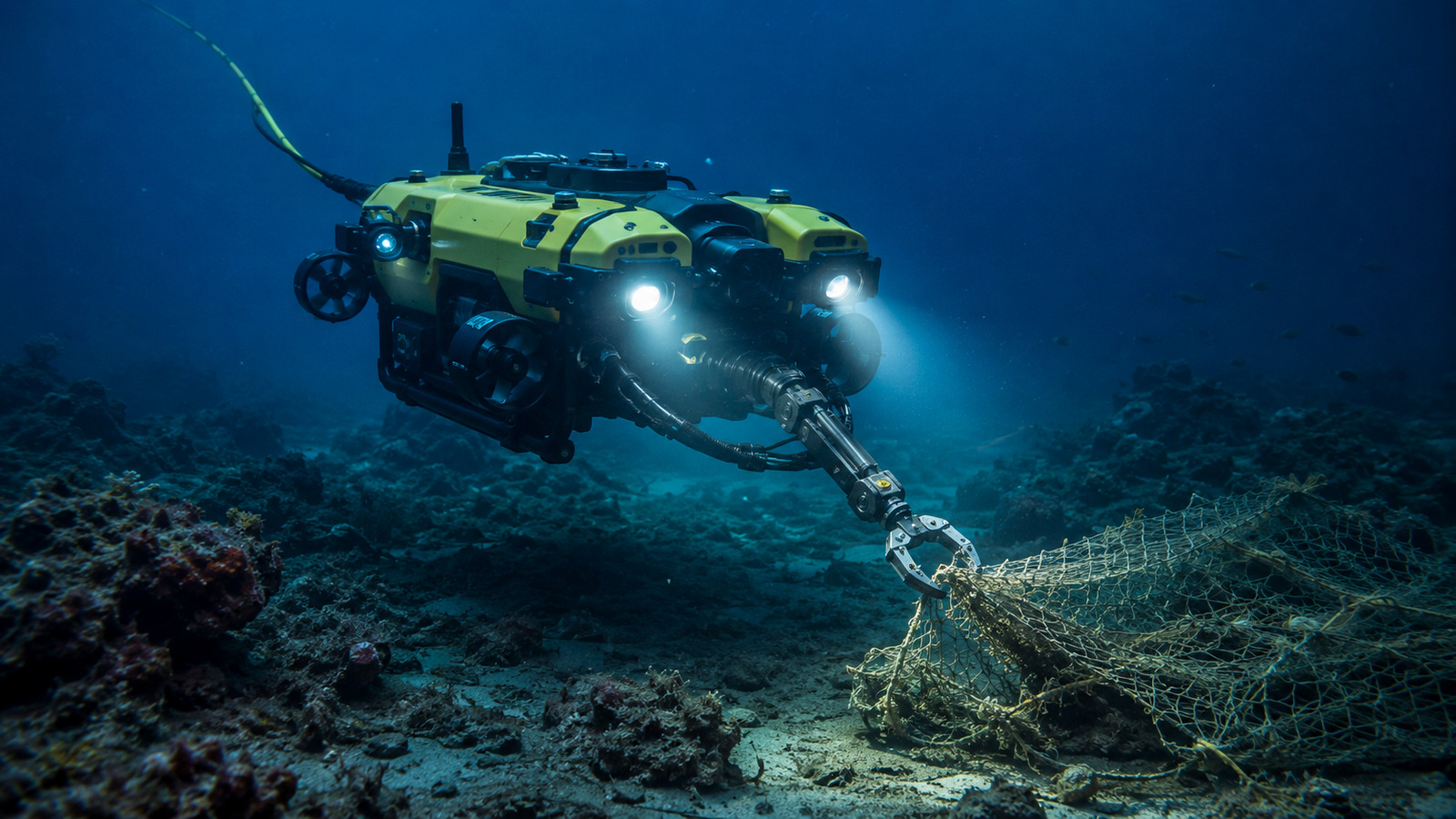


NetTag+ Project tests acoustic markers and autonomous robot capable of diving up to 500 meters to locate ghost nets, reduce damage to marine biodiversity, and support fishermen in Portugal
More than 600,000 tons of ghost nets enter the sea every year, representing 10% of all marine litter and continuing to capture animals for centuries. To reduce this impact, the NetTag+ project tests acoustic markers and the ÍRIS robot in areas of the Atlantic and the Mediterranean.


Ghost nets continue fishing for more than six centuries
Ghost nets are among the main threats to marine biodiversity because they remain active even after being abandoned or lost in the ocean. Made with durable materials, such as nylon, they can remain in the environment for more than six centuries.
During this period, these equipments continue capturing turtles, mammals, and seabirds indiscriminately.
-
Australia deploys poisoned sausages and uses traps, shooting, and fences in a battle against invasive cats that kill over 1.5 billion native animals annually, threatening more than 200 species.

-
NASA Rover Captures “Tired Face” on Mars, Highlighting Human Brain’s Tendency to See Faces in Rock Formations

-
Ancient Stone City in the Desert, Once Home to 30,000, Puzzles Scientists with Nabateans’ Water Mastery 2,000 Years Ago

-
Ancient Creature Thought Extinct Since Dinosaur Era Reappears, Baffling Scientists




The problem also affects fish, with an estimate that up to 30% of the decline in certain populations is linked to this phenomenon.
The impact is not limited to the environment. For fishermen, lost nets reduce the stocks available for commercial activity and can get caught on remnants of old equipment, causing financial losses and operational risks.

NetTag+ uses acoustic markers to locate lost nets
To tackle this cycle, NetTag+ was created, a project led by the Interdisciplinary Centre of Marine and Environmental Research, CIIMAR, at the University of Porto. The initiative brings together 15 partners from seven countries.
The solution is based on smart acoustic markers installed on fishing gear. When a net is lost, these devices allow the equipment to be located precisely, facilitating recovery before it continues to cause damage on the seabed.
The technology is being tested in real conditions in the Atlantic and the Mediterranean, with a special focus on the communities of Vila do Conde and Póvoa de Varzim, in northern Portugal.
ÍRIS robot dives up to 500 meters in search missions
When the net disappears in the ocean, researchers deploy the ÍRIS robot, an autonomous device developed by INESC TEC. The equipment can dive up to 500 meters deep to conduct search missions.
Communication occurs via a hydrophone installed on the nets themselves. With an advanced onboard computer and sound navigation systems, the robot calculates distances and orients itself to the target, even without visibility in the water.
After locating the equipment, ÍRIS begins the retrieval phase. The machine uses a mechanical system to attach a recovery cable to the detected net, which is then pulled to the surface by a support vessel or the competent port authority.

Artificial intelligence helps operate in dangerous areas
The robot also uses artificial intelligence and computer vision to distinguish the net from other natural objects on the seabed.
This capability allows identifying the safest point to attach the cable and increases the chance of recovery.
The innovation was designed for deep areas, where the presence of human divers would be dangerous.
The system was also designed to operate on small vessels, which broadens its application in different fishing fleets.
Fishermen do not operate the robot directly due to costs, but they play a central role in the process. On a daily basis, they only need simple location systems and nets equipped with acoustic markers.
Through a mobile application, professionals can recover most of the lost equipment. ÍRIS is reserved for critical cases, such as rocky areas or locations with very strong currents.
Currently, about two hundred fishermen from northern Portugal are participating in the validation of prototypes in a real environment.
They also receive training on good environmental practices and participate in cleaning campaigns, ocean conduct guides, and distribution of portable ashtrays.
This article was prepared based on information from the material provided about the NetTag+ project, CIIMAR, University of Porto, and INESC TEC, with data, numbers, and statements preserved as per the consulted material.








Good start. About time. What about the dark ships and the untaged fishing nets