






 Portuguese
  Spanish


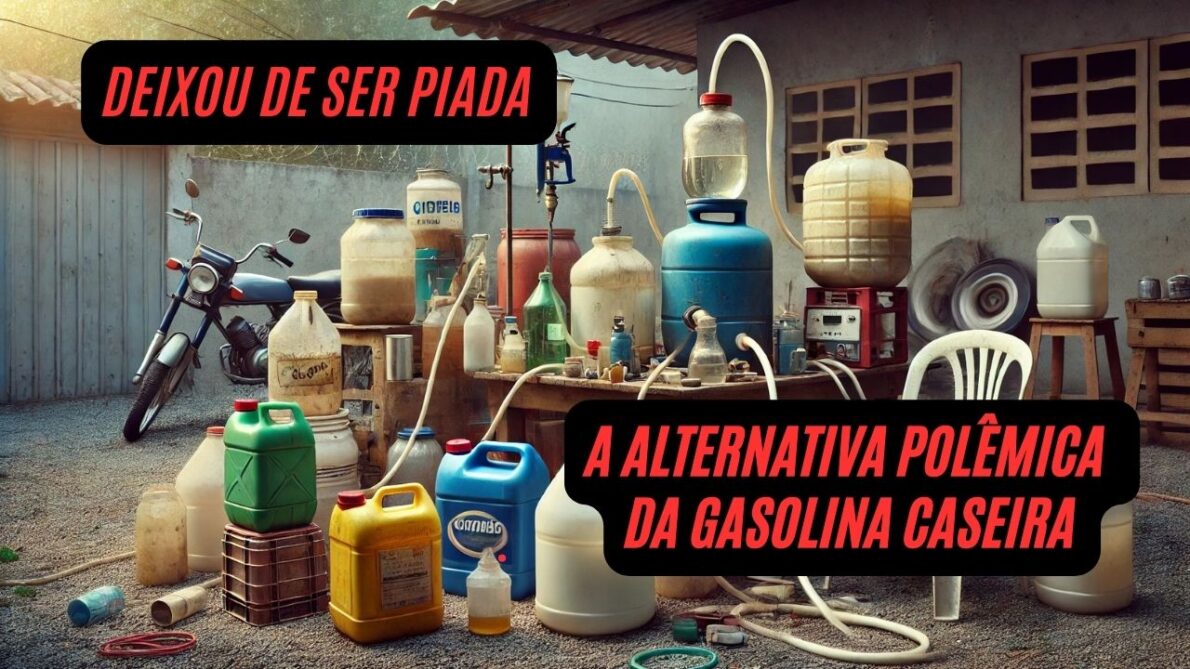

In a Scenario Where Filling the Car’s Tank Has Become Practically a High-Risk Investment, Some Brazilians Have Resorted to Creativity, but This Time, a Creativity That Could Be Costly. It’s Time for the So-Called “Homemade Gasoline,” a Mixture of Conventional Gasoline with Used Cooking Oil That, Despite Promising to Ease the Burden, Is Alarmingly Concerning Mechanics and Environmentalists.
With fuel prices in Brazil hitting new highs, some drivers are turning to unusual and often risky solutions. Social media is filled with reports and “tutorials” on how to produce homemade gasoline, an alternative fuel that has ceased to be merely a joke for many drivers and has turned into a real practice. However, amid attempts to save money, experts warn: today’s savings could turn into a much larger loss tomorrow.
Mechanical and Environmental Risks of Homemade Gasoline
The use of homemade gasoline poses serious problems. According to mechanical engineer Erwin Franieck, the mixture compromises fuel combustion, affecting engine efficiency. With slower and less efficient combustion, fuel consumption tends to increase, negating any financial advantage that the practice might suggest.
Moreover, this mixture can lead to the oxidation of vital engine parts, such as fuel injectors, pistons, and catalysts, due to the proliferation of bacteria and the buildup of adhering layers on the components.
-
Brazil’s 2026 Tax Refund: Record 9.58 Million Filers in Largest Payout Ever, But a Key Detail on Priority Recipients Draws Nationwide Attention

-
Itaú Alters Hybrid Work Model, Increasing Office Days from 2028, Prompting Employees to Adjust to New Routine
-
Facing Labor Shortage, Japan Plans to Invest $34 Million to Attract Foreign Workers in Construction, Healthcare, Industry, and Commerce

-
Brazilian City Makes Remarkable Leap, Becomes 4th Wealthiest in the Country with GDP of R$ 134.1 Billion




And it’s not just the car that suffers: the environment also pays a price. Homemade gasoline increases pollutant emissions, harming air quality. Franieck compares the practice to improper waste disposal, emphasizing the concerning environmental impact of an improvised and unregulated fuel.
Amplified Damage in Turbo Engines
If homemade gasoline is already risky for ordinary engines, it is practically lethal for turbo engines. This is because turbo engines require a fuel with high anti-knock capacity, which the mixture with cooking oil does not provide. Consequently, homemade gasoline in these engines accelerates damage, quickly harming the system and potentially leading to costly repairs.
Creativity That Comes at a Cost
The Brazilian creativity to bypass high prices is admirable, but in this case, it could end up costing twice as much. Saving on refueling is a legitimate desire, but risking the car and the environment with homemade gasoline is not the safe path.
The most sensible solution is to seek proven ways to save fuel, such as regular maintenance and good driving practices, without compromising the vehicle’s durability and without affecting the environment.
As long as costly fuel remains a reality in Brazil, it’s up to drivers to decide between savings that are worth it and those that could be a real shot in the foot.









Que coisa **** essa imagem de IA, contratem pessoas reais e fotos reais