Portuguese
  Spanish




Foreign workers should benefit from investments of R$ 173 million in integration and employment programs in Japan.
The lack of professionals in different sectors of the economy has led Japanese municipal administrations to expand investments aimed at attracting foreign workers. Throughout the current fiscal year, 47 municipalities plan to allocate at least 5.5 billion yen — approximately R$ 173 million — to initiatives that facilitate the arrival, adaptation, and permanence of these professionals in the country.
The measure comes amid the worsening labor shortage, especially in regions far from major urban centers. With fewer young people available to fill positions and an increasingly aging population, local governments have begun to consider professional immigration an important tool to keep services and economic activities running.
How will workers be supported?
The announced resources will be used in different areas to facilitate the integration of new residents.
-
Brazilian City Makes Remarkable Leap, Becomes 4th Wealthiest in the Country with GDP of R$ 134.1 Billion

-
Controversial 6-day Workweek Elimination in Brazil Faces Economic Criticism Over Productivity Claims

-
Itaú to Refund Customers After 14 Years of Unauthorized Credit Card Charges; Agreement Includes No Interest or Adjustments, Deadline by 2028, with Potential Impact of Up to $6.5 Billion

-
Brazilian Company Grows from Bartering Soap for Food to Producing 30 Million Units Monthly, Challenges Global Giants with $100 Million Revenue and Expands into Premium Cosmetics



Among the planned actions are:
- Japanese language courses;
- Financial aid for international students;
- Support for acquiring home appliances;
- Professional recruitment events;
- Guidance on visas and hiring.
Additionally, various cities have been promoting meetings between entrepreneurs and foreign candidates to clarify labor rules and admission processes.
Workers are considered essential in various regions
The need to increase the presence of professionals from other countries is more evident in rural areas of Japan.
In these locations, the reduction of the economically active population has created difficulties for companies and public services. The problem has become so significant that, according to a survey cited by NHK, 441 companies closed their activities during the fiscal year 2025 because they could not fill available positions.
Given this scenario, experts point out that the participation of foreign workers has ceased to be merely complementary and has begun to play a strategic role in the continuity of various economic activities.
Healthcare sector faces one of the greatest demands
Among the segments most in need of professional reinforcement is the healthcare area.
Hospitals, clinics, and institutions focused on elderly care are facing increasing difficulties in hiring enough staff. The situation is gaining relevance because Japan has one of the most aged populations in the world.
For this reason, local governments see international hiring as an alternative to reduce the impacts of staff shortages in services considered essential.
Agriculture also depends on new workers
Away from the big cities, rural properties face another challenge: the constant departure of young people to urban centers.
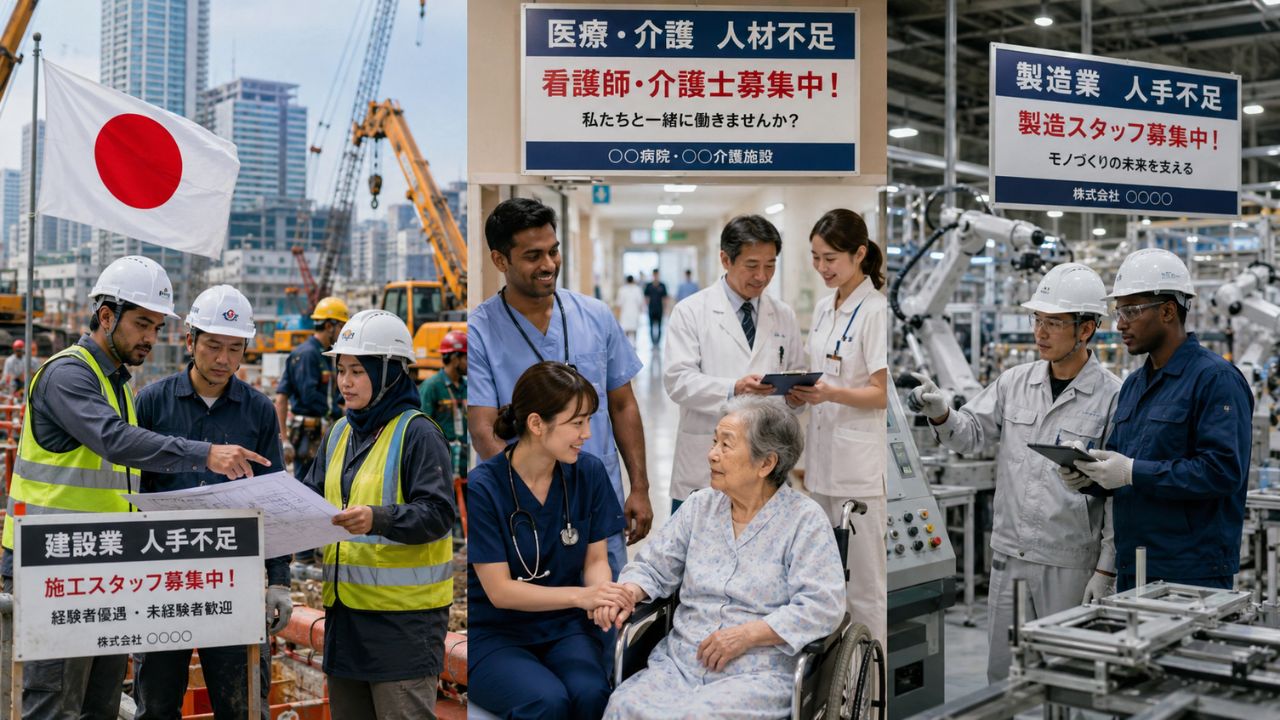
With fewer people interested in staying in the countryside, activities related to cultivation, harvesting, and food processing have increasingly relied on foreign professionals. The presence of these workers has been highlighted as important for maintaining agricultural production in various regions of the country.
Workers sustain industrial and service sectors
The manufacturing industry appears among the main employers of international labor. Factories related to the production of automobiles, electronic equipment, machinery, and other products have increased the hiring of foreigners to compensate for the reduction in the supply of local workers.
Meanwhile, areas such as cleaning, maintenance, security, and business services have also been absorbing professionals from other countries. In many of these roles, advanced proficiency in the Japanese language is not initially required, facilitating the entry of new workers.
Tourism and commerce expand search for multilingual professionals
The growth in the international circulation of visitors has directly influenced the job market. Companies in the hospitality, food, retail, and wholesale sectors have started to value professionals capable of communicating in different languages.
Hotels, restaurants, and establishments linked to tourism face difficulties in filling vacancies and, at the same time, need to cater to an increasingly diverse audience. In this context, foreign workers contribute both to filling the labor shortage and to improving service to visitors.
Investments are concentrated in different regions
Among the local administrations planning larger financial contributions are Tokyo, with an estimated US$ 5 million, the province of Mie, with about US$ 3.1 million, and Ehime, with approximately US$ 1.6 million.
In addition to investments, municipalities have been organizing seminars aimed at entrepreneurs interested in hiring foreign professionals. In early May, for example, the city of Isesaki held a meeting focused on the management of international employment.
In promoting the event, the city hall highlighted that the growth in hiring foreigners requires greater knowledge of labor legislation, working conditions, occupational health, and safety.
Experts advocate for broader support
Although municipal initiatives are advancing, researchers warn that the challenges cannot be addressed solely by local administrations. Speaking to NHK, foreign policy expert Inoue Hajime stated that migration to urban areas continues to attract a large part of the population in search of better opportunities.
According to him, there is a limit to the capacity of regional governments, making the participation of the central government important in developing policies aimed at the integration and permanence of foreign workers.
With the labor shortage affecting everything from hospitals to factories and rural properties, Japanese cities are betting that expanding these initiatives could help preserve fundamental economic activities and reduce the impacts caused by the country’s demographic changes.
With information from O Globo