






 Portuguese
  Spanish


Apiwe Nxusani-Mawela transformed Tolokazi Brewery into a symbol of inclusion in South Africa by combining science, African tradition, and professional training for women in the brewing industry
Apiwe Nxusani-Mawela has become one of the most recognized voices in the transformation of the brewing industry in South Africa. Founder of Tolokazi Brewery, she is noted as the first black woman to lead a brewery in the country, in a sector historically marked by male presence in factories and leadership positions.
Her journey draws attention because it contrasts with the very history of African beer. For generations, the traditional production of fermented beverages, like umqombothi, has been linked to the knowledge of women within families and communities.
Now, Apiwe tries to bring this past closer to the present. Her proposal is to show that African craft beer can be an area of science, business, cultural identity, and professional training, without erasing the ancestral techniques that gave rise to an important part of this tradition.
-
Billionaire says the most valuable skill will help overcome job elimination caused by AI, following Bill Gates’ fears

-
A Dutchman created a ‘box’ that makes trees grow in the desert almost without water and without irrigation: the invention has already brought seedlings to dozens of countries and achieves up to 90% survival where common planting did not exceed 10%.

-
Abandoned warehouse hid a giant collection of rare computers, with over 2,000 artifacts from the 1930s to the 1980s.
-
Scientists warn that melting ice is triggering an alarming chemical transformation in preserved areas, and the first signs are already concerning researchers worldwide.




According to information from NeoFeed, the entrepreneur founded Tolokazi in 2019 and started working with a predominantly female team. The brand uses ingredients associated with the African continent, such as malted sorghum, rooibos, hibiscus, marula, and local hops, in recipes that seek to reinforce their own identity.
Who is Apiwe Nxusani-Mawela and why has her journey gained prominence
Born in Butterworth, in the Eastern Cape province, Apiwe grew up in contact with homemade beer production at family events. This experience, common in many South African communities, later connected to her academic training and professional career.
According to the University of Pretoria, Apiwe has a background in microbiology and completed advanced studies in the field. The institution also highlights that she completed technical diplomas related to the production of fermented beverages and became certified to act as a beer judge.
Before paving her own path, the South African worked at South African Breweries, one of the most traditional companies in the sector. This experience in an industrial environment gave her the technical foundation to combine quality control, fermentation, local ingredients, and entrepreneurship.
Tolokazi Brewery bets on African ingredients and tries to create its own identity
Tolokazi was launched as a brand of beers and ciders with African inspiration. On the company’s official website, the brewery states that its line highlights indigenous ingredients, including sorghum, African Queen hops, and rooibos, to reflect the cultural diversity of the community.
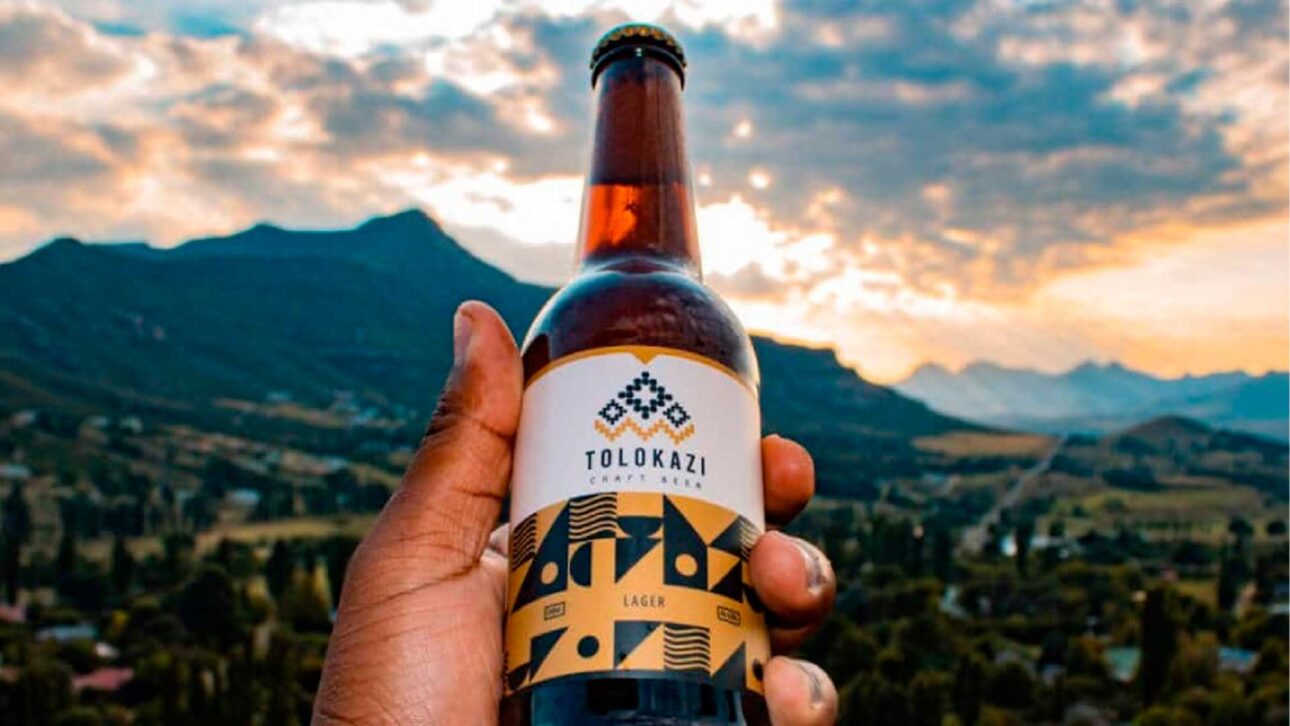
The name Tolokazi also carries symbolism. According to the brand itself, it is linked to Apiwe’s clan name, an important reference within Xhosa culture. The choice reinforces the intention to transform the brewery into an identity project, not just a beverage company.
This proposal is strongly reflected in the use of sorghum. The cereal is associated with umqombothi, a traditional South African drink made with corn and malted sorghum, historically present in rituals, family gatherings, and community celebrations.
Researchers associated with the University of Johannesburg described umqombothi as part of the social, economic, and cultural life of South Africa. The study also points out that small-scale production faces challenges of standardization and safety, which helps explain why technical knowledge and professional training have become central points for modern initiatives.
Brewsters Academy trains young people and tries to open space in a concentrated sector
In addition to Tolokazi, Apiwe is also linked to Brewsters Academy, a project aimed at training new professionals in beer production. According to AP, the academy trained young black graduates, mostly women, in a practical and theoretical program in Johannesburg.
The initiative tries to tackle a structural problem. Even in a country where the home brewing tradition had a strong female presence, the formal industry continues to be dominated by large companies and predominantly male leadership.
The training offered by the academy includes the scientific fundamentals of production, raw material analysis, fermentation control, and practice with equipment. For Apiwe, the presence of black women in this environment needs to stop being an exception and become a normal part of the production chain.
This point is relevant because beer, in addition to being a cultural product, also drives a broad economic chain. AP cited data from Oxford Economics indicating that the South African beer sector supports more than 200,000 jobs and contributes about $5.2 billion to the country’s GDP.
The history of beer also involves women
Apiwe’s attempt to “rewrite” the history of beer does not mean inventing a new narrative. The goal is to reclaim a prominence that, in many places, was reduced when production left the domestic space and came to be controlled by industrial structures.
In South Africa, the traditional production of sorghum beers remained linked to knowledge passed down among women. This knowledge involved observation, fermentation time, use of grains, and adaptation to local conditions.
With industrialization, part of this knowledge was left out of formal spaces of innovation and business. Tolokazi tries to reverse this by bringing traditional ingredients and references to a professional structure, with production standards and market language.
The strategy also aligns with a global trend. A survey by Oxford Economics on the sector showed that the beer chain had an impact of $878 billion on the global GDP in 2023 and supported 33 million jobs, considering production, agriculture, distribution, bars, restaurants, and suppliers.
In this context, the presence of women, especially black women, gains economic and symbolic dimension. Apiwe’s story shows that inclusion is not just a social agenda, but also a way to expand technical training, innovation, and participation in markets that were previously less accessible.
Tradition, science, and responsibility walk together in the debate
The trajectory of the South African also shows how beer production involves scientific knowledge. Fermentation, temperature control, microbiological quality, and selection of inputs are technical stages that require training and care.
At the same time, the debate should not be confused with encouraging consumption. Beer is an alcoholic product, with sales and consumption subject to legal restrictions, and the relevance of the story lies in the industry, culture, professional inclusion, and preservation of traditional knowledge.
The importance of Apiwe Nxusani-Mawela lies precisely in connecting these points. She operates in an economically relevant area, revives a female and African tradition, and tries to create paths for new professionals to participate in a chain that moves science, agriculture, industry, and services.
The case of Tolokazi Brewery indicates that African craft beer can be seen beyond the shelf. It also reveals disputes over memory, identity, work, and recognition in a market that still tries to balance tradition and modernity.





