






 Portuguese
  Spanish


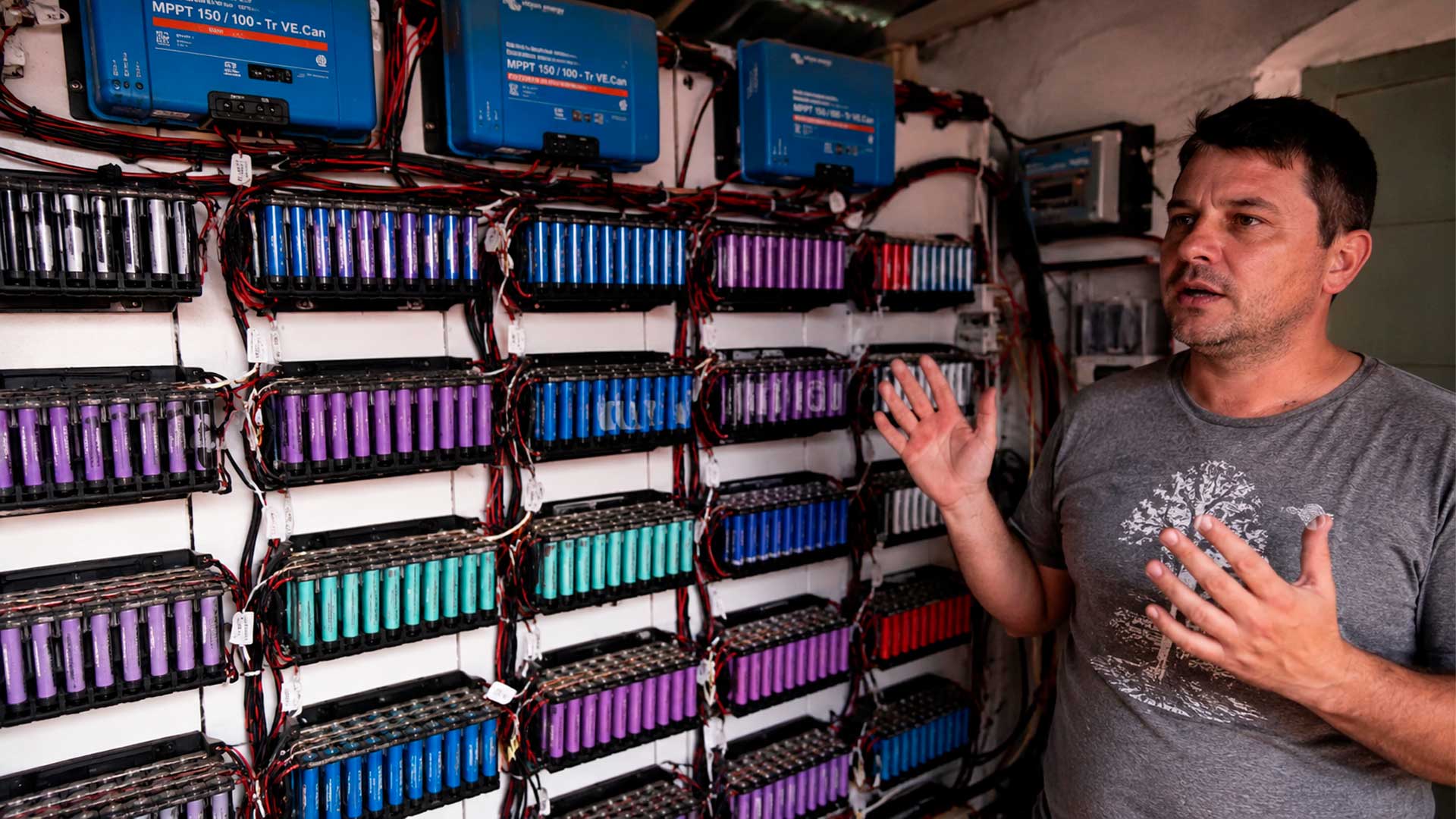

Project shows how old laptop batteries can get a second life in solar systems, but also raises alert about safety, proper disposal, and limits of DIY initiatives
A residential solar energy project caught attention after being documented on the Second Life Storage forum by a user known as Glubux, who began reporting the assembly in November 2016. At the time, he stated that he was already producing part of his own electricity with solar panels on the roof, an old forklift battery, charge controllers, and an inverter.
The project’s differential was in the energy bank. Instead of buying new batteries to store the electricity generated by the solar panels, Glubux started dismantling discarded laptop batteries, testing the internal cells, and assembling new packs for residential use. Initially, according to his published account, the collection already gathered about 650 laptop batteries.
According to New Energy Brasil, the idea was born from equipment that would likely end up as electronic waste. Instead of discarding the laptop packs, the project leader began separating still usable cells, combining them with solar panels, a charge controller, and an inverter.
-
Brazilian Truck Driver in the U.S. Earns $11,200 Commission on Heavy Haul, Highlights High Income Potential and Demands of the Job

-
Teen without prom date invites pet cat to dance, goes viral with tuxedo and pink dress photoshoot

-
Boy Uses Mother’s Sewing Machine to Make Teddy Bears for Hospitalized Children in Tasmania Over 365 Days

-
Restaurants Combat Frying Odors Before Cooking Begins: Here’s Why This Routine Matters




The case draws attention because it combines two increasingly present themes in the energy transition: residential solar energy and battery storage. The system does not represent a ready-made solution to be copied by anyone, but it helps to show the hidden potential in materials that normally lose value when a laptop stops working.
At the same time, experts warn that lithium-ion batteries require technical knowledge, adequate protection, and responsible disposal. When mishandled, damaged, or incorrectly connected, they can pose risks of overheating, short-circuiting, and fire.
Laptop batteries become energy bank for solar system
According to the publication, the project began in November 2016, when the person responsible already had some experience with solar energy. In the initial phase, he had photovoltaic panels, an old forklift battery, a charge controller, and an inverter, but was still looking for a more robust way to store the generated energy.
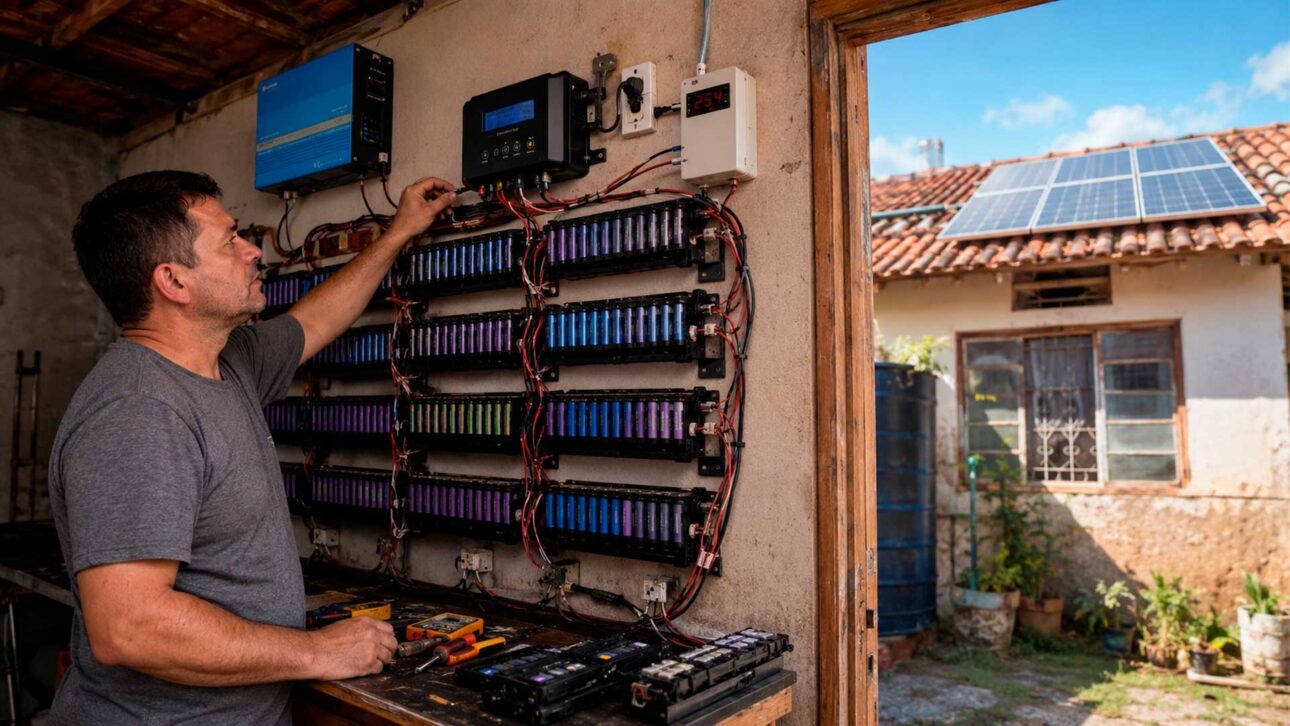
The solution found was to make use of discarded laptop batteries. In many cases, an entire pack is thrown away when only part of the internal cells have lost performance. This means that some units can still retain charge and serve in less demanding applications, provided they undergo technical evaluation.
Initially, the stock gathered about 650 laptop batteries. Over time, according to the report, the number exceeded 1,000 units, forming a kind of energy bank built gradually, cell by cell, to support the home’s electrical supply.
The assembly was installed in a shed separate from the house, approximately 50 meters from the residence. This detail is important as it shows a concern for safety and system organization, although the initiative remains a handcrafted installation and outside the certified commercial standard.
Off-grid solar energy depends on storage to function at night
The central point of the project is storage. Solar panels generate electricity during the day, but the house also needs energy at night, on cloudy days, or during low generation moments. This is where the batteries come in.
According to UNIFAL-MG, off-grid photovoltaic systems are those that operate without direct connection to the distribution network. In these systems, the energy generated by the panels needs to be stored in a battery or battery bank, allowing for later use.
A master’s research developed at the university studied precisely the reuse of 18650 cells removed from laptop batteries for off-grid residential solar systems. The work evaluated discarded cells, measured residual capacity, and analyzed the economic viability of this application.
According to UNIFAL-MG, about 51% of the cells analyzed in the study were considered suitable for reuse. The research also indicated that a battery assembled with reused cells could sustain a theoretical residence for up to five days without sunlight, in addition to presenting a lower financial return than a solution made only with new batteries.
This type of result helps explain why projects like the one by the man who gathered more than 650 batteries spark curiosity. They show that the disposal of electronics can hide still useful components, provided they are evaluated with method and safety.
Electronic waste is growing worldwide and putting pressure on recycling
The story also draws attention to the environmental side. Electronic waste is one of the most challenging aspects of the circular economy, as it involves equipment with metals, plastics, boards, batteries, and components that require proper treatment.
The Global E-waste Monitor 2024, a report produced by UN-affiliated organizations, reported that the world generated 62 million tons of electronic waste in 2022. The volume increased by 82% compared to 2010 and could reach 82 million tons by 2030 if the trend continues.
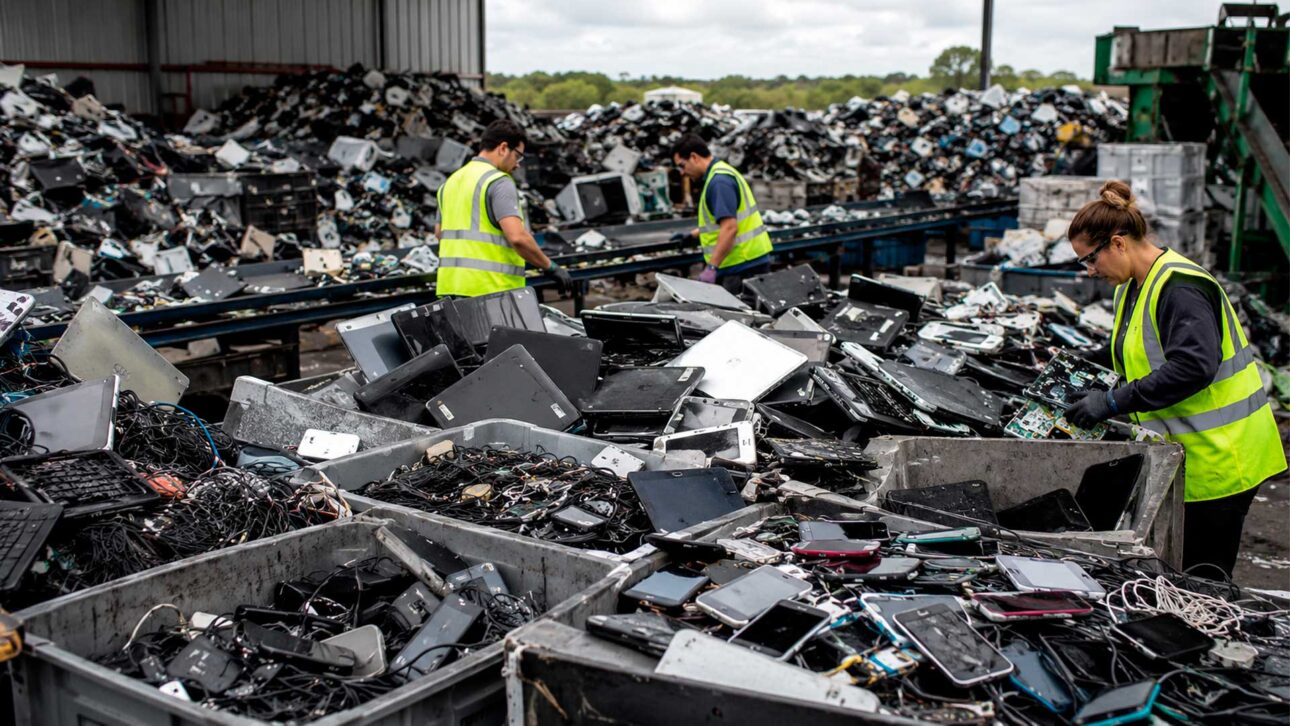
The same survey indicates that less than a quarter of this electronic waste had documented collection and recycling in 2022. This means that a large portion of the materials ends up in improper disposal, informal storage, or untraceable chains.
In Brazil, the National Solid Waste Policy provides for reverse logistics as a tool to return products to the productive sector, allowing recycling, reuse, or environmentally appropriate disposal. The National Information System on Solid Waste Management also advises that batteries and cells be delivered to designated collection points.
Therefore, the reuse of batteries should not be confused with improvisation. The safest path for ordinary consumers remains taking batteries, cells, and electronics to drop-off points, while technical initiatives should follow standards, electrical protection, and specialized monitoring.
Battery storage gains ground in Brazil
The case of notebook batteries arises at a time when energy storage has become a strategic topic in the Brazilian electric sector. Solar energy has rapidly grown on rooftops, rural properties, and businesses, but the ability to store electricity remains one of the most expensive and complex pieces of this expansion.
ANEEL reported, in 2025, that Brazil already had millions of distributed micro and mini-generation systems connected to the grid. Most of these units were in the residential class, showing how self-generation is no longer a topic restricted to large companies.
In June 2026, ANEEL approved rules on energy storage systems, discussing models of exploration, charging for grid use, and the participation of these devices in the National Interconnected System. In the same week, the Ministry of Mines and Energy published guidelines for an unprecedented auction of battery storage in the country.
These measures address professional and large-scale projects, not home installations with repurposed batteries. Even so, the movement reinforces that batteries have gained a central role in the energy transition, whether for isolated residences, electrical grids, or large enterprises.
According to the Energy Research Company, electrochemical batteries have potential for different applications due to their rapid response, modularity, and location flexibility. The challenge lies in reducing costs, defining clear rules, and ensuring technical and environmental safety.
Inspiration does not eliminate fire risks and electrical failures
Despite the sustainable appeal, the project with old laptop batteries requires caution. Lithium-ion batteries can offer good energy density, but they also pose risks when they suffer physical damage, overcharge, deep discharge, or improper assembly.
Fire safety organizations warn that such batteries should not be discarded in regular trash and need to be kept away from heat sources, flammable materials, and unsuitable chargers. In larger systems, the risk increases because hundreds of cells start working together.
In the case reported by New Energy Brasil, the installation would have operated for years without serious incidents, but this does not turn the practice into a domestic recommendation. The result depends on careful screening, constant monitoring, electrical protection, and technical knowledge.
For most families, the safest alternative is to invest in certified equipment, hire qualified professionals, and dispose of old batteries at reverse logistics points. For universities, companies, and research centers, repurposing can be a promising line of study, especially in controlled applications.
The main lesson from the story is not that anyone can assemble a home battery from scrap. The most important message is that electronic waste has value, solar energy needs storage, and the circular economy depends on technology, safety, and responsibility.


