






 Portuguese
  Spanish


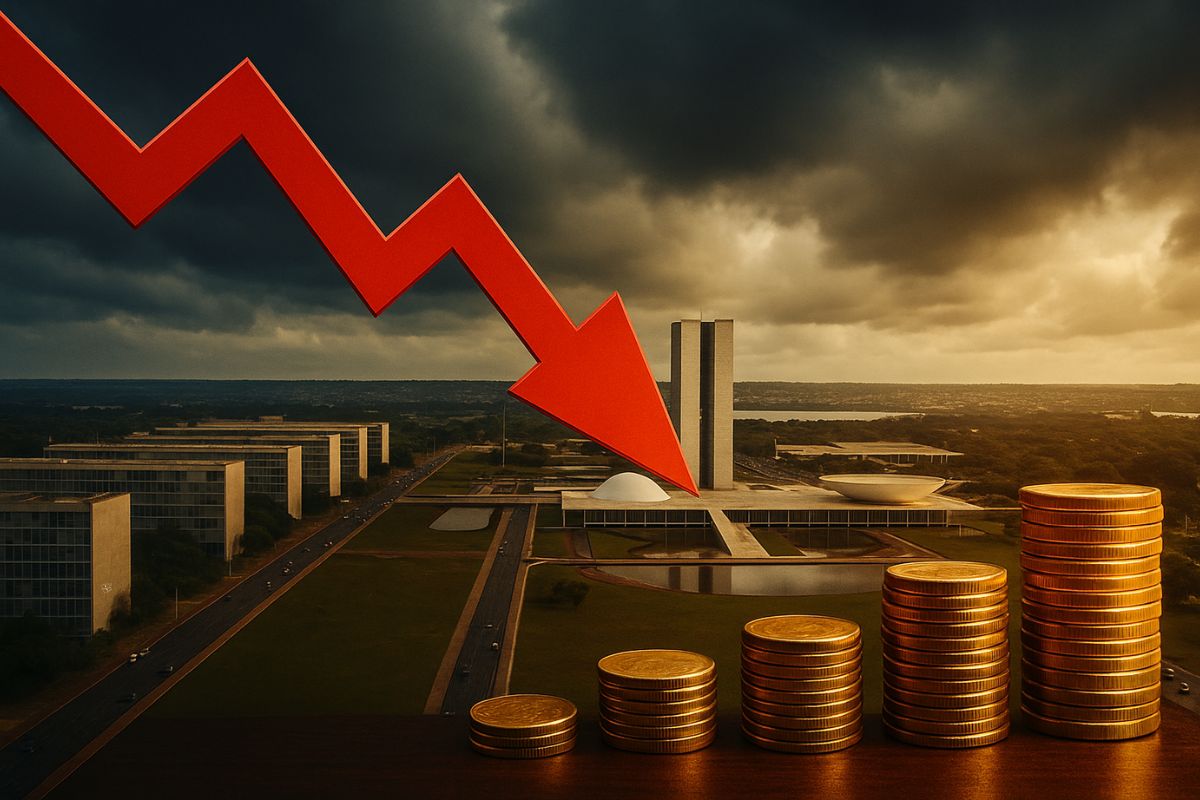
Brazilian Public Debt Should Exceed 80% Of GDP In 2026, Warns National Treasury. Projections Indicate That Indebtedness Will Remain At A High Level For At Least A Decade, Putting Pressure On Interest Rates And Investments
The brazilian public debt reached 76.6% of GDP and, according to the National Treasury, should exceed 80% in 2026, remaining above this level for at least ten years. The scenario worries economists, who warn about the impacts on economic growth, investments and the country’s competitiveness.
According to experts, high indebtedness combined with high interest rates creates a hostile environment for economic expansion. The World Bank points out that, for emerging countries, exceeding the limit of 64% of GDP already reduces growth potential – each additional percentage point of debt can decrease economic activity by up to 0.02 percentage point.
International Comparison And Cost Of Indebtedness
By the calculations of the International Monetary Fund (IMF), which include liabilities from the Central Bank, Brazil already registers a debt/GDP ratio of 89.9%. This number is 18 points above the average of emerging countries and 20 points above the Latin American average.
-
Coca-Cola Shuts Down 100-Year-Old Factory in the U.S., Impacting 85 Workers and Shaking Local Community with Historic Consequences

-
Bianca Andrade Invests $30 Million of Her Own Money in Boca Rosa, Launches Over 100 Products in a Year, Aiming for $400 Million by 2026
-
Belo Horizonte Becomes First Brazilian City to Fund Housing, Utilities for 100 Homeless Families with $900,000 Initiative
-
Brazilian Joins Homeownership Consortium, Faces Decade of Dual Payments Totaling $141,000, Surpassing Traditional Mortgage


The difference compared to countries like the United States and Japan is clear: developed nations sustain higher debts thanks to low interest rates and high domestic savings, while Brazil faces high interest rates and low savings capacity, making the cost of indebtedness much heavier.
Projections For The Coming Years
Even with adjustment measures, such as cuts in parliamentary amendments and review of mandatory expenses, projections indicate that brazilian public debt may reach 93% of GDP by 2030 according to the Central Bank methodology. The Treasury’s forecast is slightly less pessimistic, estimating 83.2% in the same year.
For economist Felipe Salto, “the problem is the poisonous combination of stratospheric real interest rates with low fiscal effort.” He advocates that a more robust adjustment program be implemented starting in 2027 to reverse the upward trajectory.
Impact On Investments And Growth
Researcher Samuel Pessôa from FGV/Ibre and BTG Pactual highlights that high interest rates make capital-intensive projects unfeasible, such as infrastructure, housing, sanitation and ports. He also warns that current revenue, although record high, is the result of a favorable and temporary economic cycle, not of a structural improvement in public accounts.
In practice, the budgetary space for investments may be exhausted in five years, according to Treasury projections. This means less resources for works, maintenance of public machinery and modernization of strategic sectors.
Do you believe that Brazil will be able to reverse the trajectory of the brazilian public debt without further compromising investments and economic growth? Leave your opinion in the comments.





-

-

2 people reacted to this.