Portuguese
  Spanish


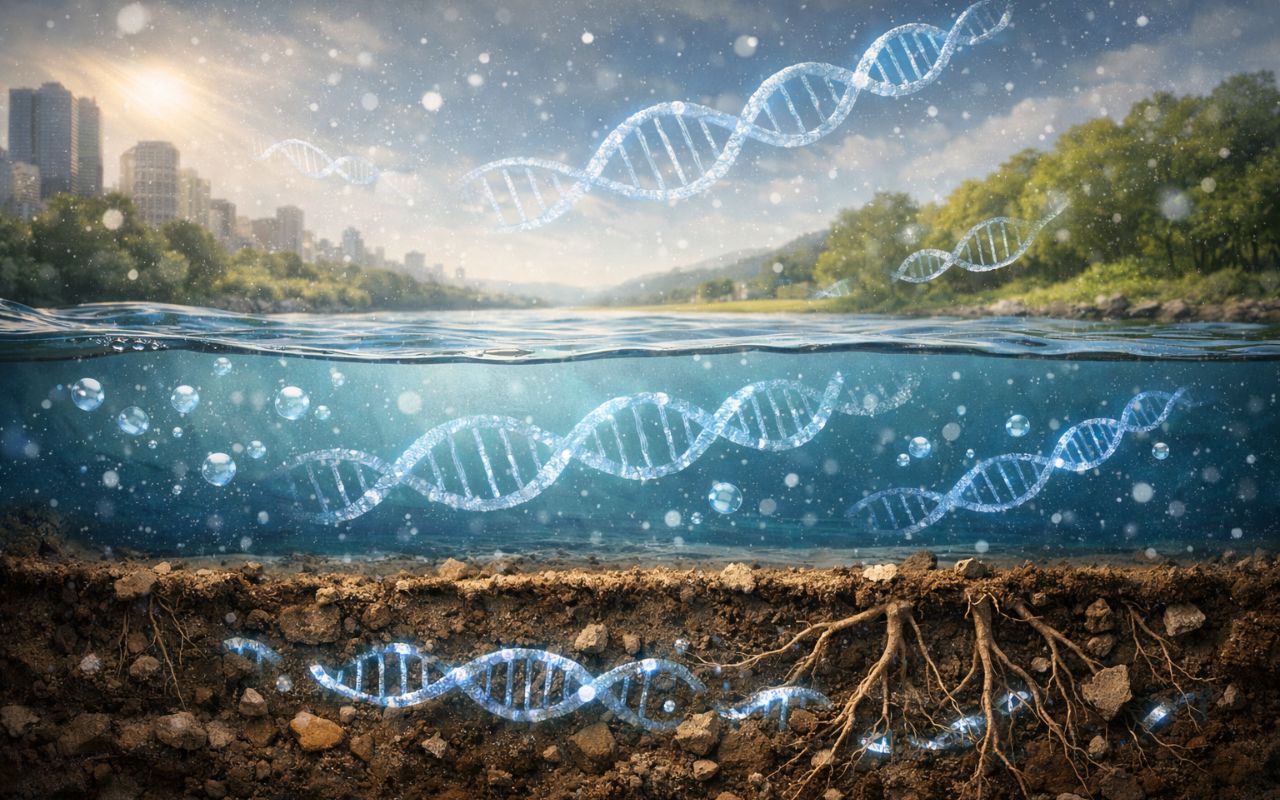


Scientists Discover That Human DNA Is Scattered in the Air, Soil, and Water Almost Everywhere, An Advancement That Could Revolutionize Science and Forensics, But Raises Ethical Concerns About Privacy.
Scientists from the University of Florida in the United States revealed that human DNA can be detected in almost every environment — in air, soil, and water — during a study published in the journal Nature Ecology and Evolution.
The discovery, made in 2023 and widely reported among researchers, demonstrates the ubiquity of human genetic material outside the human body and raises profound questions about scientific stages, potential applications, and ethical dilemmas.
Where Was Human DNA Found?
The term human DNA refers to the genetic material that we all carry in our cells, explaining physical characteristics, predispositions, and other biological information.
-
The large jar blender has a rival: Oster Ultra Power bets on 1,000 W, six stainless steel blades, and two portable cups with leak-proof lids.

-
Tesla injected an additional $250 million into the German factory, doubled the battery cell target, and opened its own production line for startups.

-
No more TV stuck on the wall: Samsung The Freestyle+, the new projector with over 400 lumens projects on walls, floors, and ceilings, bringing cinema to any corner of the house.
-
A Japanese governor single-handedly stalled the construction of the world’s fastest train for nine years, and only now has he agreed to allow a tunnel excavated at a depth of 1,400 meters.



Researchers initially collected environmental DNA (known as eDNA) to study endangered sea turtles on Florida beaches, but soon realized something unexpected: abundant parts of human DNA present in their samples.
In addition to beach sand, genetic material was found in indoor air samples, collected at a veterinary clinic, where the DNA matched the people present on-site, animal patients, and even common viruses found in those animals.
According to the study, traces of human DNA were detected in:
- Air in closed rooms, through suspended particles in the air.
- Soil, including sediment and footprints in the sand of beaches.
- Water, both saltwater and freshwater, including samples from oceans and rivers near populated areas.
These traces are present in environments close to human activity and, in many cases, can be analyzed with modern sequencing technology to reveal information about health and ancestry.
How Is Human DNA Released Into the Environment?
Human DNA enters the environment through everyday actions such as:
- skin that naturally flakes off;
- saliva droplets expelled while talking or coughing;
- sweat and other natural secretions.
These fragments are small but sufficient to be captured by collection equipment used in genetic research.
The detection of human DNA in so many places has clear scientific advantages:
- It can help monitor human presence in sensitive or remote ecosystems.
- It enables the identification of public health patterns through environmental samples, such as wastewater.
- It can revolutionize forensic methods, such as discovering traces at crime scenes where there are no clear physical samples.
However, this same capability also raises profound ethical concerns.
Ethical Debates and Privacy Risks
One of the major questions raised by scientists is the potential to violate genetic privacy.
Human DNA contains very personal information — including ancestry, genetic mutations associated with diseases, and health traits — that can theoretically be read by anyone with access to the appropriate technology.
Professor David Duffy, a genomics specialist at the University of Florida, emphasizes that:
“All this personal, ancestral, and health-related data is available for free in the environment and is just floating in the air right now,” warning of the impact this could have on privacy and genetic surveillance.
Human DNA in the Environment: Potential Applications and Cautions
Beyond the risks, scientists see utility in environmental monitoring and assisting in crime and missing persons investigations.
For example, the collection of human DNA in wastewater is already being explored to track disease outbreaks, as occurred with COVID-19 in some areas.
However, these technologies should only advance with strong ethical regulations, ensuring protection of individual privacy and preventing malicious use or surveillance without consent.
Researchers believe that the ability to detect human DNA in the environment can transform many areas — from ecology to medicine and forensic science — but always with the need for broad public dialogue about the limits and responsibilities of this technology.
In the meantime, science continues to explore how genetic fragments — left by each of us — become subtle clues of our presence on the planet.
With information from Metrópoles.