






 Portuguese
  Spanish
  4 min of reading
  1 comment




Embraer Projects Significant Expansion in Asia-Pacific with Its E2 Jets, Highlighting Future Demand, Already Established Presence in Airlines, and New Strategic Orders Reinforcing the Competitiveness of the Brazilian Manufacturer in the Global Market.
Embraer gathered, in Singapore, representatives from airlines and industry executives to discuss the expansion of regional aviation in the Asia-Pacific and present solutions from the E-Jets and E-Jets E2 family.
At the meeting, held on August 6 and 7, 2025, the Brazilian manufacturer highlighted the forecast of demand for 10,500 aircraft with up to 150 seats worldwide by 2044, of which 3,390 are expected to serve Asian markets, including China.
The scenario, according to a report published by the newspaper Diário do Nordeste, reinforces the company’s commercial strategy in the continent, where around 200 jets from the brand are already in operation.
-
Brazilian Joins Homeownership Consortium, Faces Decade of Dual Payments Totaling $141,000, Surpassing Traditional Mortgage

-
Land Rover to Halt Production in July, Putting 371 Jobs at Risk, as Chinese Automaker Negotiates to Convert Factory to 100,000 Vehicles Annually by 2027

-
Mexican Pest Threatens U.S. Cattle Herds at Historic Lows, Potentially Boosting Brazilian Beef Exports as Burger Prices Soar

-
Brazilian Freight Bill Progresses in Congress with $5,000 Minimum Wage, 70% Advance Payment, and Fines Up to $1 Million, as Agriculture and Industry Warn of Rising Costs and Legal Uncertainty


Market Accelerating in Asia-Pacific
The seminar in Singapore presented traffic trends and passenger profile in the region, emphasizing connection routes between medium-sized cities and still under-served destinations.
Embraer argued that aircraft with up to 150 seats can increase frequencies and open markets without the need for large hubs, while simultaneously reducing costs and emissions per seat.
The meeting gathered airlines, lessors, and civil aviation authorities from the Asia-Pacific.
Global Projections until 2044
According to the Market Outlook 2025, released on June 12, 2025, the demand for 10,500 aircraft in the sub-150 seat category includes jets and turboprops and reflects the search for operational efficiency and flexibility in network.
The regional analysis indicates that the Asia-Pacific will account for about 33% of the total, equivalent to 3,390 units, participation anchored by the growth of domestic and intraregional traffic.
Operators and Presence on the Continent
In Asia-Pacific, E-Jets total approximately 200 aircraft in service.
According to materials presented at the Asian edition of the seminar, 14 airlines in seven countries have already selected models from the E-Jets and E2 family, consolidating the Brazilian manufacturer’s presence.
Among the mentioned clients are Scoot (Singapore), All Nippon Airways (ANA), and Japan Airlines (Japan), Tianjin Airlines (China), Alliance Airlines, and Virgin Australia (Australia).
Recent Orders Reinforce Expansion
The commercial strategy in the region gained momentum with new orders.
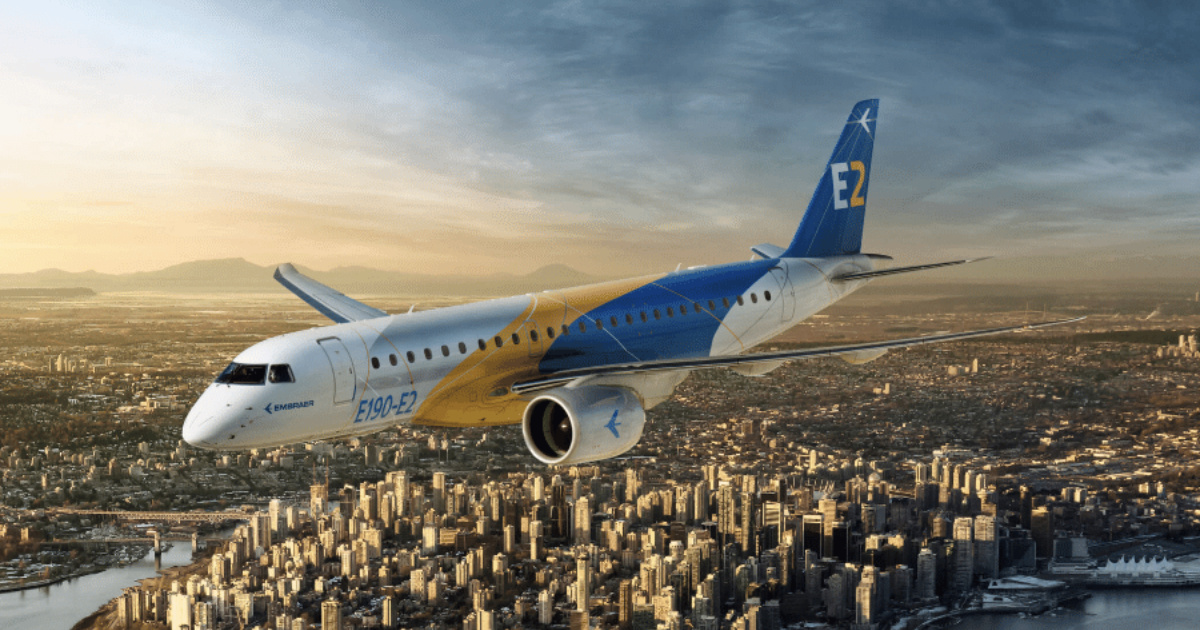
On February 25, 2025, ANA confirmed the purchase of 15 E190-E2 with an option for five more units, becoming the first operator of the E2 family in Japan.
The contract was formalized in June 2025, during the Paris Air Show, with deliveries expected to begin in 2028.
The company stated that the jets will be used to strengthen domestic connectivity.
In the Australian market, Virgin Australia announced on August 12, 2024 the acquisition of eight E190-E2 for operations in Western Australia, focusing on the charter segment and regional routes.
The company reported that deliveries will begin in the second half of 2025 and that the E2s will replace part of the older fleet, offering efficiency gains and lower noise.
VARA is expected to be the first operator of the E2 in Australia.
Why E-Jets E2 Are Gaining Ground
Airlines in the region have been seeking aircraft that ensure high efficiency on lower density routes and that enable increased frequencies with controlled costs.
The E2 family, Embraer’s focus in the sub-150 seat category, was presented at the event as an alternative for networks requiring performance on short runways, compatible range for intraregional networks, and reduced fuel consumption.
The manufacturer emphasizes that this combination allows adjusting supply to demand and enhancing connectivity between secondary centers.
Expected Impact on Connectivity
With the projected demand for 3,390 aircraft in Asia-Pacific by 2044, the expectation is that the number of point-to-point connections in domestic and short-distance cross-border markets will grow.
The role of smaller jets in increasing frequencies can contribute to the economic development of under-served regions, as well as alleviate infrastructure bottlenecks at congested airports.
The analysis presented by Embraer aligns with the strategy of mixed networks, combining larger narrowbodies and regional jets to absorb peaks and seasonality.
Brazil Projects Industrial Influence
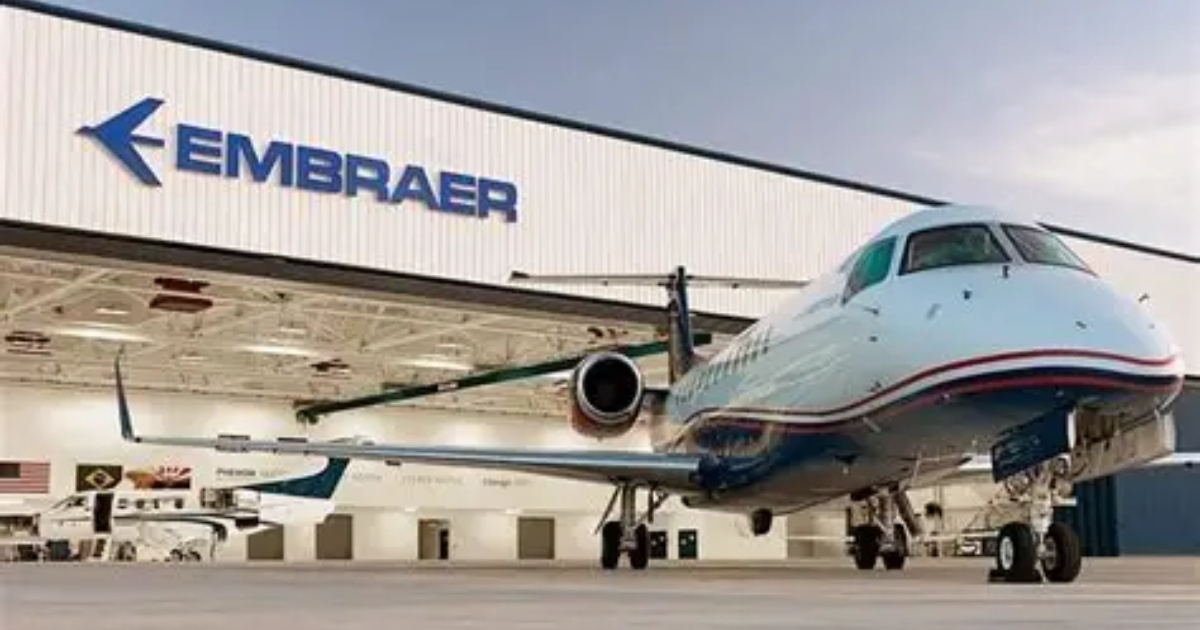
The commercial advancement in Asia-Pacific also reinforces Embraer’s image as a global supplier of aircraft in the sub-150 seat range.
This movement combines orders from established customers and new operators, as well as regional certifications that expand the sales potential of the E190-E2 and E195-E2 in markets with different regulatory requirements.
The company maintains that the product’s maturity and the base of operators in the region help accelerate sales campaigns and consolidate local after-sales support.





Estou com o pessoal da minha vida sempre sua amiga vai ficar muito bem