






 Portuguese
  Spanish


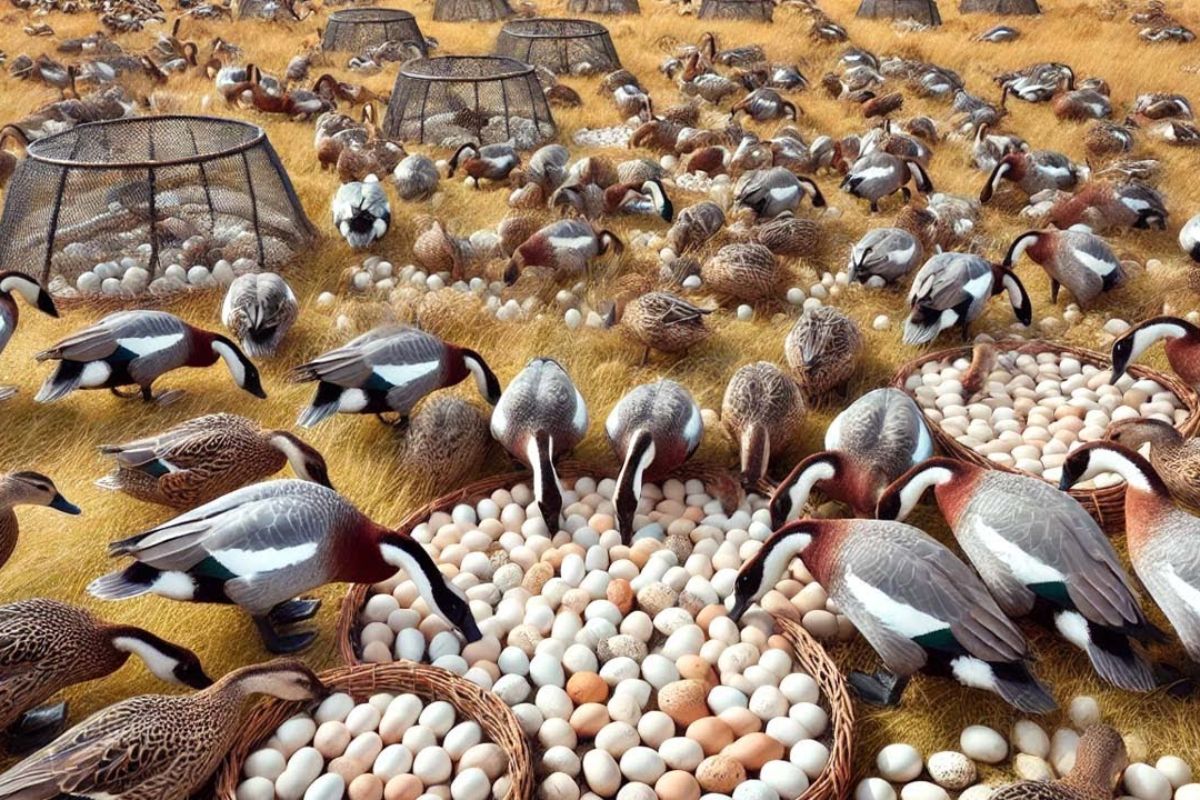


Between Water, Feed, Incubation, Sanitary Management and Automation, the Journey of Millions of Ducks and Chickens in the World Reveals Choices That Impact Cost, Productivity, Sustainability and Global Commerce.
Millions of ducks and chickens in the world are not “ready” to arrive at the plate. Before that, there is a long, repetitive, and highly organized path that begins in the early morning, goes through incubation, warming, feeding, environmental control, and ends in processing, transportation, and market.
The most interesting aspect is the contrast: in many countries, ducks still follow a traditional model with grazing in fields and rice paddies, while in modern systems, chicken farming turns into an industrial operation guided by sensors, conveyors, and robots. And the two worlds coexist in the same global market.
Ducks in the Traditional System: Water, Field, and Daily Routine
In Asian countries, it is common to see ducks wandering through the fields. This traditional model depends on the environment because ducks need access to water and are usually harder to keep in closed cages.
-
Regenerative Farmers Use Keyline Plow to Improve Pasture Hydration, Storing 1 Gallon of Water Every 30 Centimeters

-
Bicolor Pumpkin Resembling Hand-Painted Art Discovered by Brazilian Researchers in the Capital Due to “Spontaneous Mutation”

-
In China, a 26-story building produces 1.2 million pigs annually, revolutionizing livestock farming with tube feeding and AI surveillance.
-
With Nearly 60% Desert, Israel Desalinates Seawater and Recycles 90% of Wastewater to Build a Billion-Dollar Agricultural Powerhouse in Dates and Cotton
Unlike chickens, ducks tend to be “dirtier,” which makes confinement a bigger challenge.
The ideal life for them is to graze with space to walk, explore, and enter the water. The duck’s body “talks” to this lifestyle: webbed feet, waterproof plumage, and down that helps keep them warm in winter.
Moreover, ducks tend to have a sanitary advantage, with resistance to diseases and good foraging ability, especially in wet areas where they gather in flocks.
The Cost of Feeding: Why Waste Weighs on the Price
Even in the traditional system, feed plays a central role. In some routines, the storage keeps bags of food to meet the daily consumption of the flock, and replenishment is constant.
This brings a practical disadvantage: when ducks are fed a balanced diet, there is considerable feed waste because their shovel-shaped bill makes it difficult to take advantage of everything that is offered. This helps explain why duck meat and eggs can be more expensive than chicken.
On the other hand, there is a strong point: ducks can maintain good yield even with less-than-ideal quality food, which supports farming in rural contexts and small-scale production.
Incubation, Warming and Adaptation: How a Healthy Flock is Born

After laying, the eggs go through incubation and hatch in about 29 days. From there, the focus shifts to survival and standardization of the flock.
In some farms, day-old ducklings arrive weekly and are kept warm for up to 14 days with heat lamps.
They receive feed and also undergo vaccination to prevent avian diseases. Over time, healthy ducklings get used to new foods and the environment, including water and solar temperature.
Finally, they are transported to the fields to start grazing and foraging in the natural environment, closing the cycle of the traditional system.
Rice and Ducks: An Integration That Becomes a Sustainability Strategy
In rice-producing areas, clear synergies arise between ducks and crops. When ducks graze after harvest, they act as natural predators of insects and snails, while at the same time leaving natural fertilizer in the field.
This dual role of biological control and fertilization helps increase yields and can reduce pesticide use.
The integration of ducks with rice also serves as a practical response to climate impacts, and some farmers adopt the technique to sell rice at a higher price.
There are also combinations with fish farming, which reinforce the narrative of sustainable development for small producers.
Not everything is perfect: some farmers report that ducklings can damage young crops and, when the rice enters the fruiting phase, it is time to remove the ducks to avoid losses.
Eggs, Commerce and By-products: Where the Global Market Comes In
In some places, duck farming is historic and aimed at both meat and eggs. In Indonesia and the Philippines, for example, farming is primarily mentioned for egg production.
Meanwhile, the consumption of duck meat is strongly associated with markets like Hong Kong, Japan, and Korea, with a significant portion imported from Asia.
There is also a highlight for Singapore as a major importer of live ducks for processing, with annual movement in the tens of millions of dollars.
Besides the final product, what comes from ducks also has value: high-value fertilizers can be sold or applied directly to crops; feathers can be marketed; and even eggshells can become feed for other animals.
Closed Systems and Human Challenges: Productivity Does Not Eliminate Risk
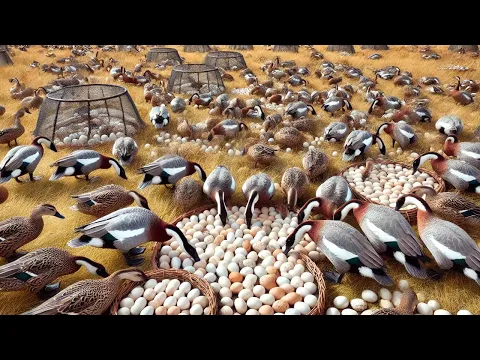

In developed countries, the text mentions duck farming in closed systems with cages. But whether in the field or in the barn, there is a common point that many people overlook: the impact on the health of those who work.
Farmers exposed for long periods to ammonia, manure dust, feed, feathers, and various particles may face respiratory problems and irritations.
The productivity of the system does not erase the human cost of daily management.
Chickens on an Industrial Scale: Robots, Sensors, and Connected Farms
With the demand for chickens increasing, a new chapter comes into play: smart technology in almost every production activity.
A poultry farm can raise over 530,000 chickens a year, and egg farms can house hundreds of thousands of layers at the same time.
In this scenario, smart systems monitor welfare, health, and the environment of the henhouse, freeing up labor and seeking to maintain quality and routine.
Chicks go through incubation, and in modern operations, some farms produce their own strains to feed the next round of production, reducing dependence on external transport.
Heating in the first days is treated as a critical stage: systems automatically control heat lamps according to climate and age, keeping the temperature in the ideal range.
Lighting is also managed to regulate biological rhythm, with lights on for long daily periods during peak times.
Sanitation, Feeding and Collection: Automation to Reduce Waste and Failures
Sanitary management keeps pace with scale. As it is not possible to vaccinate each bird individually, part of the process is done in groups, with spraying technology that seeks uniformity and a more precise dose.
In feeding, automation changes the game: sensors and timers distribute defined quantities at regular intervals. The goal is clear: reduce waste, standardize growth and minimize manual labor.
The logistics of eggs also become a production line. In some farms, eggs are automatically collected in nesting areas and sent for processing.
Advanced equipment washes, sorts by size and quality, packages, and prepares for shipping, with the capacity to process thousands of eggs per hour.
Controlled Environment and Continuous Cleaning: The “Invisible Routine” of Productivity
Maintaining an ideal environment is part of the system. Fans and heaters automatically adjust parameters, and ventilation removes ammonia and harmful gases, reducing the risk of respiratory problems.
An average cycle of chicken production is described as around seven weeks, from birth to final weight. Afterward, the barn is cleaned, disinfected, and prepared for the next flock, repeating the cadence several times a year.
Here come the cleaning robots: they move through the henhouse, sweeping waste to collection areas and helping to keep the environment clean continuously.
There are conveyor systems to collect manure, which is destined for composting or treatment, reducing the risk of outbreaks and improving waste management.
There is also the idea of robots that help ventilate, reduce carbon emissions, and limit the growth of harmful bacteria, which can decrease the need for antibiotics and support animal welfare.
From Field to Plate: Two Logics, One Same Goal
When you put it all together, the picture becomes clear: millions of ducks and chickens in the world exist because there are systems that repeat processes with discipline, whether in the rice field with grazing and natural fertilization, or in the automated barn with sensors, conveyors, and robots.
One path invests in integration with nature and reduction of inputs like pesticides. The other invests in environmental control, efficiency, standardization, and speed.
And both converge at the same destination: supplying a market that demands volume, regularity, and competitive price.
From your point of view, will the future of millions of ducks and chickens in the world lean more towards the integrated traditional model or total automation with robots in farms?


