






 Portuguese
  Spanish


The Valuation of the Yuan Drives Emerging Currencies, Pressures the Dollar, and Opens Space for the Brazilian Real to Gain Strength Amid the Global Dedollarization Scenario and Greater Role of China in International Trade.
The recent valuation of the yuan and the prospect of interest rate cuts in the United States have created a favorable environment for emerging currencies, including the real.
Signs of adjustment in Beijing’s exchange rate policy and the weakness of the dollar have reinforced movements that, according to analysts, are spreading to pairs like the Thai baht and Mexican peso, with direct reflections in Brazil.
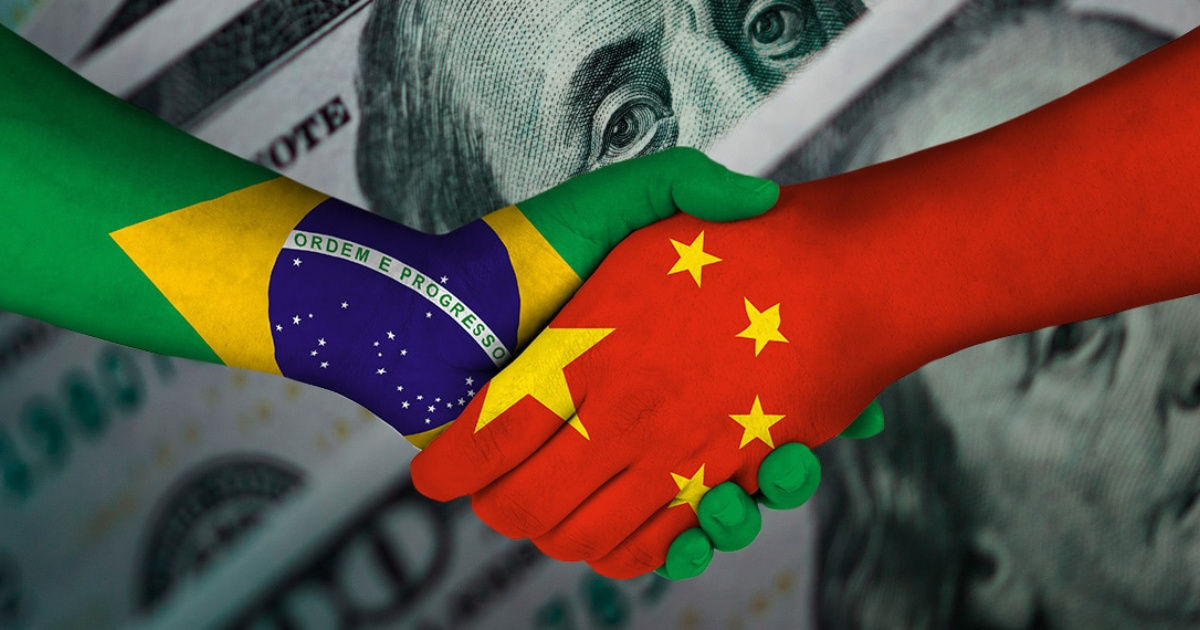
Effect of the Yuan on Emerging Currencies
Surveys indicate that fluctuations in the yuan have an almost immediate effect on the currencies of developing countries.
-
Major Brazilian Supermarkets, Including Carrefour and Assaí, May Close Earlier to Prevent Price Increases

-
Coca-Cola Shuts Down 100-Year-Old Factory in the U.S., Impacting 85 Workers and Shaking Local Community with Historic Consequences
-
Bianca Andrade Invests $30 Million of Her Own Money in Boca Rosa, Launches Over 100 Products in a Year, Aiming for $400 Million by 2026
-
Belo Horizonte Becomes First Brazilian City to Fund Housing, Utilities for 100 Homeless Families with $900,000 Initiative


In August, the 30-day correlation between the dollar-yuan pair and the MSCI Emerging Markets Currency Index reached 0.59, the highest since May 2024.
In practical terms, variations in the yuan tend to be followed by currencies like the real in the same direction, with similar magnitude.
The market reading is that China has returned to accepting a firmer renminbi.
On September 9, the People’s Bank of China (PBOC) set the reference rate at its strongest level since November, at 7.1008 per dollar, a gesture seen as a change in posture after a period focused on stabilization.
This movement occurred amid expectations of monetary easing in the US, which reduces the relative attractiveness of the dollar.
China Changes the Axis of Exchange Rate Policy
The new calibration does not represent, according to experts, a break with the commitment to “stability at reasonable levels,” but signals greater tolerance for a less weak yuan.
Fund managers have increased bets on options for an exchange rate below 7 per dollar by the end of 2025, supported by expectations of domestic support in China and a cycle of cuts in the US.
The prevailing view is that a strong yuan reduces volatility among emerging markets and improves flows to the region.
In the spot market, the offshore yuan has already tested levels close to 7.10 per dollar this week, reinforcing the perception that the Chinese currency has turned direction in the short term.
Real Gains Traction with Weaker Dollar
The combination of a globally weaker dollar and improved risk appetite favored the real, which traded at around R$ 5.30 per dollar in mid-September, after reaching peaks above R$ 5.40 the previous week.
For the foreign investor foreign, a lower negative correlation between commodities and emerging currencies also contributes to the inflow of tactical capital into Brazil.
Meanwhile, participants emphasize that when the yuan appreciates, it improves the backdrop for Brazilian exporters linked to the Chinese supply chain, while the lower perception of exchange risk helps reduce premiums on local assets.
As summed up by manager Eric Fine of VanEck to Bloomberg: “The Chinese currency is now the main currency cross for emerging markets” and “the winners are all emerging markets.”
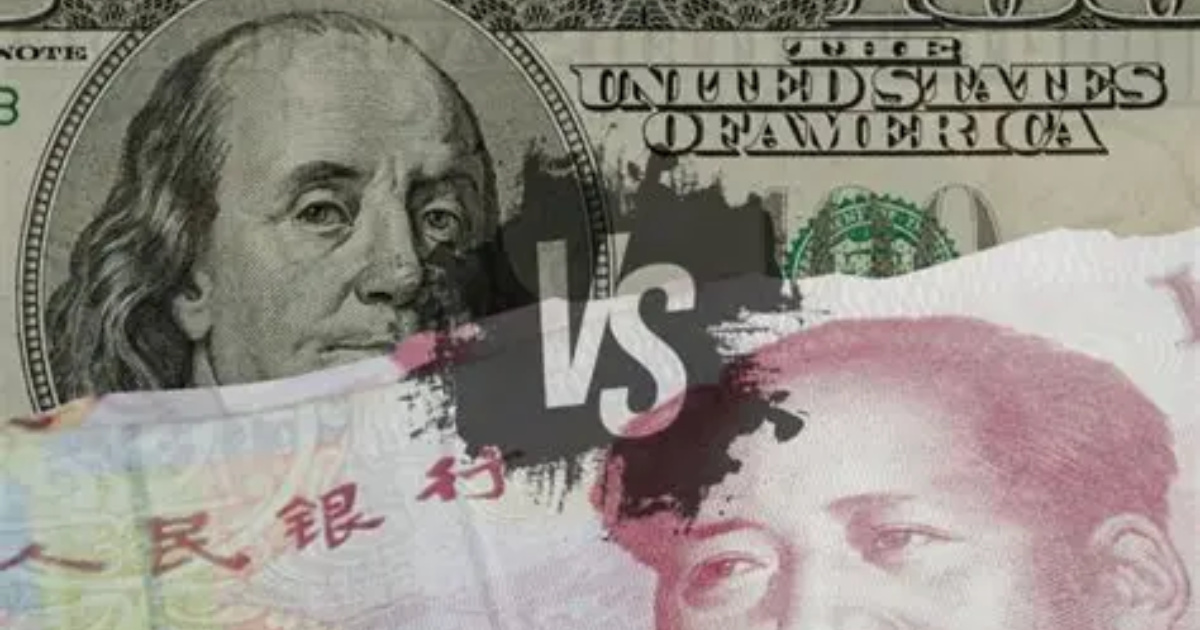
Dedollarization: What the Data Shows
The discussion about dedollarization has gained momentum with recent numbers.
The share of the dollar in international reserves reported to the IMF fell to 57.7% in the 1st quarter of 2025, the lowest level in decades.
Although the dollar remains dominant, its share is gradually decreasing, making space for the euro, gold, and other currencies.
In the Chinese case, the advance is even more visible domestically: in the 1st half of 2025, the RMB share in cross-border receipts and payments by companies and individuals in China reached 53%, surpassing the 50% barrier and reflecting bilateral agreements, increased use of the CIPS system, and official guidelines to expand settlements in local currency.
Outside of China, however, the penetration of the yuan into the payment system is slower.
According to the RMB Tracker from SWIFT, the Chinese currency accounted for 2.88% of global payment values in June and July 2025, remaining the 6th most used.
In other words, there is a divergence between domestic use/China-related use and broader global adoption.
Exchange Market: Participation of the Chinese Currency
In trading volume, the yuan continues to rise.
The BIS Triennial Survey showed that the share of the RMB in global foreign exchange turnover rose from around 4% in 2019 to ~7% in 2022, placing the currency among the most traded in the world and consolidating its role as a benchmark for emerging markets.
This increased presence in the interbank market helps to explain the sensitivity of pairs like the real and the Mexican peso to variations in the yuan, in addition to reducing spreads and hedge costs for companies with exposure to China.
Debt in Yuan and Dim Sum Bonds
The strengthening of the ecosystem in yuan is also evident in debt issuances.
In Hong Kong, the market for dim sum bonds is heading for a record year, supported by raises from large companies and by lower costs offshore.
Tencent reopened the window with an issuance in three tranches, and other multinationals are following suit, increasing the base of non-resident investors in RMB.
Among sovereigns and state-owned companies, a highlight is Hungary, which issued 5 billion RMB in panda bonds in the onshore Chinese market in July.
Pakistan is preparing for its debut with an estimated raise of US$ 250 million equivalent in 2025, while Chinese authorities are discussing allowing Russian energy companies to re-access the domestic market after years of restrictions.
In the case of Brazil, the Treasury has intensified external raises in dollars throughout 2025, but there is no confirmed sovereign issuance in yuan.
Brazilian companies are evaluating alternatives and agreements for settlement in RMB for bilateral trade, but the transition to financing in Chinese currency is gradual and depends on cost, liquidity, and investor demand.
What to Watch For Ahead
If the Fed begins cuts and China maintains a stronger fixing, the trend is to support the block of emerging currencies, with additional benefits for countries with favorable terms of trade and balanced external accounts.
Nonetheless, the full internationalization of the yuan faces capital controls and low participation in global reserves compared to the dollar and euro, which limits its function as a reserve asset in the short term.
In this scenario, what will be the role of the real if the yuan maintains its appreciation trajectory and the dollar continues to lose ground?







Importe algo da China e veja em que moeda irá pagar,nem eles aceitam pagamento na própria moeda!
É pra rir ?
A diferença do dollar é de 7 voltas na terra na frente do yuan… é cada reportagem fraca, comentário de imprensa amadora!