






 Portuguese
  Spanish


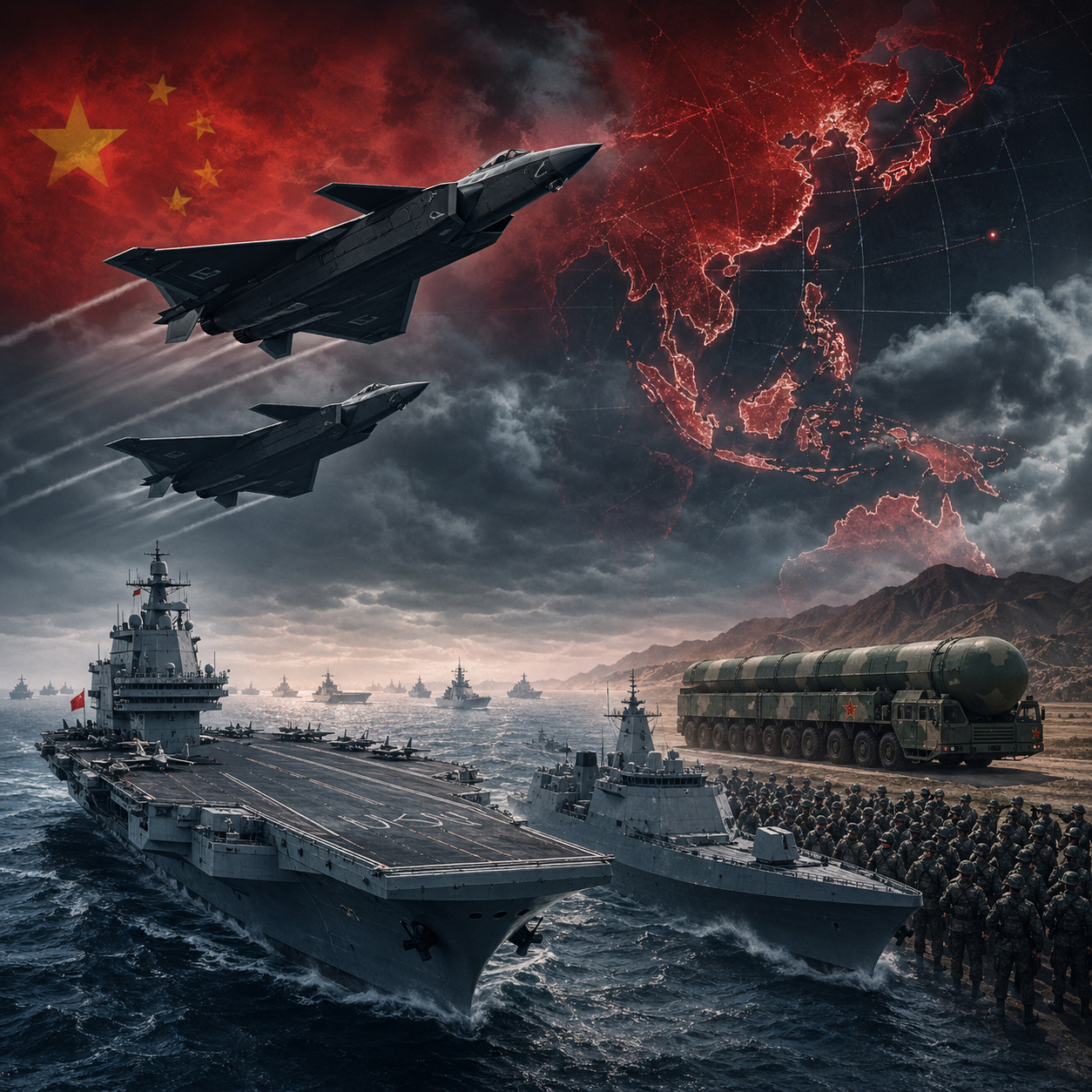

China expands armed forces with millions of military personnel, hundreds of ships, and advanced weapons, increasing tension in the Indo-Pacific.
In a report to Congress published on December 23, 2025, the United States Department of Defense indicated that the modernization of the People’s Liberation Army of China has moved beyond mere numerical expansion to involve all military domains, including sea, air, space, cyberspace, missiles, and information warfare. With an active force estimated at around 2 million military personnel, China maintains one of the largest armed forces in the world, but the central point of the transformation lies in the technological capability incorporated into its defense system.
Since the 2000s, Beijing has accelerated a strategy based on its own technological development, integration between different branches of the armed forces, and expansion of the ability to operate beyond the immediate Chinese territory. The American report states that the modernization goals for 2027 are linked to the advancement of mechanization, informatization, military intelligence, and strategic deterrence capability, in a movement that is already altering the balance of power in the Indo-Pacific.
Next, understand what the main weapons, capabilities, and structural changes are that have transformed the Chinese armed forces into one of the most observed topics in global geopolitics.
-
U.S. Air Force Launches Air-to-Air Missile Project with Range of Up to 1,850 km for Indo-Pacific Operations

-
Australia to Deploy Up to 8 Nuclear-Powered Submarines in Indo-Pacific, Establishes Billion-Dollar Naval Chain Through AUKUS, Joining Elite Group Capable of Extended Underwater Missions

-
Indonesia Begins Construction of 2,000-Ton Scorpène Stealth Submarines with Advanced Weaponry and French Steel

-
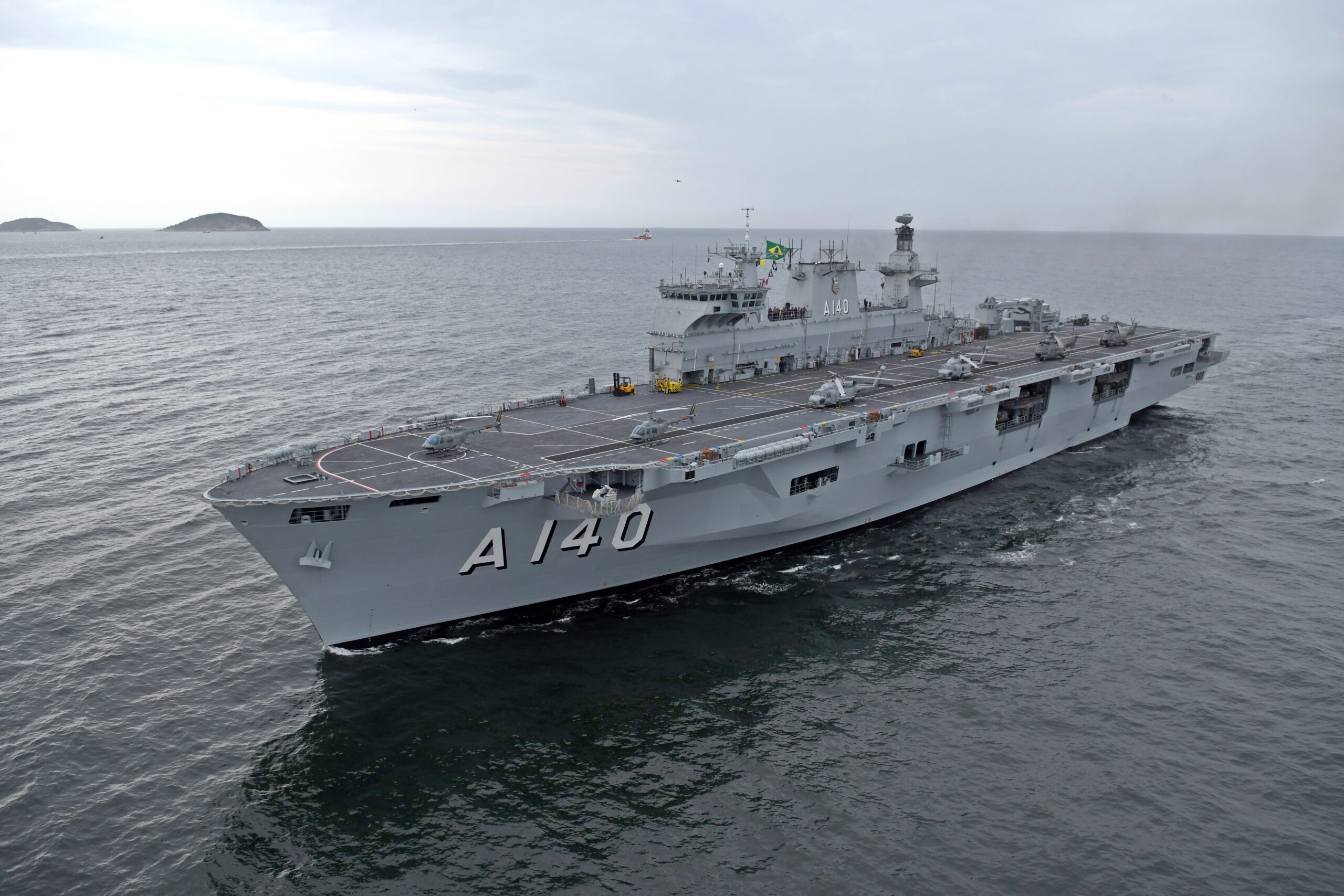
Brazil’s Largest Navy Ship, NAM Atlântico, Transforms into Field Hospital During National Crises



The country has moved from being a regional military power to positioning itself as a global player with increasing force projection capability.
Chinese navy becomes the largest in the world in number of ships and accelerates expansion
One of the most visible aspects of this transformation is in the naval force. China surpassed the mark of 370 ships and submarines, becoming the largest navy in the world in absolute number of vessels. This growth was driven by a continuous shipbuilding program that has no recent parallel in terms of speed and scale.


The expansion is not limited to increasing the number of ships. The country has invested heavily in modern vessels, with advanced radar systems, weaponry, and digital integration. This allows the fleet to operate in a coordinated manner in patrol, defense, and power projection missions.
The Chinese navy has evolved from a coastal force to a structure capable of operating in deep waters and competing for influence on strategic maritime routes.
Aircraft carrier Fujian marks technological advancement and a new phase of naval strategy
The development of the aircraft carrier Fujian represents an important milestone in China’s naval evolution. Unlike previous models, the Fujian was designed with more advanced technologies, including electromagnetic catapult launch systems.
This innovation allows for the operation of heavier aircraft with greater payload capacity, expanding the range and efficiency of embarked air operations. Thus, the ship ceases to be just a symbolic platform and assumes a real strategic role in conflict scenarios.
The Fujian signals that China seeks to achieve operational standards comparable to those of the largest navies in the world.
Type 055 destroyers enhance combat and defense capabilities in open sea
Another central element of naval modernization is the Type 055 destroyers. These vessels are considered among the most advanced currently in operation, with the ability to perform multiple functions in a single system.

Designed to act as escorts for combat groups, the Type 055 combines air defense, long-range attack, and support for complex naval operations. Their presence significantly increases the survivability and efficiency of Chinese fleets in high-intensity scenarios.
These ships represent a qualitative change in how China structures its maritime presence.
“`htmlMilitary aviation gains strength with the J-20 stealth fighter
In the aerial domain, the development of the Chengdu J-20 fighter has placed China among the few countries capable of operating fifth-generation aircraft. The J-20 was designed to reduce radar detection and operate in air superiority and strategic attack missions.
The introduction of this aircraft expands the Chinese air force’s ability to operate in more complex scenarios, including long-range operations and confronting advanced defense systems.
The presence of stealth fighters reinforces China’s position as a technological power in the military field.
DF-41 missile reinforces China’s strategic role in the nuclear scenario
Modernization also reaches the nuclear field, with the development of systems like the DF-41. This missile is capable of traveling long distances and carrying multiple warheads, increasing the country’s deterrence capability.

Recent estimates indicate that the Chinese nuclear arsenal already exceeds 600 warheads, with growth projections over the next decade. This advancement places China at a new level within the global strategic balance.
The expansion of the nuclear arsenal alters the power dynamics among major powers and increases the complexity of international relations.
Chinese military strategy prioritizes integration and technology
The modernization of the Chinese armed forces does not occur in isolation in each sector. The country has invested in an integrated approach, combining land, maritime, aerial, space, and cyber capabilities.
This integration allows for greater operational efficiency and reduces vulnerabilities in conflict scenarios. The increasing use of technologies such as artificial intelligence and autonomous systems is also part of this strategy.
The focus is not only on possessing advanced equipment but on connecting them in a coordinated manner within a single system.
Indo-Pacific becomes the main focus of Chinese military presence
A large part of the Chinese military expansion is concentrated in the Indo-Pacific region, considered one of the most strategic in the world. This area concentrates important trade routes and geopolitical tension points.
The growing presence of China in regions such as the South China Sea and around Taiwan has generated attention and response from other powers, especially the United States and its allies. The region consolidates as the main stage of contemporary strategic dispute.
Military growth accompanies economic and industrial advancement
The strengthening of the Chinese armed forces is directly linked to the country’s economic growth. The ability to invest in research, development, and industrial production allows for accelerated military modernization.
This model creates a cycle in which technological innovation and productive capacity reinforce each other, expanding the reach of the armed forces. The economic base sustains military expansion and ensures continuity to the modernization process.
Global balance goes through a phase of transition
The advancement of China’s military capabilities has a direct impact on the international scene. Other powers are following this movement and adjusting their defense strategies.
This process includes increased military investments, strengthening alliances, and developing new technologies. The result is a more dynamic global environment and, in some cases, more unstable. The international system enters a phase of adaptation in the face of a new balance of power.
The transformation of the Chinese armed forces is not limited to increasing numbers or acquiring new equipment. It represents a broader change in how military power is structured and utilized.
The combination of technology, scale, and integration creates a model that can influence other nations and redefine strategic standards. The impact of this transformation goes beyond China and affects the entire international system.
With millions of military personnel, hundreds of ships, and advanced systems operating in an integrated manner, do you believe this expansion can lead to a new global balance or increase the risk of conflicts among major powers?
“`







