






 Portuguese
  Spanish


Rice enters a critical zone with the advance of global warming, bringing producing regions closer to a temperature ceiling that the plant has never faced in 9,000 years of cultivation and raising an alert for food security in parts of Asia in the coming decades
Rice, one of the staples of human nutrition since the emergence of the first agricultural societies, may be approaching a dangerous climatic limit. A new study published in the journal Communications Earth & Environment indicates that global warming could push important producing areas beyond the thermal range in which rice can develop, especially in the region from India to Malaysia. The alert is significant because rice today provides 20% of the calories consumed by half of the world’s population.
The research was led by Nicolas Gauthier, curator of artificial intelligence at the Florida Museum of Natural History, in collaboration with scientists from New York University and the University of Washington. The work combined archaeological, botanical, agricultural data, satellite images, and herbarium records to reconstruct where rice was cultivated in the past, where it is cultivated today, and how far it can withstand the advance of heat in the coming decades.
What the study discovered about rice and its thermal limit
The main finding of the study is that rice seems to have reached its historical thermal limit. According to the authors, at no time over 9,000 years of cultivation has the plant been cultivated in regions with an average annual temperature above 28°C. This mark appears as a sort of climatic ceiling for the crop.
-
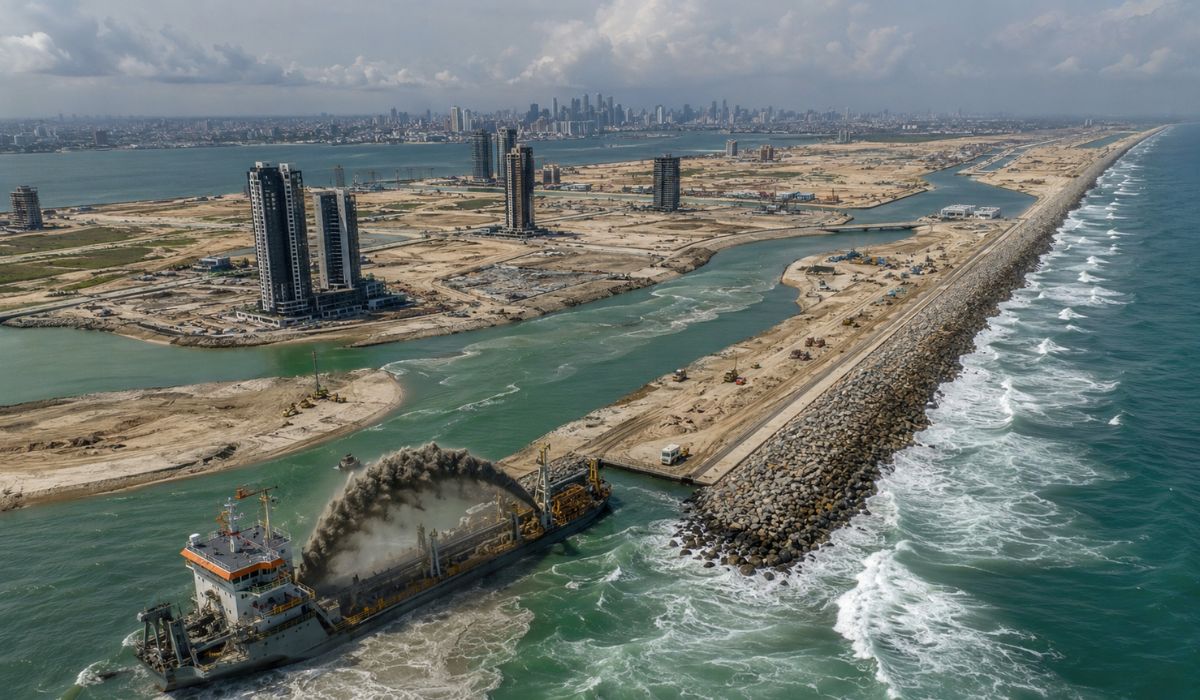
Nigeria Dumps 120 Million Tons of Sand into Atlantic to Build Massive City with 8.4 km Sea Wall for Protection Against Ocean Waves and Erosion

-
German Engineer Developed Diesel Engine Running on Vegetable Oil Decades Before Electric Cars Became Popular; Can This Forgotten Idea Work in 2026?

-
Brazilian Farmer Invents Low-Cost Tractor Using Motorcycle Parts, Efficiently Working 2 Acres on 1 Liter of Diesel

-
James Webb Telescope Uncovers Unexpected Clues on Mysterious Moon, Potentially Redefining Planetary Origins


The data also show that rice begins to show signs of thermal stress above 33°C. Furthermore, the researchers identified that the plant is currently cultivated almost entirely in areas with an average annual temperature below 28°C and a monthly average maximum below 40°C. The reading is straightforward: rice has always liked heat, but there is a point beyond which heat ceases to be an advantage and becomes a threat.
The numbers that explain why the alert is so significant

The potential impact of this climate change is enormous because rice plays a central role in the lives of billions of people. Half of the world’s population obtains 20% of their calories from this food, while more than 1 billion people depend on rice production and distribution for their economic survival.
The timeline is also concerning. According to the study, in the next 50 years, global warming caused by greenhouse gas emissions is expected to advance at a rate 5,000 times faster than rice and many other cultivated species have faced at any point in their evolutionary history. This means that the speed of change could be as severe as the temperature increase itself.
How rice managed to spread in the past
Rice was initially domesticated in the Yangtze River basin, in central China, between 7,000 and 9,000 years ago. During that period, mild temperatures and frequent rains helped create ideal conditions for the advancement of agricultural societies, and the first varieties of rice circulated through trade networks that connected these communities.
Later, rice cultivation expanded to the north, to the east, and to the interior of China. Around 4,200 years ago, however, a period of abrupt cooling and drought hit much of Eurasia. Faced with this scenario, Chinese producers adapted by developing more cold-tolerant varieties. This allowed rice to expand into more temperate regions, such as Korea and Japan.
Why heat is a more difficult barrier than cold
The study highlights that cold adaptation and heat adaptation are very different challenges. In colder climates, a plant can adjust its development pace and better utilize favorable windows. In extreme heat, however, the problem is deeper, because there comes a point when the plant simply stops functioning physically.
This difference helps explain why the current scenario is so concerning. Rice may be a heat-adapted crop, but that doesn’t mean it can keep up with any temperature increase. According to Gauthier, even with human help through directed cultivation and the development of new varieties, adaptation will not be free, simple, or pleasant.
What could happen to rice by 2070
The climate projections used by the researchers indicate that, by 2070, almost the entire southern rice distribution region, from India to Malaysia, is expected to record average annual temperatures above 28°C. This would place vast producing areas precisely beyond the thermal limit identified by the study.
The situation becomes even more serious in the hottest months of the year. The expectation is for maximum monthly average temperatures above 40°C in much of India, as well as parts of China and the Middle East. As India has become the world’s largest rice producer, with nearly 150 million metric tons of grain cultivated, any significant drop in its production would have the potential to generate severe global effects.
Why this raises an alert about food security
The risk is not only in the scientific or agricultural field. It directly affects food security. If large producing regions lose cultivation capacity, the impact can fall on supply, prices, and the livelihoods of entire populations that depend on rice for food and work.
The study explicitly states that if something suddenly and negatively affected India’s ability to produce rice, mass starvation would be a real possibility. This is one of the strongest points of the warning, because it connects climate change to a food that is already central to the diet of billions of people.
What changes for those who live off rice today
Even in the best-case scenario imagined by researchers, adaptation will be uneven. Part of the answer could come from shifting tropical varieties to areas that are now more temperate and cultivating temperate varieties at higher latitudes. In theory, this could prevent a total supply collapse.
But redistributing production doesn’t solve everything. Gauthier states that the fact that one region can compensate, in volume, for the loss of another does not eliminate the human impact on those who currently live in threatened areas. Those who depend on rice in Southeast Asia, for example, will not be able to simply change crops or rebuild all production from scratch overnight.
The next steps and why time is running out
Researchers indicate that rice producers and consumers have about 50 years to prepare for the worst, considering the current climate models in which countries continue to not significantly reduce fossil fuel emissions. This timeframe may seem long, but it is short for a food chain of this scale and for a crop with such deep historical roots.
Adaptation will require planning, development of new varieties, and intentional decisions. The study makes it clear that rice has faced climate changes before, but now the challenge is different because the speed of warming and the plant’s thermal ceiling make this transition much harder than any previous expansion.
Do you believe the world is preparing at the necessary speed to protect rice before extreme heat hits key producing regions?


