Portuguese
  Spanish


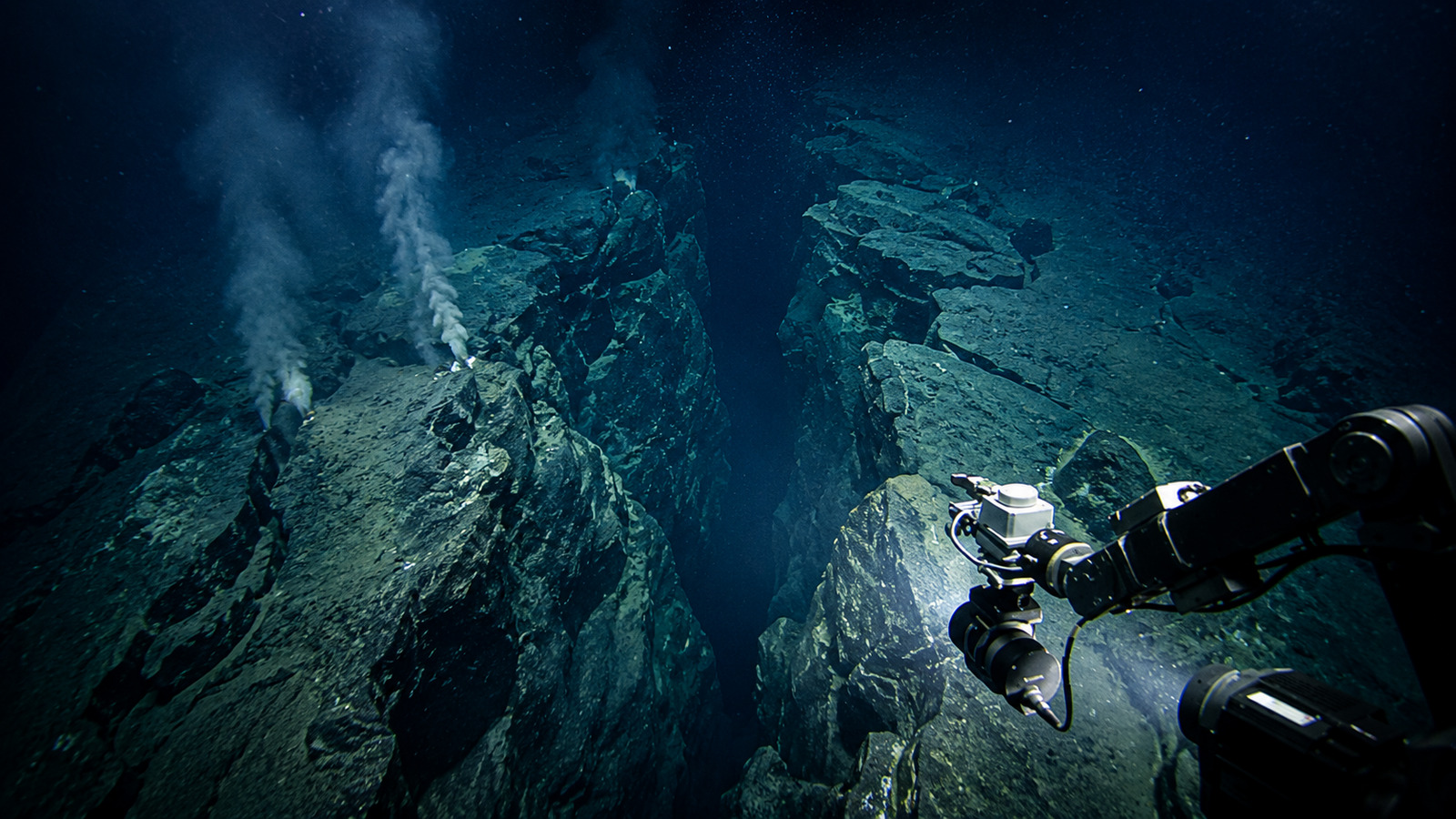


Fragmentation of the Juan de Fuca plate near Vancouver Island reveals gradual rupture of the oceanic crust, formation of microplates, and new data on the geological dynamics of the Cascadia region
The fragmentation of the Juan de Fuca plate near Vancouver Island is allowing the observation of an ongoing tectonic rupture at the bottom of the Pacific. The phenomenon, recorded in the Cascadia region, shows deep fractures, sections still joined, and signs of microplate formation, helping scientists understand how the oceanic crust transforms over millions of years.


Juan de Fuca plate breaks in stages under the ocean
The Juan de Fuca plate is in a subduction area in the northwest Pacific, between northern California and southern British Columbia.
In this region, one tectonic plate dives under another, creating a zone of great interest for geology.
-
Chinese “dark factories” produce electric cars 24/7 with minimal human intervention, as Zeekr assembles 800 units daily, raising concerns in Brazil.

-
Spectacular Green Aurora Seen from Space Illuminates International Space Station, Captivates French Astronaut

-
In Tasmania, a Beach Features a Natural Stone Mosaic Formed by Earth’s Cracks Millions of Years Ago
-
China’s Artificial Sun Reaches 100 Million Degrees, Six Times Hotter Than the Sun’s Core, Putting Beijing Ahead in the Race for Infinite Energy



The central point of the observation is that the rupture does not occur in a single or sudden manner. The plate has parts already separated, while other sections still remain connected. This behavior reveals a gradual fragmentation, done in stages, on the ocean floor.
The discovery allows the monitoring of a process that is often only studied through marks left in ancient rocks.
In this case, the data shows a transformation still in progress, with faults, displacements, and areas that cease to maintain contact with other parts of the crust.
Deep fractures help map the tectonic rupture
To identify the division of the crust under the sea, researchers used mapping technologies capable of revealing deep layers of the oceanic crust.
Sound waves emitted by vessels and sensors installed on the ocean floor helped record the structure below the surface.
The data pointed to vertical fractures several kilometers deep. Areas without recent seismic activity were also observed, indicating loss of contact between rocks, as well as sections that remain active within the subduction zone.
These pieces of information form a rare portrait of a tectonic plate in the process of disintegration. Instead of a rapid break, the signs show a progressive separation, with different parts of the structure responding in distinct ways to the Earth’s internal forces.

Cascadia gains new data to understand geological risks
The Cascadia region is already known for its seismic potential, as it concentrates large rock masses under pressure.
The observation of the fragmentation of the Juan de Fuca plate does not indicate that an earthquake is about to occur, but it offers new elements to improve geological models.
The separation of parts of the plate can alter the force that pulls the main structure downward. When the dynamics of subduction change, faults, temporary volcanism, and tectonic boundaries can also be influenced over time.
The study of this process helps to better understand how the region reorganizes at depth. For areas with a history of tectonic pressure, more detailed data on faults and rock contacts are important to interpret the evolution of the system.
Formation of microplates shows a continuously moving Earth
The fragmentation of the Juan de Fuca plate also points to the possible formation of microplates. These structures can arise when progressive divisions separate parts of the oceanic crust, opening new paths for changes on the seafloor.
The phenomenon reinforces that the Earth’s surface is not fixed. Mountains, ocean trenches, earthquakes, and volcanoes are part of a slow-moving system, driven by the planet’s internal heat and the movement of tectonic plates.
In the case observed in the Pacific, the importance lies in the chance to follow a profound change as it happens. The step-by-step rupture shows how the oceanic crust can tear, lose contact, and reorganize its boundaries over millions of years.
This article was prepared based on information from the base material provided about the fragmentation of the Juan de Fuca plate in the Cascadia region, with data, numbers, and statements preserved as per the material consulted.